Please enable javascript to view this page in its intended format.

Queen's University
 

School of Graduate Studies

A different path to a degree

Seasoned perspectives help enrich the experience, students find

(By KAY LANGMUIR)

While most of Queen's newest crop of graduates will leave the world of classrooms for the first time this spring, other graduates have taken more unusual routes to attaining degrees.

They are the mature graduates who have returned to school after some years of working, traveling or raising families, and whose broad life experience and seasoned perspectives enrich the classroom experience.

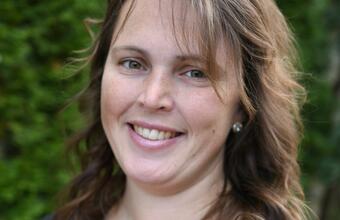
Their stories are different, but the love of learning and self-development is the same. Some people end up back at university because their calling has come more clearly into focus. Such was the case with Hilary Davies, who originally graduated from the University of Guelph in biological sciences. GazetteconvoHilaryDavies26.jpg

After her undergraduate studies, she taught in Korea before returning to take a Bachelor of Education at Queen's.

"When I was overseas, I realized how fortunate were are to have the air quality we have, and the space we have, and what might happen if we didn't take care of it."

Subsequent work in the public-school system did not do much to feed her burgeoning interest in environmental education. Opportunities to integrate environmental awareness into the curriculum were limited. Funds were being pulled out of the outdoor education program. And yet the public interest in the environment was growing. Ms. Davies felt drawn to the cause of public environmental education, and particularly to focusing on positive actions which can be taken to support environmental sustainability.

"So I decided to follow my heart," she says.

Last fall, she entered the first class of Queen's new Master of Environmental Studies program.

For her thesis, she worked with the Inuit in northern Labrador to document their observations on environmental change and to understand the changes and make decisions based on those changes.

Ms. Davies also continued with her volunteer work with STRIVE (Students Taking Responsible Initiative for a Viable Environment), helped coordinate Green Up, a festival of earth friendly living, and a local food summit to showcase sustainable food systems, as well as helping out with the Queen's farmers' market.

Ms. Davies says her time away from school helped make her a better student when she came back.

"If you have the chance, it's best to have real-world experience - travel, volunteer. It lets you focus on what you really want to do...That's especially important when students are coming to university at a younger age."

Ms. Davies was also very pleased with her environmental studies program and its "generalist" cross-disciplinary approach to a hugely complex subject affected by a wide range of scientific and social factors.

"There has to be more focus on programs that link all of these things together," says Ms. Davies, who is currently working part-time at St. Lawrence College.

GazetteconvoMarkBeauregardandson26A.jpgMature student Mark Beauregard is another current graduate that found a good fit with his program at Queen's. A professional engineer for 25 years with engineering and MBA degrees from McGill, he currently works for Montreal-based Pratt & Whitney, a jet-engine manufacturer. When he decided to pursue a Masters in Mechanical Engineering, he needed a program flexible enough to bend around the demands of a busy full-time career.

"It was a lot easier to work with Queen's than a lot of other places," says Mr. Beauregard, who had also considered studying in Ottawa and Montreal. "I really didn't know if I would continue or not because I had been out of school for 25 years."

Mr. Beauregard took one course at a time, working it around a job that frequently had him traveling between Montreal, Ottawa and Toronto.

"It's not easy. You do have constraints. You have to submit things. It's learning that discipline again, and getting down to focusing on a topic."

Many of his course involved research on large projects, and where possible Mr. Beauregard did work related to the manufacturing process used at Pratt & Whitney.

After three years of whittling away at his courses, Mr. Beauregard receives his degree this spring. Convocation will be more than the usual happy family affair. His son Yannick is also graduating this spring with a degree in chemical engineering.


Gazetteconvbbebe26.jpgSiziwe Bebe continues to be an inspiration to all who meet her. When she immigrated to Canada from Zimbabwe in 2001, she already had a Masters in Chemical Engineering from the University of Sydney (Australia). But she was also a single parent in a wheelchair, unable to walk or talk due to a severe brain concussion sustained when she was attacked by her partner. She needed an operation on her back that could not be performed in Zimbabwe, and with her sister Sipho living in Kingston, she came here to heal. Her son Jesse, five, and daughter Nosizo, 10, went to live with her sister while she spent three months at Kingston General Hospital.

With the help of physiotherapy, she slowly learned to walk again. But the psychological scars of her ordeal were still there. She worried that her nightmares and screams were frightening her children.

"When I could walk using a cane, I decided to go back to school. I didn't want my brain sitting idle, because these things come back into my head."

She was accepted into her PhD program in 2002.

"My supervisor knew of my work (in polymer kinetics) when I was in Australia so he was happy to take me," she says.

There were times during the past five years when circumstances often conspired to test Ms. Bebe's commitment - financial constraints, chronic health problems, a burst appendix, short-term memory loss. At one point, health issues forced her to leave her studies for a year. But her academic work was her lifeline and she didn't let go. She and her family squeaked along on welfare, bursaries and scholarships. At one time, things were so tough, she felt forced to discontinue her studies and find a job, but could not secure one.

Throughout her difficulties, Ms. Bebe had the unflinching support of her professors and colleagues.

"People in my department were exceptionally understanding of my situation and so accommodating. From the department head to my supervisor, I couldn't ask for anyone better to have been in those positions."

Despite her considerable academic accomplishments, Ms. Bebe has some concern for what the future will bring. She would like to continue to raise her family in Kingston, but doesn't know if she can find work here.

"Because I didn't want my mind to be idle, I studied quite a lot," she says. "The scary part is that I'm done with this. What next?"

During her studies, Ms. Bebe found support at the Ban Righ Centre, which provides counseling and peer support for mature women students. It is one of a number of services on campus attuned to the needs of mature students, whose presence the university continues to support and encourage.

(Reprinted with the permission of Queen's Gazette)

Kingston, Ontario, Canada. K7L 3N6. 613.533.2000