Please enable javascript to view this page in its intended format.
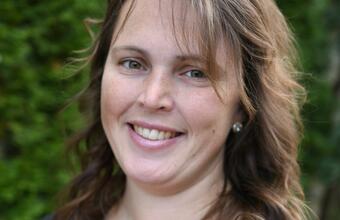
Shea Balish
by Meredith Dault
January. 30, 2011
Lockeport, an island with a population of 646, is about two hours south of Halifax. “It’s a small town that revolves around sport, primarily basketball. It has a long tradition” says Balish, explaining that the local high school has won 44 provincial championships in the sport since 1950. “That’s probably the highest in Nova Scotia -- perhaps in Canada -- for any high school.” The community also produced a handful of particularly gifted players, including Ian McMillan, who went on to become assistant coach for the Houston Rockets.
After finishing his undergraduate degree at Dalhousie University, Balish knew he wanted to study under Dr. Jean Côté in the department of Kinesiology & Health Studies at Queen’s, but he admits he was surprised by what an ideal fit it was for him. “It’s funny how it worked out,” he laughs, “because right when I was coming here, (Côté) was studying not just how athletes become talented, but also how entire communities become talented.” Balish proposed doing a case study of a successful sport community, and the pair began looking around for a suitable one. “My community was amenable to study and hadn’t been looked at before,” he says.
For Balish, it meant going home to Nova Scotia to undertake a qualitative study. It also meant doing research in an area he had experienced. Because although Balish talks openly about getting into trouble as a kid (“I got a criminal record at 13, and I was doing drugs and drinking”), he says everything changed when he found basketball. “It really picked me up,” he explains, “and then as I opened my eyes a bit, I started to see the larger goals.”
Balish, whose father coached basketball, poured his energy into his sport. “I got really good when I started to play provincially, for Basketball Nova Scotia,” he says, explaining his father would drive him back and forth to Halifax every week for games and practices. For Balish, it was an opportunity to experience the world - and possibilities - beyond the edges of his rural upbringing. As an undergraduate playing basketball for Dalhousie, he conducted an honours project where he studied talent development -- and found his passion. “All I did was read,” he says with a smile, “I read pretty much everything.”
Though Balish admits that his heart is still in Lockeport, he is grateful for the opportunities he’s found at Queen’s. “It’s been great since I’ve been here,” he says. “One of the things I have loved about Queen’s so far is the intellectual freedom I’ve been allowed...all while being taught intellectual values, research skills, logical consistency and rationality.”
Shea Balish speaking at TEDx, Nov 7th, 2010.
Photo courtesy of Kevin Morris photography.
As well as his academic work, Balish has been involved in the community since arriving in Kingston. Last year his was a coach with the Kingston Impact under-19 basketball team, and he currently works as an assistant coach with RMC’s basketball team (not because he is disloyal, but because he already has a coaching relationship with their head coach). In November he was a speaker at the TEDx conference, and in March will be delivering an address at the popular MIT Sloan Sports Analytics Conference concerning the evolution of sport. He also works part-time as a “mental skills trainer,” helping athletes “develop skills to facilitate their own learning, and deal with challenges”.
Currently nearing the end of this degree, Balish already has his sights set on a PhD, though he’s also interested in doing work in sport development. He’s also keen on starting up my own consulting business to work with athletes, and maybe even a non-profit organization that enables rural youth to facilitate change within their own communities. “I’m full of piss and vinegar,” he says with a laugh.