Please enable javascript to view this page in its intended format.

Queen's University
 

School of Graduate Studies

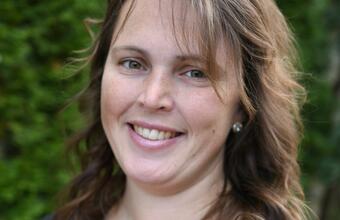
Nathaniel Lewis

Ph.D candidate, Geography

Exploring the ways in which sexuality can affect migration

Nathaniel Lewis

Nathaniel Lewis

by Meredith Dault
February 27, 2011

When Nathaniel Lewis was deciding where to pursue his PhD, he ran his options by a professor at a U.S. university that was on the list of potentials.  Lewis, who grew up in Albany, New York, knew he was leaning towards coming to Queen’s, but wondered whether studying in Canada, as an American student, would be a wise decision. When she heard his preference, the professor, who was aware that Lewis was interested in immigration issues, asked him a single question: “Would you be studying with (Queen’s professor) Audrey (Kobayashi)?”  “I said ‘yes’,” he recalls with a smile, “so she said ‘yeah, that would be pretty good then.”

It’s a decision that Lewis, 29, hasn’t regretted yet. “Canada’s been really good to me,” he says warmly. Currently in the final year of his PhD in Human Geography, Lewis says he has been well-supported throughout his degree program - both intellectually and financially. In 2009, for example, he won a Vanier Canada Graduate Scholarship worth $50,000 a year, enabling him to pursue his research in relative comfort. “Oh my God, I was stunned,” he says, thinking back on hearing that he’d earned the prestigious prize, “but I also felt like it validated every decision I had made up to that point, as far as coming to Canada, and choosing my topic. It was like, ‘ok, here we go’.”

His current research, which focuses on the two capital cities of Ottawa and Washington, DC, explores the ways in which sexuality affects migration and adopts a particular focus on how gay men make decisions about where to live. “It’s looking at how sexuality perpetually influences the life course for people,” Lewis explains over coffee on campus. “For example, ‘coming out’ is not a once and for all emancipation from the closet -- instead, you are constantly dealing with it, by having to come out at work, with different people, and in different environments.” Lewis is interested in how migration is used to “mediate and negotiate” that constant pressure, charting how people move in response to it.

“Having a non-normative sexuality makes the landscape of these things a bit more uneven than it might be for most people, by creating different landscapes of safety or risk,” says Lewis, who identifies as gay. He describes men who may move back to their hometowns to try on heterosexual identities, and those who leave larger, urban centres in pursuit of jobs that will give them a better sense of safety and security. “There are so many variations,” explains Lewis, “and it is always mediated by the individual’s characteristics, for example, whether he is a person of colour, his age, or where he is at in his life.”

“By looking at individual stories, it brings to light the ways in which sexuality is constantly influencing the life course. It ends up being considered at every juncture,” says Lewis, “ranging from guys moving to Ottawa because they knew that working for the government was one sector where rights would definitely be protected, or perhaps that the gender norms in that sector would be more relaxed than working in, say, an industrial setting. It mediates looking for work. It mediates the process of coming out.” 

Lewis interviewed 48 men and over the course of his research, ranging in age from 24 to 56. “I transcribed every interview,” he laughs. “It almost killed me.” Having lived in both Washington, D.C (he earned his Master’s degree at the George Washington University) and in Ottawa, Lewis has close ties to his work, which he feels is an asset especially in human geography, where “experiential authority can add something to your research. You can also engage with your participants already having some kind of knowledge.” Lewis feels it should stand him in good stead for the long haul, too. “I really think for something like a dissertation it needs to bear some relevance to you, personally ... to keep you going for four years! For me, this was an intuitive project that people would be able to relate to, and be happy to participate in.”

Once he has his degree in-hand, Lewis says he hopes to pursue post-doctoral research and has a long-term goal of becoming a geography professor. He also hopes to find a way to stay in Canada. “I’m very partial to this part of the world,” he says with a smile. For now, he’s grateful for the opportunities he’s had while at Queen’s. “I have had amazing research assistantships. I have co-written with people. I’ve worked with professors who are so willing to integrate you into their network. I really feel like opportunities abound if you want to take them.”

Back To All Stories

Kingston, Ontario, Canada. K7L 3N6. 613.533.2000