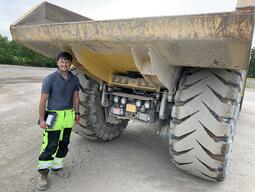
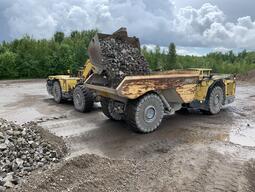
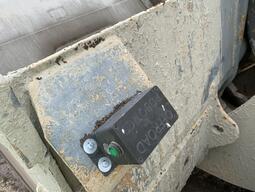
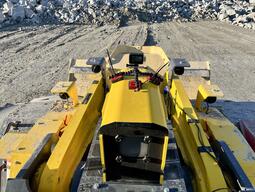
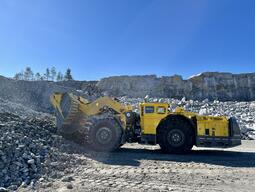
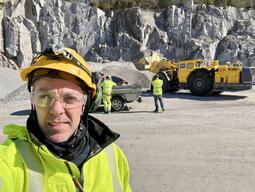
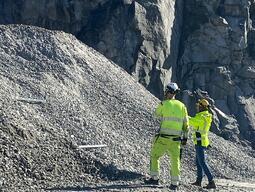
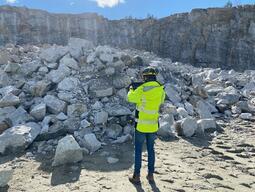
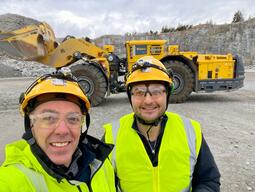
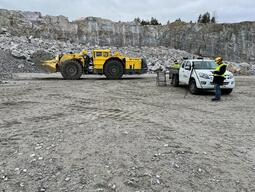
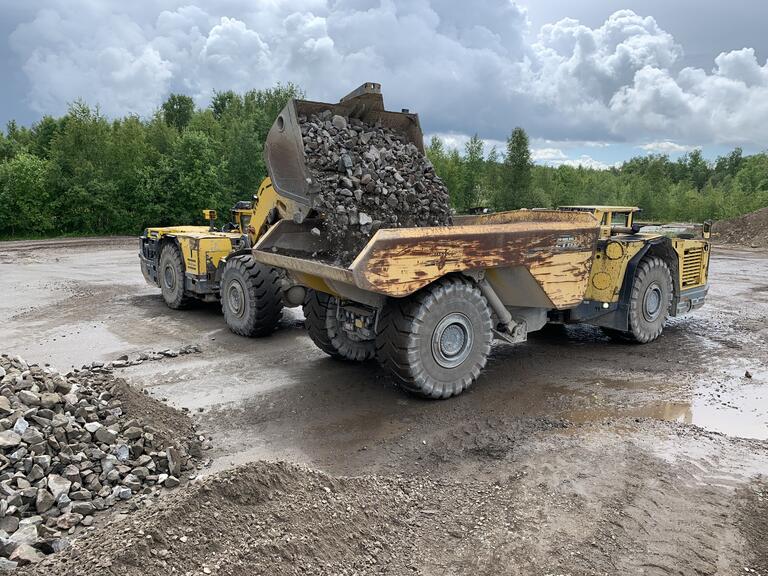
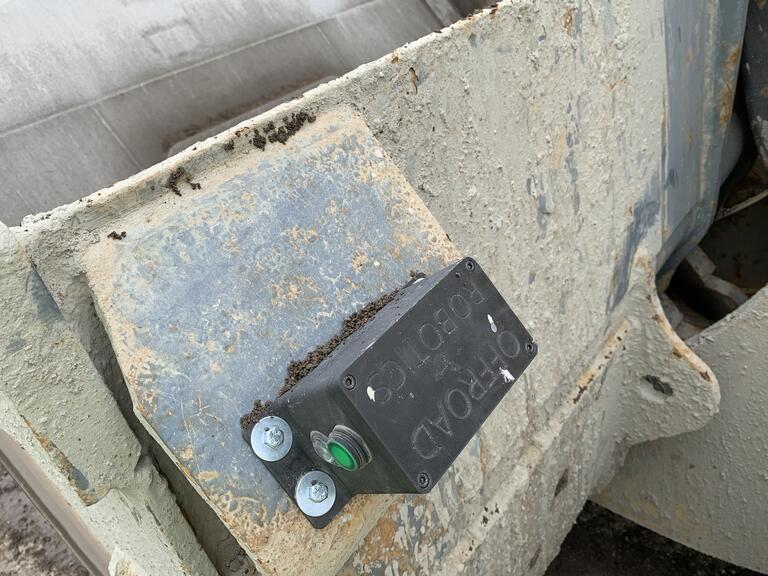
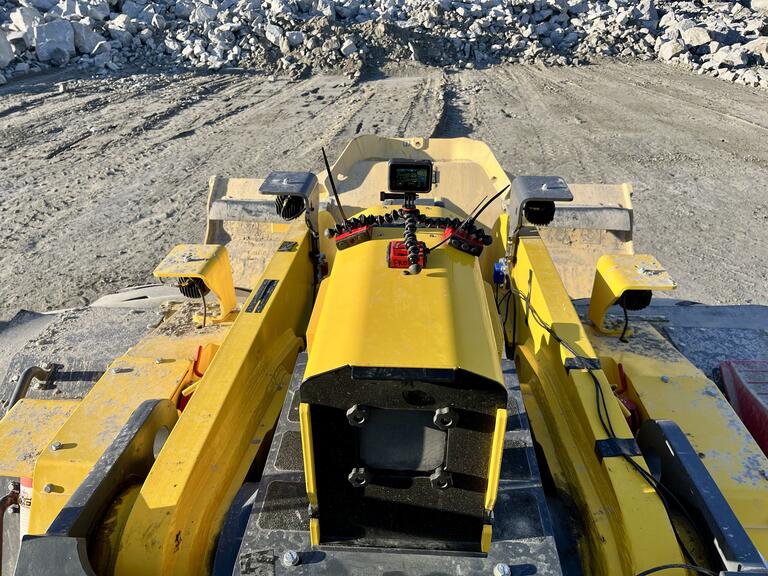
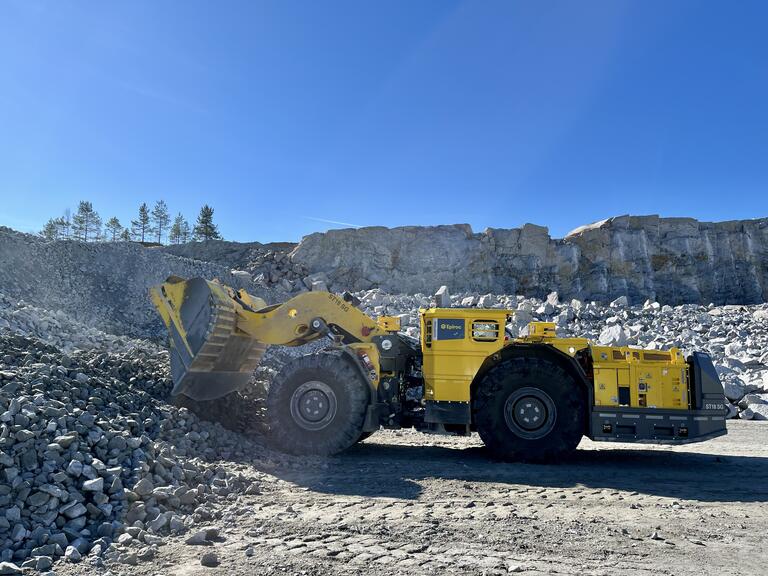
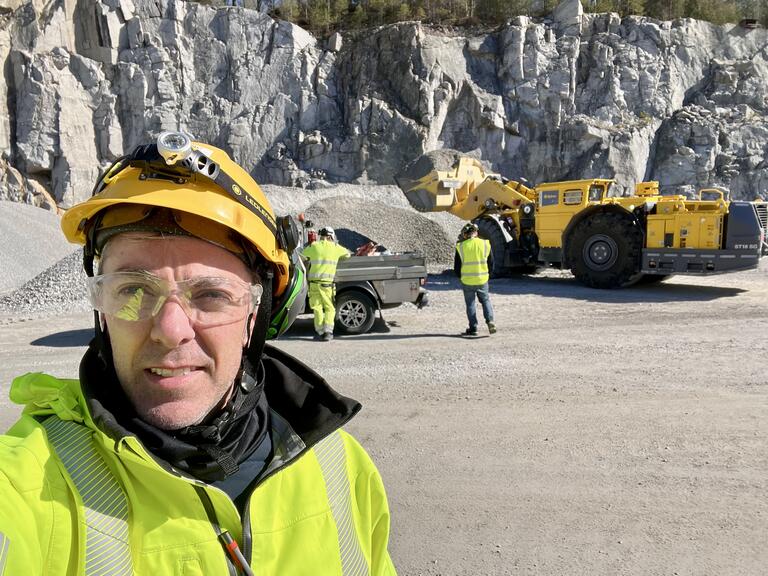
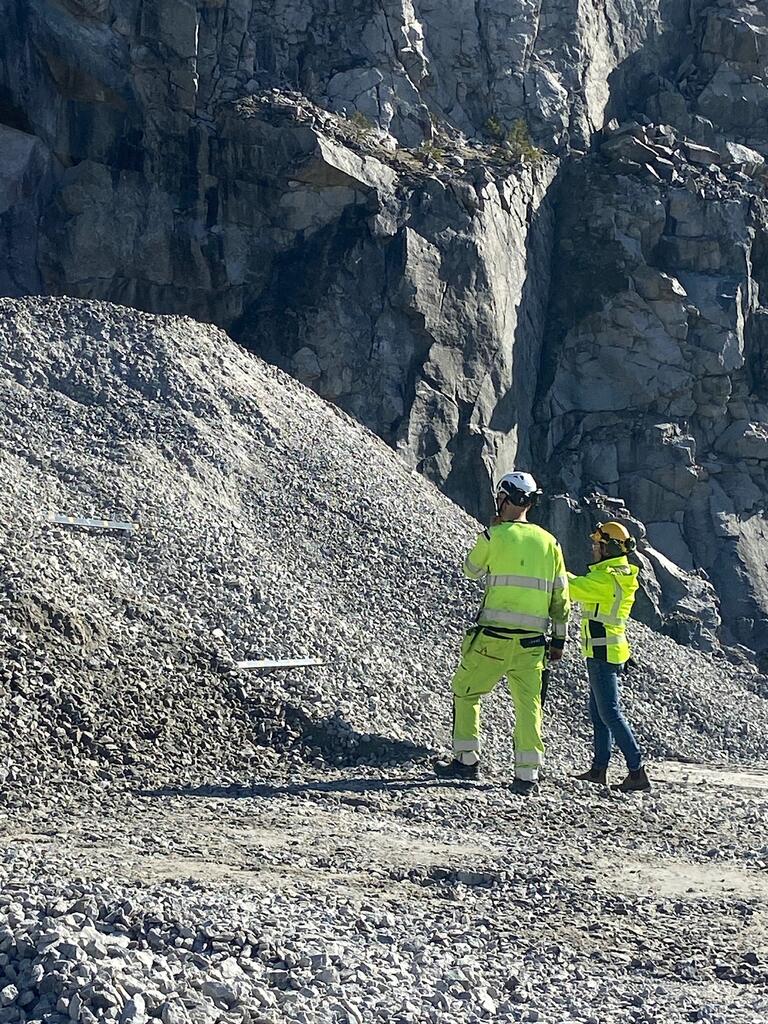
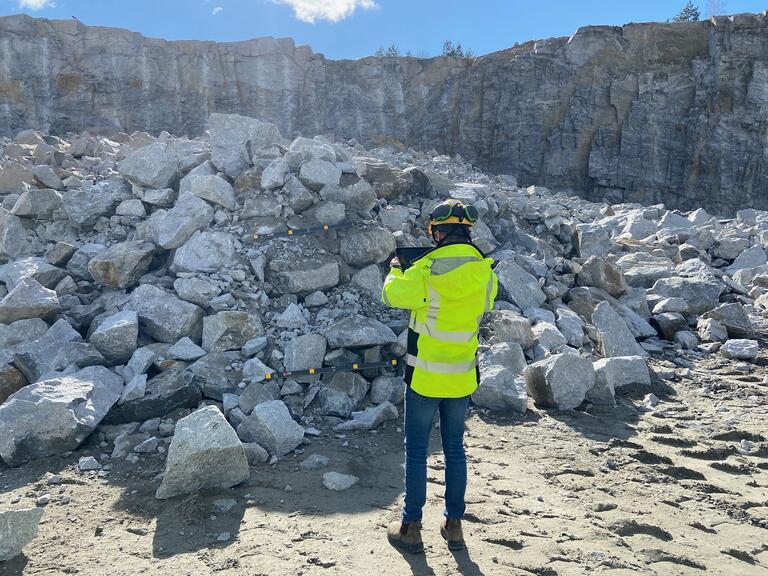
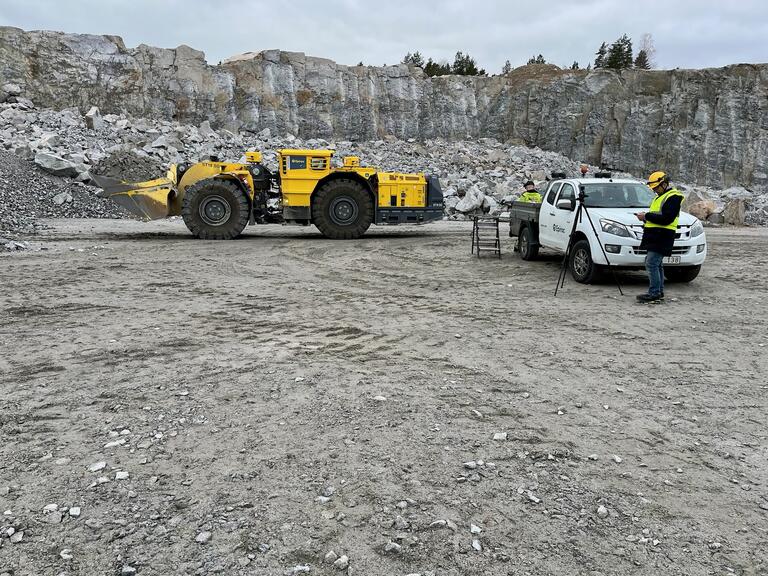
Gaining valuable insights into excavation material properties, including type, density, cohesion, and size distribution, can enhance the efficiency of various operations in sectors like mining, construction, aggregate handling, and space exploration and development. This research explores using proprioceptive sensing and wavelet analysis for automatic classification of fragmented rock, suitable for environments with poor visibility. Experiments with small and large equipment demonstrate the potential of custom wavelet features in estimating rock size distribution, offering a promising new technique for mean rock size estimation using only proprioceptive information.
Related Publications
U. Artan, M. Magnusson, and J. A. Marshall. Digging for data: Experiments in rock pile characterization using only proprioceptive sensing in excavation. To appear in IEEE Transactions on Field Robotics. Accepted February 5, 2026. [Preprint PDF]
U. Artan. Automatic Classification of Fragmented Rock using Proprioceptive Sensing. Ph.D. Thesis, The Robert M. Buchan Department of Mining, Queen’s University, October 2022.
U. Artan, H. Fernando, and J. A. Marshall. Automatic material classification via proprioceptive sensing and wavelet analysis during excavation. In Proceedings of the 2021 IEEE/ASME International Conference on Advanced Intelligent Mechatronics (AIM), Delft, The Netherlands, July 12, 2021. DOI: 10.1109/AIM46487.2021.9517696
U. Artan and J. A. Marshall. Towards automatic classification of fragmented rock piles via proprioceptive sensing and wavelet analysis. In Proceedings of the 2020 IEEE Conference on Multisensor Fusion and Integration for Intelligent Systems, Karlsruhe, Germany, September 2020. DOI: 10.1109/MFI49285.2020.9235261
Patent Application
U. Artan, H. Fernando, and J. A. Marshall. Automatic classification of excavation materials. Filed August 26, 2021. Published October 27, 2022.
Project Partners & Funding
This work was carried out within the Impact Innovation program Swedish Metals & Minerals under grant 2024-02697, a joint effort of the Swedish Energy Agency, Formas, and Vinnova, and by Epiroc Rock Drills AB. Additional support was provided by the Knowledge Foundation (KK-stiftelsen) through the Synergy project TeamRob under grant 20210016. Early development of the concepts presented in this paper was supported by the NSERC Canadian Robotics Network (NCRN) under grant NETGP 508451-17.