Donate Now
Brittany Jennings
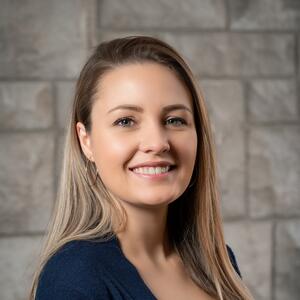
Brittany Jennings
Operations Director, MEERL
Geological Sciences and Geological Engineering
Queen's University
Operations Director, MEERL
Geological Sciences and Geological Engineering
Queen's University

Academic Director & Adjunct Faculty Member
Chief Scientific Officer (Retired)
Imperial Metals
Dr. ‘Lyn Anglin is an experienced geoscientist with proven leadership skills, and a strong background in research management, government relations and public communications. She was Chief Scientific Officer and Vice President Environmental Affairs at Imperial Metals, a Vancouver–based mining company, from Sept 2014 to Dec 2018. In May 2022 she joined the Board of Imperial Metals as a Director. In August 2024 she was appointed Academic Director of the Master of Earth and Energy Resources Leadership (MEERL) Program at Queen's University in Kingston, Ontario.
Prior to joining Imperial as CSO, she was the inaugural President and CEO of Geoscience BC (GBC), a non-profit geoscience research organization focused on attracting resource development investment to B.C.. Before joining GBC, ‘Lyn spent almost 20 years with the Federal Government, as a Research Scientist and Subdivision Head in the Mineral Deposits Division, and as Associate Director of the Pacific Division of the Geological Survey of Canada. She also spent three years as a Science Advisor and Policy Coordinator with the SR&ED Investment Tax Credit Program in Revenue Canada.
Lyn’s accomplishments have been formally recognized by her peers. In 2021 she was designated a Fellow of Geoscientists Canada (FGC). In 2020 she was awarded a CIM Distinguished Lectureship. In 2019, she received both the J. Willis Ambrose Medal from the Geological Association of Canada, and the C.J. Westerman Memorial Award from Engineers and Geoscientists BC. In 2014, she received a Special Tribute Award from the Association for Mineral Exploration BC in recognition of her work at Geoscience BC, and in 2010 she was named as one of the top 100 Global Inspirational Women in Mining by WIM (UK).
She previously served as: President of the Geological Association of Canada (GAC); Chair of the Board of the Association for Mineral Exploration BC (AME BC); President and Trustee of the Society of Economic Geologists Foundation (SEGF); a member of Engineers and Geoscientists BC (EGBC) Council; and, a member of the Premier's Women's Economic Council (PWEC) in BC. She is presently also volunteering for the BC Lymphedema Association as their Vice President.
Teaches Field Based Synthesis
Program & Learning Coordinator and Adjunct Faculty Member
Geological Sciences & Geological Engineering
Queen's University
Teaches Field Based Synthesis
Mike Rose, Artsci’79, and Susan Riddell Rose, Sc’86, have donated an additional significant gift of $1.1 million to the Master of Earth and Energy Resources Leadership (MEERL) program to help the next generation of natural resources leaders respond to environmental challenges in innovative and sustainable ways.
Adjunct Faculty Member
Strategy Principal (Retired)
Cenovus Energy
John teaches about pathways for a sustainable energy transition. The perspective is the global energy system, how it became, and how it could evolve in the 21st century in response to demographic and climate challenges. Practicality stems from analysis of real-world constraints on continental, national and regional energy systems, in both the developed and developing world. John draws on a career as an earth science researcher and leader, petroleum development manager, corporate strategist, and founder of a net-zero carbon fuels company.
John grew up in Vancouver, BC and obtained a BSc in geophysics from the University of British Columbia. After joining the petroleum industry in Calgary, he completed an MSc (seismology) and PhD (continental tectonics) at the University of Calgary. John’s early and mid-career involved petroleum discoveries and development mainly in western Canada. In that span, he was a noted developer of seismic technologies for high-fidelity recordings and quantitative detection of reservoir properties.
In later career, John became a natural gas development manager at EnCana, then one of North America’s largest natural gas production companies. He led teams that created industry-leading coal-bed methane production practices. He supported academic-industry research on geological storage of CO2 and was the driver for Cenovus’s contribution of surface and mineral rights to Carbon Management Canada for their research station near Brooks, Alberta.
John managed strategy development at Cenovus Energy, a major Canadian oil sands producer, until his retirement in 2015. He guided the design of its environmental, technology and innovation, communications, organizational, and markets and products strategies.
John also served as president of the Canadian Society of Petroleum Geologists in 2010, with 3000 members and 300 volunteers. He was charged with revitalizing the vision for the society in response to the changing industry environment.
Along with teaching for the Queen’s MEERL program, John recently completed the chemical engineering IP designs for a net zero carbon synthetic diesel fuel company, OCHIUS. When time permits, he’d like to compile his lectures into a book that explains truly scalable energy resources and why building a CO2-neutral energy system will take this century.
Teaches Resource Life Cycle Overview - Energy and the Energy Life Cycle Track
Adjunct Faculty Member
Senior Advisor (Retired)
United Nations
Andrew Russell is a senior international development professional with over 35 years of experience leading complex peacebuilding and organizational change initiatives in fragile, conflict-affected, and transitional societies. For decades, he served within the United Nations system, including in key leadership roles at the UN Development Programme (UNDP) and as the UN Development Coordinator and UNDP Resident Representative in Kosovo. He played a pivotal role in various rounds of UN reform efforts, advising the UN Secretariat on change management and fast-tracking the establishment of the reinvigorated global UN Resident Coordinator System.
Beyond his operational leadership, Andrew maintains a strong commitment to academia and capacity building. He has held adjunct faculty and lecturer positions throughout his career, including at Columbia University, Haverford College, Oxford Brookes University, the Open University of Catalonia, and Queen’s University, where he has also served as Interim Director for the MEERL program. He currently designs and delivers graduate-level courses focusing on organizational leadership, peacebuilding, and the critical skills of stakeholder engagement and conflict transformation.
Teaches Engaging Effectively
Adjunct Faculty Member
Arthur B. McDonald Canadian Astroparticle Physics Research Institute
Queen's University
Alexandra Pedersen (she/her) is a human geographer who brings a critical social science lens into the classroom. Alex, as she prefers, earned a PhD in Geography (Queen’s University) and holds a master’s (University of Northern British Columbia) and undergraduate (BAH, University of Guelph) degrees in international studies. Her graduate research focused on Indigenous and non-Indigenous communities’ experiences with, and resistance to, imposed development. As an Adjunct Professor, Alex embraces new learning platforms and revels in opportunities to engage with undergraduate, graduate, and professional students for both their studies and career aspirations. She continues her activist academic work through teaching, outreach, supervision and research as an Adjunct Professor in MEERL and Geological Sciences and Geological Engineering. Her photography related to the struggle of the Indigenous Q’eqchi’ Maya of Guatemala and their resistance to the Fenix nickel mine in El Estor, Guatemala has been featured at the Canadian Museum for Human Rights (Winnipeg, MB), The Guardian, and Lo Donna (an Italian women’s magazine). Her published academic and non-academic writings can be found in the Journal of Latin American Geography, Harvard’s ReVista Magazine, TeleSur, and Upside Down World, and more recently in the edited book Testimonio: Canadian Mining in the Aftermath of Genocides in Guatemala. Alex is proud to be a member and Co-Chair of MiningWatch Canada’s Board of Directors; an organization celebrating 25 years of experience supporting Indigenous and non-Indigenous communities facing potential or actual industrial mining operations that affect their lives and territories. Outside of teaching and research, Alex is the President of the Limestone Beekeepers’ Guild and can be found in her apiary buzzing with the bees. She can also be found in her day job as the Manager for Equity, Diversity, Inclusion, and Indigenization (EDII) Capacity Development with the McDonald Institute.
Teaches Operating Effectively, Law, Policy and Ethics and the Sector-Focused Project
Continuing Adjunct Faculty Member
Founder & President
Limestone Analytics
Bahman Kashi is an adjunct lecturer at Queen’s University, and the president of Limestone Analytics. Prior to Limestone, he worked for 8 years as a consultant in the areas of public investment management, economic analysis of development projects, and evaluation of social programs.
Dr Kashi has worked on capacity building and technical advisory projects in Canada, Cameroon, Rwanda, Kenya, South Africa, Zimbabwe, Nigeria, Haiti, Malaysia, United States, Cyprus, Honduras, El Salvador, and Switzerland. His research interests include economics of energy markets, integration of environmental and social impacts into cost-benefit analysis, monitoring and evaluation for performance management and learning, and institutional aspects of investment management.
Dr Kashi is also the director of the Certified Professional Impact Analyst (CPIA) programs at Queen’s University. CPIA is a series of executive programs offered to individuals involved in planning, budgeting, designing, implementing, and evaluating major investment projects in the areas of international development, public investments, regulation, and social programming.
Teaches Economic Essentials Part I & II