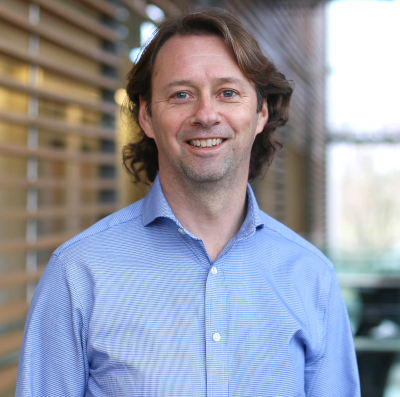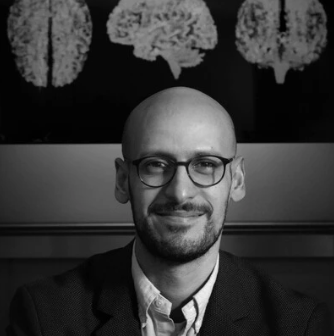
Dr. Mohamed Abdelhack (Speaker in person)

Date

Wednesday October 28, 2026
12:00 pm - 1:30 pm

Location

Abramsky Hall Rm 002
[Dr. Mohamed Abdelhack]

Speaker: Dr. Mohamed Abdelhack
Title: Uncovering Common and Distinct Neural Associations of Sleep, Mental Health, and Cognition Using Neuroimaging and Big Data

Abstract:
Mental health disorders impose a significant burden of illness worldwide. They are often accompanied by alterations in neural processing and connectivity that affect cognitive functions. Understanding the biological substrates of mental disorders remains a complex challenge at the intersection of psychiatry, psychology, neuroscience, and informatics. The advent of big data in neuroimaging has enabled the construction of data-driven models linking brain circuits to various phenotypes. Using data from over 30,000 participants across multiple datasets, associations between sleep, depression, and cognition were investigated. Opposing neural signatures in resting-state and task-based conditions were revealed. Specifically, hyperconnectivity between brain regions during resting state, but hypoconnectivity during task conditions in individuals with symptoms of insomnia and depression. These findings may reflect disruptions in synaptic homeostasis and could guide the development of novel therapies and medical interventions. 

Affiliation: Centre for Addiction and Mental Health

Mr. Duoaud Shah (Speaker in person)

Date

Wednesday October 21, 2026
12:00 pm - 1:30 pm

Location

Abramsky Hall Rm 002
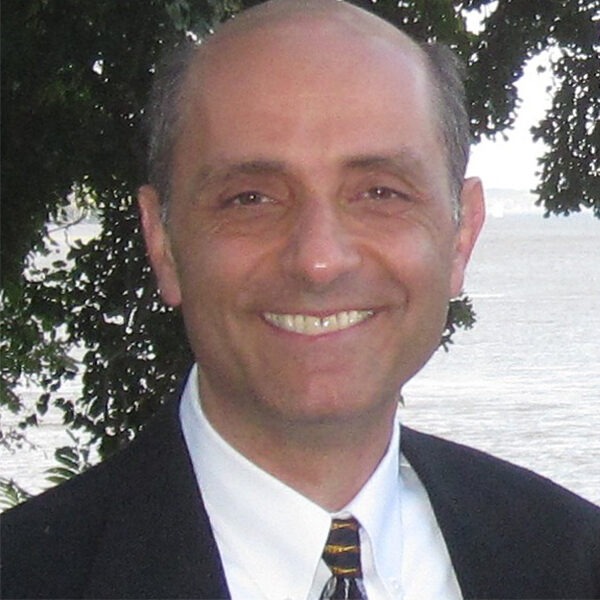
[Mr. Duoaud Shah]

Speaker: Mr. Duoaud Shah
Title: From Physics Lab to Phase III: Data, AI, and an Unlikely Path to Imaging Biomarkers

Abstract:
Most AI models in medicine are not held back by algorithms. They are held back by access to data: who holds it, who can share it, and under what rules. In this talk, Duoaud will explain how Altis Labs built one of oncology’s largest real-world imaging, clinical and outcomes databases, covering more than 239,000 cancer patients across 126 hospitals. He will show how that database was used to train IPRO, an AI model that predicts survival from routine CT scans. Drawing on a post-hoc analysis of a Phase III lung cancer trial, he will show how an imaging biomarker that reads the whole scan, not just the tumour, could have detected a treatment effect nearly a year before the trial’s primary analysis. He will also discuss his consulting work through Actuate Consulting with the Centre for Aging + Brain Health Innovation (CABHI), where he evaluates and advises early-stage brain health companies. He will cover what separates technologies that reach patients from those that stall. Finally, he will reflect on his non-linear career from physics to partnerships, and offer practical advice to trainees considering paths beyond the traditional academic track.

Affiliation: Altis Labs

Dr. Dave Andrew (Speaker in person)

Date

Wednesday October 7, 2026
12:00 pm - 1:30 pm

Location

Abramsky Hall Rm 002
[Dr. Dave Andrew]

Speaker: Dr. Dave Andrew
Title: Wired for God and Country: Believing the Incredible

Abstract:
Religiosity has developed independently in most societies at many different times and places during human evolution. This suggests that this behavior is genetically based and is selected to support species survival. As a result of this evolutionary selection, our brain`s natural default is to believe improbable ideas that nevertheless bond us to the tribe. It is difficult to over-ride such inherent beliefs. Why is the concept of a god (or gods) common to human societies and how do the non-scientific concepts of Dualism and religion/morality have a role?

Affiliation: Department of Biomedical and Molecular Sciences, Queen's University

Dr. Caroline Landelle (Speaker in person)

Date

Wednesday September 23, 2026
12:00 pm - 1:30 pm

Location

Abramsky Hall Rm 002
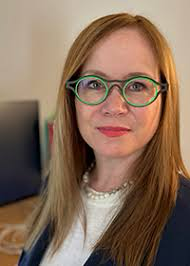
[Dr. Caroline Landelle]

Speaker: Dr. Caroline Landelle
Title: Mapping the human spinal cord function with fMRI: from research to clinical application

Abstract:
In the past decades, magnetic resonance imaging (MRI) has greatly advanced our understanding of the structural organization of the human spinal cord, enabling the development of imaging biomarkers for spinal cord disorders. However, functional alterations can sometimes precede detectable structural damage, highlighting the need for advanced neuroimaging methods capable of mapping spinal cord functional organization across multiple segments simultaneously. In this presentation, I will provide an overview of the current state of spinal cord functional MRI, with particular emphasis on analytical approaches used to address fundamental and clinical research questions. Finally, I will discuss emerging clinical applications across different pathologies affecting the spinal cord. Together, this presentation will highlight how spinal cord functional MRI is becoming a crucial complement to structural imaging, offering new opportunities to detect early dysfunction, inform therapeutic interventions, and ultimately improve clinical assessment in spinal cord disorders.

Affiliation: The Neuro: Montreal Neurological Institute-Hospital, McGill University

Dr. Valeriya Gritsenko (Speaker in person)

Date

Wednesday September 16, 2026
12:00 pm - 1:30 pm

Location

Abramsky Hall Rm 002
[Dr. Valeriya Gritsenko]

Speaker: Dr. Valeriya Gritsenko
Title: From Force Prediction to Impedance Control: How the Nervous System Compensates for Gravity and Interaction Moments

Abstract:
Accurate movement requires more than producing the joint torques needed to move the limb. The nervous system must also stabilize a multijoint body whose segments mechanically interact and whose loading changes with gravity. This talk presents a unified neuromechanical framework in which motor commands combine predictive compensation for gravitational and intersegmental moments with the regulation of limb impedance. Experiments across normal and altered gravity show that static muscle activation and antagonist co-contraction change together with gravitational load, while phasic muscle activation drives motion with separate contributions to co-contraction. Experiments with TMS further show that corticospinal excitability anticipates resistive interaction moments and scales with the gravitational moments required during posture and reaching, supporting a descending contribution to both limb dynamics compensation and postural control. These results reveal why motor commands cannot be understood as a direct mapping from desired motion to muscle torque: co-contraction generates stiffness and damping that stabilize the limb but are invisible to inverse dynamics. Together, these findings support a dual control architecture that balances predictive force compensation with impedance regulation, allowing the nervous system to counteract resistive interaction moments, exploit gravity and assistive interaction moments, and maintain robust movement across changing mechanical environments.

Affiliation: West Virginia University, School of Medicine

The interoceptive origins of reward

Date

Wednesday March 11, 2026
12:00 pm - 1:00 pm

Location

Abramsky Hall Rm 002

Affiliation: McGill University, Depts. of Neurology and Neurosurgery, Medicine, and Psychology 

Summary: Where do reward signals for food come from? In this lecture I will discuss findings from work in humans and in animals demonstrating that the value of food lies, not in the food itself, the pleasure it evokes or the nutrients it supplies to the body, but rather in the organism’s ability to transform nutrients into vital resources, such as cellular fuel. This information must then reach brain reward circuits to update the value of foods and support reinforcement learning so that both behaviour and metabolism can be optimized.  Experiments will be presented to outline the gut-brain circuits that underlie these processes, and to illustrate their role in perception, behavior and metabolism. Finally, we will consider how the modern food environment impacts gut-brain reinforcement and discuss potential implications for health.

Zoom link: https://queensu.zoom.us/j/92609950615?pwd=V3N1UDRneUliKzY4R25SS1RGelZ0dz09