
 Centre for Health Innovation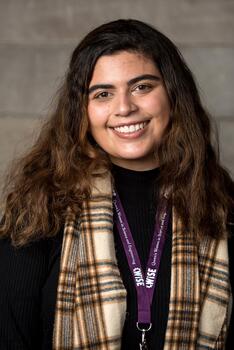
Alejandra Correa Belloso (she/her)
M.Sc. in Bioengineering, Ph.D. (c) in Biomedical Engineering
Alejandra arrived to QBJB as an Exchange Research Student with the Emerging Leaders in the Americas Program (ELAP) Scholarship in 2022, where she completed the experimental component of her master’s degree on the improvement and validation of a bioreactor system coupled with mechanical loading for the ex vivo culture of live trabecular bone explants. She is currently onto the next stage of this work as part of her doctoral research.
Combining experimental and computational approaches, Alejandra is studying how age-related musculoskeletal diseases, and the time-dependent mechanical properties of human trabecular bone affect the bone adaptation process to mechanical stimulation.
OTHER: Alejandra is also passionate about Science Communication and inclusive Science, Engineering, Technology and Math (STEM) Education. She frequently volunteers for the Chair for Women in Engineering at Queen's University.
Alejandra's LinkedIn Profile | email: alecorrea@alumnos.uai.cl
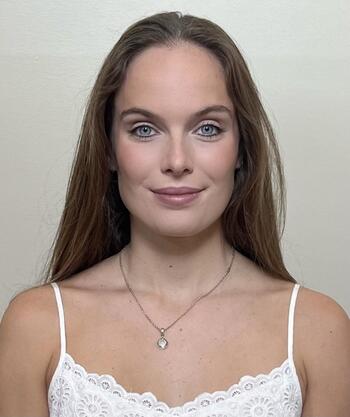
Emily Cameron (she/her)
Bachelor of Applied Science (BASc): Biomechanical Engineering at Queens, Master of Applied Science (MASc): Biomechanical Engineering at Queens, Doctor of Philosophy (Ph.D) Candidate: Biomechanical Engineering at Queens
Emily has been a member of the Bone and Joint Biomechanics Lab since the summer of 2020. During her undergraduate and master’s studies, she conducted research investigating the effects of CT imaging parameters on quantitative bone density measurements and developed patient-specific finite element models to evaluate fracture risk in individuals with benign bone tumours. She successfully defended her master’s thesis, Knee Joint Loading and Fracture Risk Analyses of Patients with Benign Bone Tumours: A Finite Element Analysis.
Emily is currently a Ph.D. candidate in Mechanical and Materials Engineering at Queen’s University. Her research integrates patient-specific computational modelling, motion analysis, and experimental biomechanics to investigate how mechanical loading influences bone adaptation and implant fixation in total joint replacement. Her work aims to improve the understanding and prediction of long-term implant fixation outcomes by developing and validating computational and experimental frameworks for studying the bone-implant interface.
Emily's LinkedIn Profile | email: 17egc5@queensu.ca
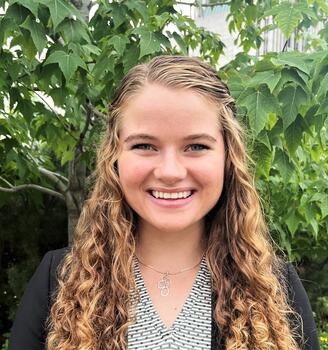
McKinley Van Klei (she/her)
BASc. in Biomechanical Engineering, MASc in Biomedical Engineering (candidate) | Queen's University
McKinley is currently a Master's student in the Q-BB Lab. She started working in the lab as an undergraduate student in 2020. With the intention to complete work that will lead to improved patient outcomes related to implant orthopaedics, her work has mainly focused on developing a geometrically accurate model of human trabecular bone to support establishing accurate computational models (FEM). She presented posters of her work at conferences (ORS 2022, NACOB 2022, ORS 2023) alongside other students in the lab. Prior to starting the master's she was helping two PhD students with work on the trabecular bone core project and she created the Q-BJB Lab website. During her master's, she attended ASBMR 2024, completed an international internship at EMPA (Swiss Federal Laboratories for Materials Science and Technology) in Switzerland, presented a podium talk on behalf of Dr. Heidi Ploeg at the CMBBE 2025 conference in Spain, and her thesis project is a part of a Canadian Space Agency-funded ex vivo bone study. Following her master's, McKinley is looking to apply strong leadership abilities in a project management role to deliver high-impact healthcare projects that improve patient outcomes, or work within the education system to improve engineering education.
McKinley's LinkedIn Profile | email: 18msmv@queensu.ca
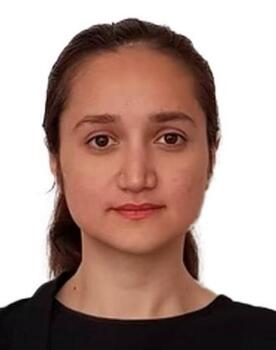
Mahsa Zojaji (she/her)
MSc, PhD (candidate)
In her MSc program, Mahsa investigated the accuracy of Euler-Bernoulli and Timoshenko beam theories in estimation of long bones flexural rigidity through biomechanical testing and computational modeling using a bone surrogate. Mahsa's PhD research focuses on numerically simulating trabecular bone remodeling and validating the simulations through experimental and histological testing. Mahsa had the opportunity to contribute to the C4Bio project, a collaborative endeavor with an international biomechanics laboratory. Additionally, she took on the responsibility of designing a fixture for rate hind limb unloading (HLU) as part of the project.
Mahsa's LinkedIn Profile | email: mahsa.zojaji@queensu.ca
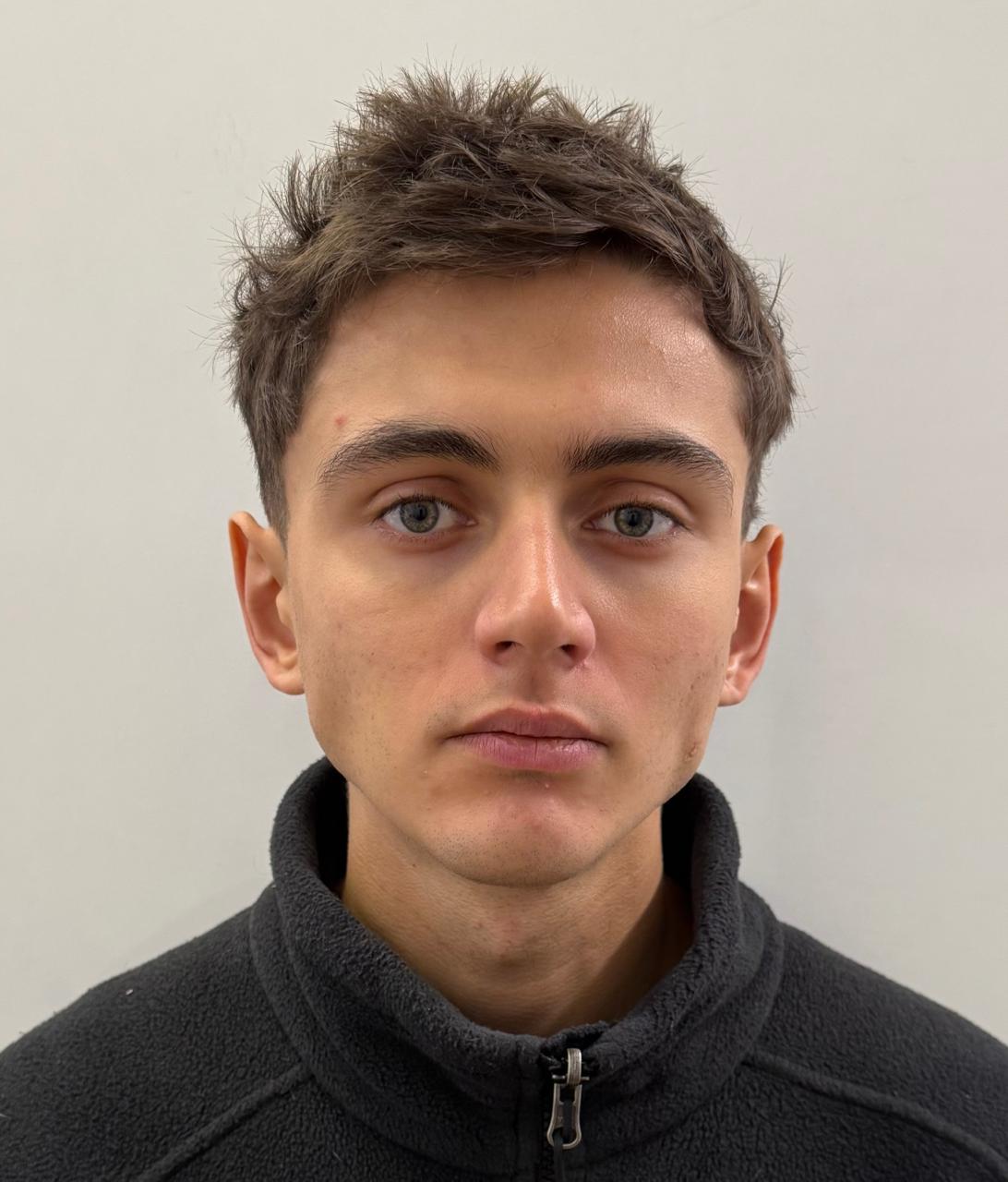
Vincenzo Marchese Saavedra (he/him)
BS in Bioengineering, MSc in Bioengineering
Vincenzo is currently working on the design, fabrication, and the mechanical and biological characterization of 3D-printed TPMS scaffolds for bone tissue engineering applications. His research focuses on understanding how structural gradients influence scaffold architecture, mechanical performance, and biological response. As a Visiting Research Student at Queen’s University, he is also involved in micro-CT-based characterization and mechanical analysis via FEA of porous biomaterial structures.
Vincenzo is pursuing a Master of Science in Bioengineering at Universidad Adolfo Ibáñez, Chile, where his work combines additive manufacturing, biomaterials, scaffold design, and experimental validation.
Vincenzo´s LinkedIn Profile | email: vincenzo.marchese2001@gmail.com

Maryam Ghaferi (she/her)
Master of Manufacturing, Master´s in Biomechanical Engineering
My research at the BJB Lab focuses on the design, experimental testing, and numerical simulation of bone-inspired porous structures fabricated using additive manufacturing and bone-mimicking materials. The goal of this work is to investigate the effects of shear loading on bone-like structures and evaluate their mechanical response to better understand bone behavior under shear stress.
Email: m.ghaferi@queensu.ca
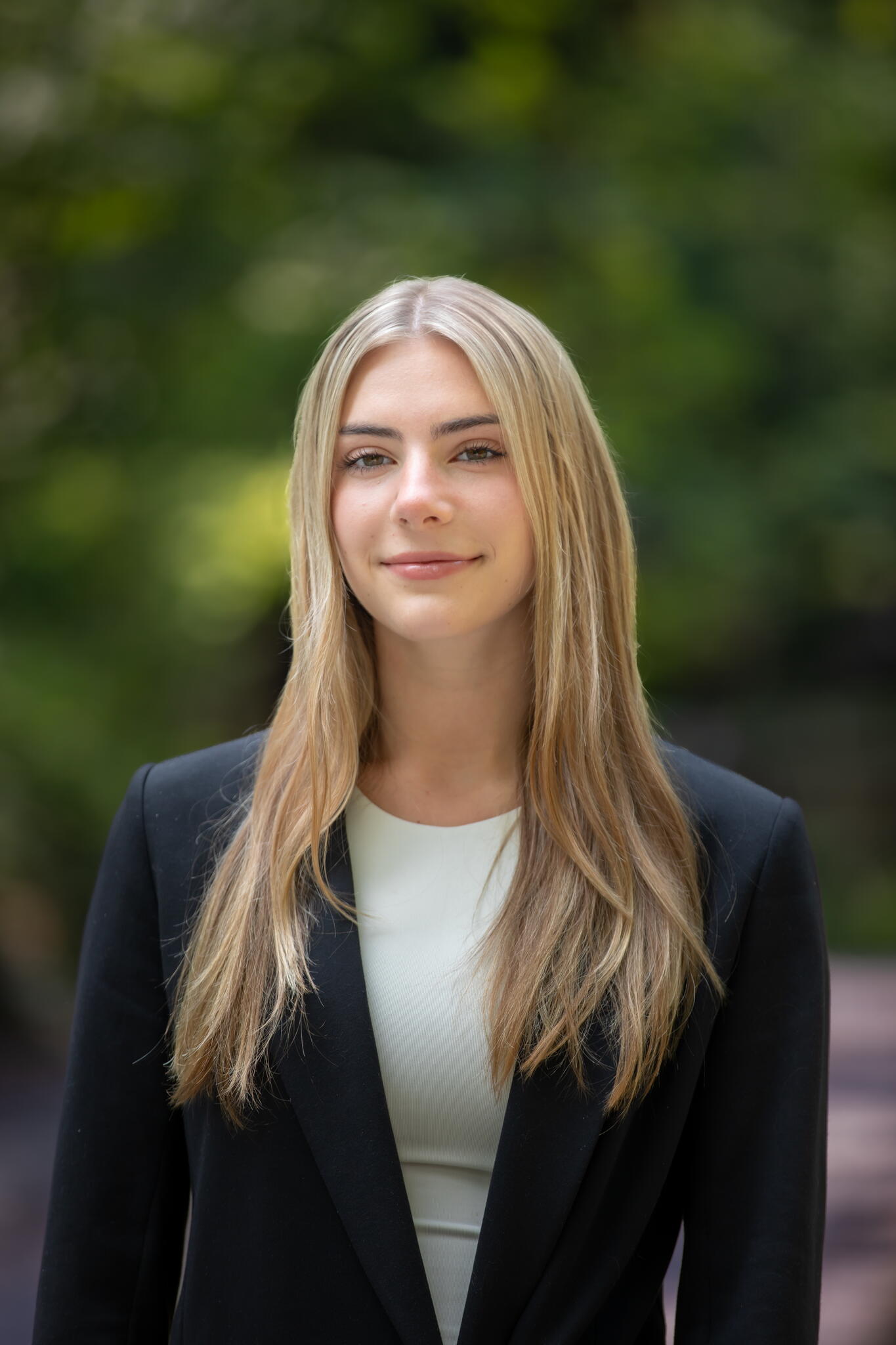
Ella Connop (she/her)
Undergraduate Student in Biomechanical Engineering
Ella is currently working on the mechanical testing and analysis of rat tibias as a part of the CSA project on the effect of high-dietary phosphate and absence of mechanical loading on bone tissue integrity. As part of this work, she is developing a 3D Slicer software module to calculate the density-weighted centroid and moment of inertia to produce mechanical strength properties. She has also been helping with a doctoral project in the dynamic finite element analysis of hip resurfacing arthroplasty.
Ella´s LinkedIn Profile | email: 22vht2@queensu.ca