When I started graduate school at Queen’s University, one of the first things I did was look for a neuroscience club for women-identifying students. During my undergraduate degree, I co-founded the Women in STEM club at Simon Fraser University, having recognized the lack of community and representation for women in the sciences. Most of my professors were men, yet my class was split pretty evenly between women and men. I often felt isolated and my journey in science seemed unnecessarily difficult – and science wasn’t easy to being with.
The discrepancy is clear to me. Women are interested in STEM, but systemic barriers, stereotypes, and a lack of role models continue to limit representation in the workforce. I recognized that challenge during my undergraduate years, and so did Blake Noyes, a PhD candidate at the Queen’s University Centre for Neuroscience Studies.

Blake runs the Women in Neuro (WiN) club at Queen’s, a student-led initiative at focused on creating a supportive community for women-identifying neuroscientists. The club focuses on research discussions, mentorship opportunities, outreach activities, and an annual conference, to help students navigate academic and professional pathways, while inspiring the next generation of women scientists.
Why was Women in Neuro created?
For Blake, the idea of WiN began with a simple observation, “I came up with the plan after chatting with some fellow students in my program,” she explained. “At the time, we were predominantly women (and I think we still are) but the faculty, including our supervisors, were predominantly men.”
While their supervisors were supportive, Blake and her peers noticed that some experiences specific to women in science were difficult for male mentors to fully relate to. She explained, “though our supervisors are incredibly supportive, there are certain challenges like biases about women in science or managing pregnancy during graduate school that they don’t have experience with.”
Recognizing these issues, Blake and her colleagues set out to build something new. She says, “we wanted to build a community to support each other [through] these challenges and provide mentorship from women who have gotten through it.”
Challenging the Competitive Culture of Academia
Beyond issues of representation, there is an inherent competitiveness in academia. Graduate students frequently compete for the same grants, fellowships, and conference opportunities, and these pressures that can intensify feelings of isolation.
“Grad school can feel competitive at times,” Blake says. “We are often all applying [for] the same grants. We are all trying to win the oral presentation spots at conferences. But I think we have a lot to learn from each other.”
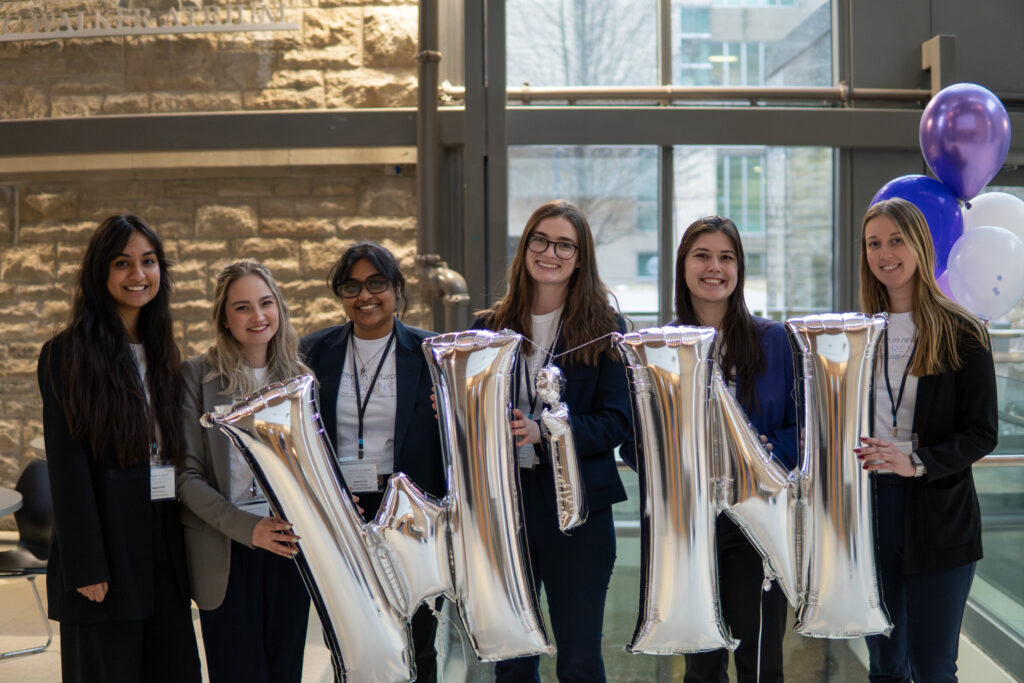
Women in Neuro aims to counter that culture by emphasizing collaboration and community building. One example is the organization’s annual Women in Neuro conference, which highlights the diverse research of women neuroscientists across Ontario. The next conference will take place on March 21, 2026.
Events like this one create spaces where students can present their work, meet potential mentors, and build networks that extend beyond their own institutions.
“Getting the community together makes our research stronger and grows our network heading into the future,” Blake says.
Inspiring the Next Generation
Another key feature of the club is to inspire the next generation of women scientists. As Blake says: “I think it’s super important for young girls to know it’s a possibility to be neuroscientists, or scientists in general.”
Growing up, she recalls watching science programs like Bill Nye the Science Guy but rarely seeing women represented on the show. “When I was growing up, we watched Bill Nye, and I didn’t really see a lot of women in science.”
To help overcome this issue, the organization runs outreach programs for students ranging from elementary school to high school. Activities are tailored to different age groups and emphasize hands on learning.
“With young kids, we introduce the lobes of the brain and do hands-on activities like making playdough neurons,” Blake explained. “Older students get more insight into the work we actually do, including testing equipment like microscopes, the EyeLink eye tracker, or the KINARM.” [Note: links included]
These experiences often provide students with their first real glimpse of neuroscience research. Perhaps more important are the informal conversations that follow. “More importantly, we have time to answer their questions about university and tell them how we ended up where we are today,” Blake says.
The Role of Connected Minds
Support from initiatives like Connected Minds has also played an important role in expanding Women in Neuro’s reach. “Connected Minds gave us funding for our conference last year towards the purchase of our new poster display boards,” Blake explains. “That was a huge help and saves us the cost of rentals in the future.”
Organizing conferences can be expensive, and student-run initiatives often rely on sponsorship and grants. Funding support allowed the team to keep registration accessible for students.
“We were able to keep last year’s student ticket price at $25,” Blake explained. “We thought that was a great deal for a full-day conference with lunch, snacks, and unlimited coffee.”
For some attendees, the impact has been lasting. “Some undergraduates told me the conference gave them the confidence to pursue graduate school,” Blake says. “Support from funders like Connected Minds has been very influential in advancing the next generation of neuroscientists.”
Looking Ahead
As neuroscience continues to evolve, collaboration is becoming increasingly central to scientific progress. “Scientific research has been moving towards more collaborative efforts,” Blake says.
By bringing together women researchers across institutions and career stages, Women in Neuro hopes to strengthen those networks and encourage future partnerships. Blake concludes by noting “bringing women in neuroscience together now will facilitate knowledge transfer and encourage future collaborations.”