
Beyond SRIM: Modern Binary Collision Approximation Tools
Date
Friday September 4, 202610:30 am - 11:30 am
Location
Dunning Hall RM 10Binary Collision Approximation (BCA) methods remain among the most widely used approaches for modelling ion transport, implantation, and radiation damage in materials. By treating energetic particle interactions as a sequence of independent binary collisions, BCA provides a computationally efficient framework for predicting ion ranges, energy deposition, and defect production across a broad range of irradiation conditions. Although the closed-source code SRIM has become synonymous with BCA modelling, it suffers from a number of limitations, in particular its lack of transparency. Drawing on the underlying physical principles of BCA, this talk will discuss best-practice methodologies for radiation damage calculations and demonstrate the advantages of the fully open-source code iradina for ion transport simulations.
The talk will also introduce RAΔAЯ, a new framework that leverages iradina, together with a suite of acceleration techniques, to deterministically calculate the spatial distribution of primary radiation damage in heterogeneous materials. By removing the assumption of material homogeneity that underpins conventional damage calculations, RAΔAЯ enables the direct incorporation of microstructural features, interfaces, and phase distributions into radiation damage calculations. Results show that microstructure can have a significant influence on both the magnitude and spatial distribution of point-defect production through the transport and interaction of primary knock-on atoms (PKAs) across multiple phases. These findings suggest that microstructural design can be exploited as a tool for mitigating radiation damage, opening new opportunities for the development of radiation-tolerant materials for nuclear and other extreme environments.
About the presenter
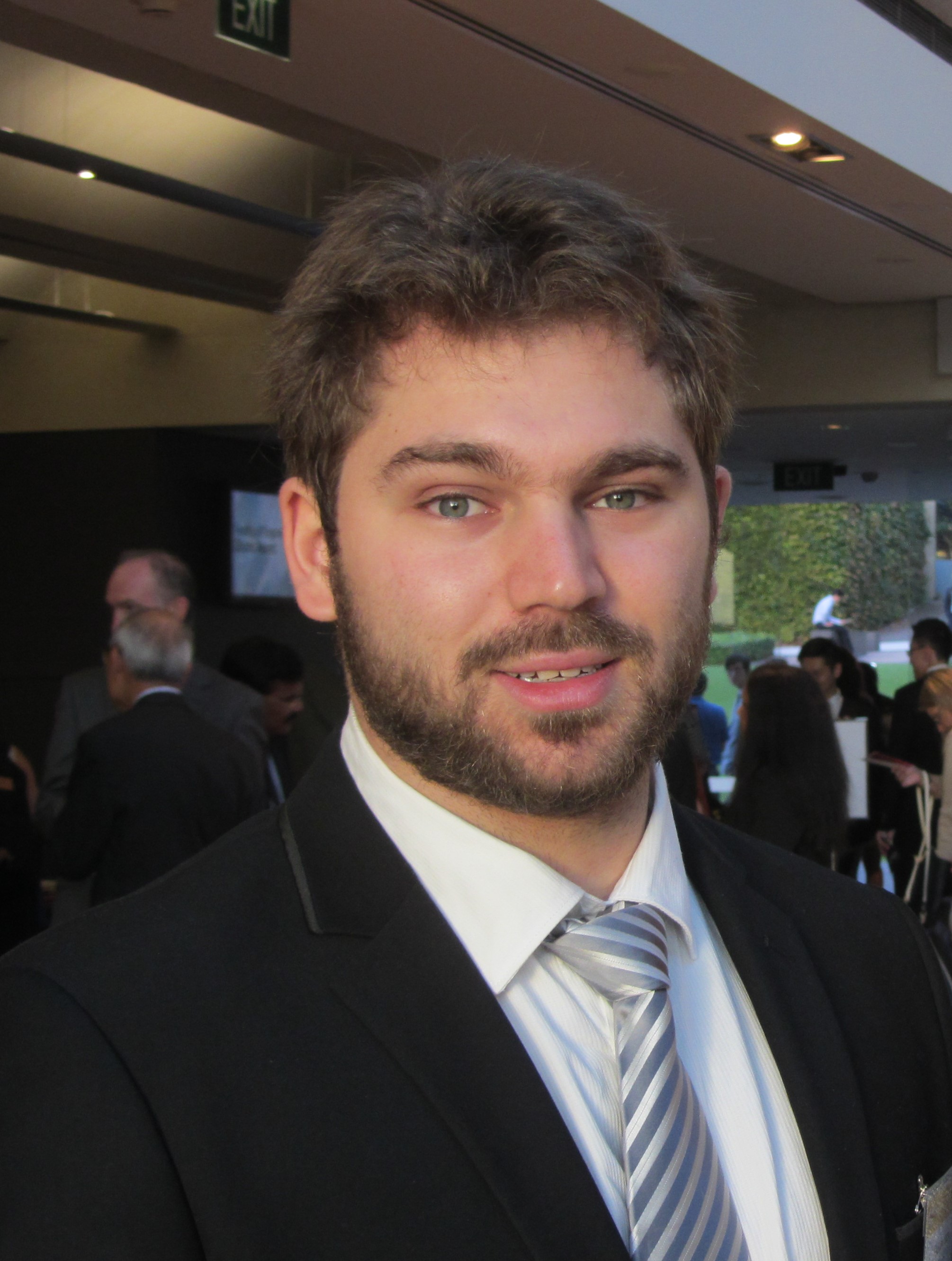
Dr. Matthew Brand is an Associate Lecturer in Nuclear Engineering at UNSW and a Fellow of the UNSW Nuclear Innovation Centre, where he also coordinates the Bachelor of Nuclear Engineering program. After earning dual University Medals in 2020, he completed his PhD in Nuclear Engineering in 2024. His research focuses on computational methods for characterizing radiation damage in nuclear materials, with codes currently utilized in fusion reactor design.