Gallant, Andraya
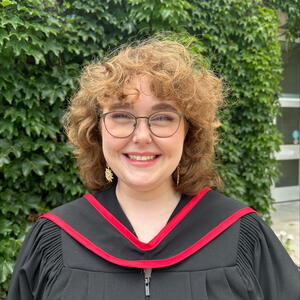
Andraya Gallant
MA Student | Thesis Option
She/Her | BAH, Sociology (University of Prince Edward Island)
Sociology
Queen's University
Supervisor: Dr. Victoria Sytsma
MA Student | Thesis Option
She/Her | BAH, Sociology (University of Prince Edward Island)
Sociology
Queen's University
Supervisor: Dr. Victoria Sytsma
Dr. Norma Möllers, Associate Professor with the Department of Sociology, was recently awarded an Insight Grant for her project on the racial political economy of security imperialism.
Insight Grants support large-scale research initiatives that advance knowledge and understanding in the social sciences and humanities. These grants are awarded over five years.
MA Student
She/Her | BAH, Sociology
Sociology
Queen's University
Supervisor: Dr. Nicole Myers
MA Student | Experiential
She/Her | BAH, Sociology, Minor in Psychology; Certificate, Gender and Sexual Studies, Queen's University
Sociology
Queen's University
Supervisor: Dr. Fauzia Husain
PhD Student
MA, Criminology; Honours Bachelor of Social Sciences, Anthropology, Minor in Criminology (French Immersion)
Sociology
Queen's University
Supervisor: Dr. Susanne Soederberg
MA Student | Thesis Option
She/Her | BAH Specialization in Sociology, Western University
Sociology
Queen's University
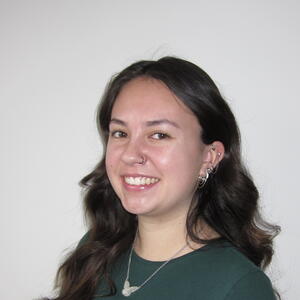
My research intends to investigate the trance-like state of intentional yet mindless scrolling through social media or other forms of online content. Through exploratory qualitative inquiry, I seek to reveal habitual phone use with the motivation to have the mind go blank as a patterned social response caused by societal pressures, rather than a mere lack of individual discipline. With screen time across the globe steadily increasing, this research will aim to develop digital sociology concepts that can inform future research and policy on digital media use. My interest in digital sociology is broad, making me flexible in creating and executing my research project.
PhD Student
She/Her | MA, Criminology, Wilfrid Laurier University; HBA, Criminology, Political Science, University of Toronto
Sociology
Queen's University
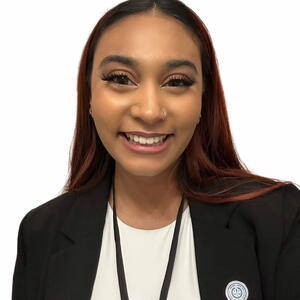
My research focuses on how to reduce youth recidivism rates by developing individualized, youth‑centered rehabilitation programs within the criminal justice system, tailored directly by the lived experiences of previously incarcerated youth. Instead of relying on the current standardized, one‑size‑fits‑all approach, my approach recognizes that justice‑involved youth face diverse social, psychological, and structural challenges that require individualized supports to meaningfully disrupt cycles of reoffending. By centering youth lived experiences, my research aims to create knowledge that can guide more effective reintegration strategies within Canada’s youth justice system.
Dr. Nicole Myers, Professor in the Department of Sociology, provides analysis on Canada’s tightening bail system in a CBC The Current segment. She discusses the unintended consequences of stricter bail rules, including increased remand populations and the broader social impacts of extended pre-trial conditions on individuals and families.
PhD Candidate
He/Him | B.A., Human Rights & Equity Studies; M.A., Sociology, Specialization in Feminist & Gender Studies
Sociology
Queen's University
Dr. Norma Möllers
Aiden's doctoral work examines how humanoid robotics and artificial intelligence are reshaping Canadian public understanding of these technologies, reproducing dominant sociotechnical arrangements while drawing on, yet often distorting, alt-right visions. Relying on qualitative methods, this exploratory study seeks to better understand contemporary sociotechnical imaginaries, specifically the processes and implications for Canadian development. The project will map the discursive landscape surrounding these technologies to uncover their role in shaping human-technological trajectories and, possibly, in perpetuating inequities. Ultimately, the goal is to produce an adaptive framework that addresses contemporary sociotechnical conditions and challenges Big Tech hegemony.