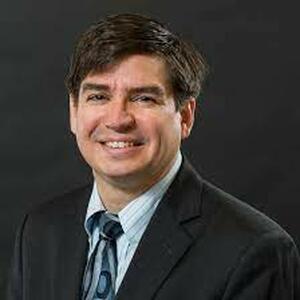
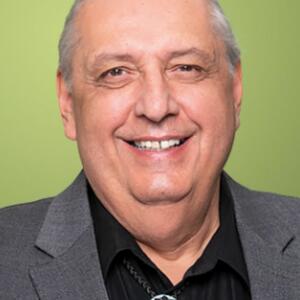
Wolfe, Robert

Robert Wolfe

Robert Wolfe

Emeritus Professor

ResearchGate

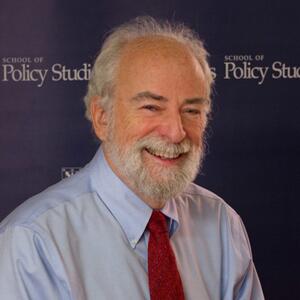
Robert Wolfe joined the School of Policy Studies in 1995 and retired in 2017.  He taught the required course on policy analysis in both the full-time and part-time Masters in Public Administration programs, and an optional course on trade policy. He was MPA Program Director from 2002 until 2008.

Wolfe has a B.A. in History from York University (1974), an M.A. in Canadian Studies from Carleton University (1976) and a doctorate in Political Studies from Queen’s University (1995). He joined the then Department of External Affairs in 1976 as a foreign service officer in the political/economic stream, serving abroad in Dhaka, Bangladesh (1977-79) and in the Canadian Delegation to the Organisation for Economic Co-operation and Development in Paris (1981-85). In Ottawa he worked in the National Security Section; the U.S. Trade and Economic Relations Division; as Executive Assistant to the Ambassador for Multilateral Trade Negotiations and Prime Minister’s Personal Representative, Economic Summit (Sylvia Ostry); and in the International Economic Relations Division. He retired from the Department of Foreign Affairs and International Trade (now Global Affairs) in 1995.

His ongoing research interests include Canadian trade policy, the World Trade Organization, and transparency mechanisms.

He was the founding director of the Queen's Institute on Trade Policy from 2009 to 2018.

Leiss, William

William Leiss

William Leiss

Emeritus Professor

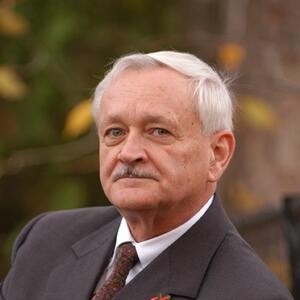
William Leiss is a Fellow and Past-President (1999-2001) of the Royal Society of Canada and an Officer in the Order of Canada.  He is currently Scientist and Associate Director for Risk Communication, McLaughlin Centre for Population Health Risk Assessment, University of Ottawa.  He was Professor, School of Policy Studies, Queen’s University (1994-2005), where he held the Eco-Research Chair in Environmental Policy; from 1999 to 2005 he was seconded to the Haskayne School of Business, University of Calgary, for the NSERC/SSHRC/Industry Research Chair in Risk Communication and Public Policy. 

He is author or senior co-author of In the Chamber of Risks:  Understanding Risk Controversies (2001), Mad Cows and Mother's Milk: The Perils of Poor Risk Communication (1997, 2004), Risk and Responsibility (1994), The Domination of Nature (1972), The Limits to Satisfaction (1976),  Under Technology's Thumb (1990), and C. B. Macpherson (1988, 2009), all from McGill-Queen's University Press; also Social Communication in Advertising (Routledge, 1986, 1990, 2005) and The Doom Loop in the Financial Sector, and Other Black Holes of Risk (2010), from the University of Ottawa Press.  A fourth edition of Social Communication in Advertising will be published by Routledge New York in 2018.

He has also written a trilogy entitled The Herasaga:  A Work of Utopian Fiction, composed of Book One:  Hera, or Empathy (2006); Book Two, The Priesthood of Science (2008);  and Book Three:  Hera The Buddha (2017). 

Over a period of thirty years he has done many consulting projects for industry and governments in the general areas of risk management and risk communication, across a very broad range of health and environmental issues.

In recent years he has been working on risk management and risk communication projects in the following areas:  storage and disposal of low- and intermediate-level nuclear waste, carbon capture and storage, and prion diseases (BSE and CWD).  A number of journal articles in these areas are currently in press.

Harrison, Peter

Peter Harrison

Peter Harrison

Emeritus Professor

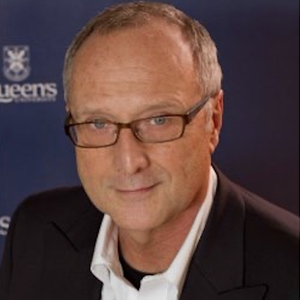
Dr. Peter Harrison is Professor Emeritus in the School of Policy Studies at Queen’s University, and the former Stauffer-Dunning Chair and Director of the School (2009-2013).  He joined SPS as the federal “Skelton-Clark Fellow” in 2008.

Dr. Harrison is a Geographer by profession and holds a B.A. (1st cl. Hon.) from the London School of Economics and Political Science (1969); an M.A. from the University of Victoria (B.C.) (1970); and a Ph.D. from the University of Washington (Seattle) (1973).  His research, writing and public speaking have focused on the management of the Oceans, with particular reference to the Arctic Ocean and Canada’s Northern regions and peoples.

Dr. Harrison’s first career (1973- 1981) was as Assistant, then Associate (tenured), Professor in the Department of Geography and Regional Planning at the University of Ottawa.

In 1981 Dr. Harrison joined the Public Service of Canada in the Department of Finance.  His public service career lasted nearly 30 years.  He was appointed to Assistant/Associate/Senior Associate Deputy Minister positions in a number of Departments including: the Privy Council Office (PCO); the Department of Finance; Indian and Northern Affairs Canada; Revenue Canada; and Human Resources Development Canada.  In the PCO he was Secretary to Priorities and Planning and Expenditure Review Committees of the federal Cabinet.

Dr. Harrison also served as Deputy Minister of a number of organizations including: Natural Resources Canada; the Department of Fisheries and Oceans (DFO); the Leadership Network; the National Research Council of Canada (NRC) (as Senior Research Fellow, Oceans); and Indian Residential Schools Resolution Canada.

Key contributions to public policy by Dr. Harrison include: amendments to the Indian Act (Bill C-115) to allow first Nations to tax non-Indians on First Nations’ land; shepherding the ratification of the United Nations Convention on the Law of the Sea (UNCLOS) by Canada in 2003; the creation of the “Oceans Action Plan” (2003); the investment of $150 million in the International Polar Year; the development of the previous government’s Northern Strategy; and the early commitment to the new “Canadian High Arctic Research Station” (CHARS), and leading the public service involvement in the “Residential Schools Apology” in the House of Commons. 

He was the international co-chair (with Professor SU Jilan) of the China Council for International Co-operation on Environment and Development (CCICED) Task Force on the “Sustainable Use of China’s Ocean and Coasts” which reported in November 2010. 

He has also served as a reviewer of: a number of graduate academic programs at several Canadian Universities; research proposals to funding agencies in Canada and abroad (Norway; European Union); and research reports prepared for the Royal Society of Canada and the Canadian Council of Academies.

Dr. Harrison was the Chair of the “International Polar Year (IPY) Conference: From Knowledge to Action” which was held in Montreal in April 2012.  For a number of years he has been the Chair of the Governing Council of the “Ocean Tracking Network”, which is based at Dalhousie University and funded as a “Major Science Initiative (MSI)” by the Canada Foundation for Innovation (CFI) (and, previously, by the Natural Sciences and Engineering Council of Canada (NSERC)). 

Dr. Harrison has been collaborating with the Pew Charitable Trusts (US) on the prevention of potential unregulated commercial fishing in the Central Arctic Ocean (CAO).  An international agreement to this effect was signed by ten jurisdictions (Canada; Russia; US; Norway; Denmark/Greenland; China; S. Korea; Japan; Iceland and the EU) in late 2018.  Dr. Harrison organized a number of roundtables of experts in Asia to promote the Agreement and its signing.  He continues to work with indigenous groups in the Arctic to ensure that an appropriate science program for the CAO is developed with their input.  In relation to this he is Vice Chair of the Board of Oceans North (a new Canadian NGO)

Dr. Harrison is a Fellow, and former Governor and Vice President, of the Royal Canadian Geographical Society (RCGS). 

He was awarded the Gold Medal celebrating the Golden Jubilee of Her Majesty Queen Elizabeth II for his contributions to Public Service, her Diamond Jubilee medal for his contributions to the field of Geography and to the RCGS, and the RCGS’ “Camsell Medal” for his contributions to the Society.

In December 2019, Dr. Harrison was appointed as a Member of the Order of Canada (C.M.) by the Governor General of Canada: “For his dedication to Canada's stewardship of the Arctic Ocean and to the enhancement of its role in Arctic and Northern issues".

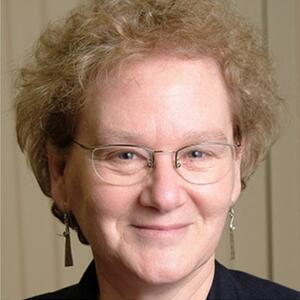
Banting, Keith

Keith Banting

Keith Banting

Distinguished Fellow and Emeritus Professor

Multiculturalism Policy Index [MCP]

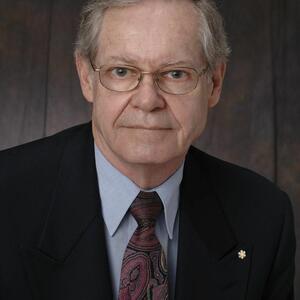
Keith Banting is the Stauffer Dunning Fellow in the School of Policy Studies and Professor Emeritus in the Department of Political Studies.  His research interests focus on public policy in Canada and other contemporary democracies. He has had a long-standing interest in the politics of social policy, and has extended this research to include ethnic diversity, immigration and multiculturalism. He is the author or editor of twenty books, as well as numerous articles and book chapters, and his publications have been translated in seven languages.

Professor Banting was appointed as a member of the Order of Canada in 2004. In 2012, he was elected as a Fellow of the Royal Society of Canada, was awarded an honorary doctorate by Stockholm University, and received a Queen Elizabeth II Diamond Jubilee Medal. In 2016, he received the Mildred A. Schwartz Lifetime Achievement Award in Canadian Politics from the American Political Science Association. In 2018, he was honoured by Queen’s University with a Distinguished Service Award.

Professor Banting earned his BA (Hon) from Queen’s University and his doctorate from Oxford University. He taught for thirteen years at the University of British Columbia, before returning to Queen’s. In addition, he has been a visiting scholar at the London School of Economics, the Brookings Institution, Harvard University, Oxford University, the European University Institute, University of Melbourne, Stockholm University and the University of California (Berkeley). In 2016, he was the Willy Brandt Guest Professor at Malmö University in Sweden.

In the field of social policy, Dr. Banting is the author of Poverty, Politics and Policy and The Welfare State and Canadian Federalism.  In 2013, he and John Myles edited Inequality and the Fading of Redistributive Politics, and in 2016 they contributed "Framing the New Inequality: The Politics of Income Redistribution in Canada" to Income Inequality: the Canadian Story (edited by David Green and colleagues). In 2020, Professor Banting contributed “The Three Federalisms and Change in Social Policy” to Herman Bakvis and Grace Skogstad, eds, Canadian Federalism.  

In the field of multiculturalism, Professor Banting is the editor (with Will Kymlicka) of The Strains of Commitment: The Political Sources of Solidarity in Diverse Societies (2017). Earlier, they edited Multiculturalism and the Welfare State: Recognition and Redistribution in Contemporary Democracies.  In 2013, they published "'Is There Really a Retreat from Multiculturalism Policies?  New Evidence from the Multiculturalism Policy Index," Comparative European Politics. The most recent contribution is “Shared Membership Beyond National Identity: Deservingness and Solidarity in Diverse Societies” Political Studies (2021).

In addition, Professor Banting is the co-director, along with Will Kymlicka, of the Multiculturalism Policy Index project, which monitors the evolution of multiculturalism policies across the Western democracies. The MCP Index project is designed to provide information about multiculturalism policies in a standardized format that aids comparative research and contributes to the understanding of state-minority relations. The Index was recently updated to 2020. 

Professor Banting has played a variety of leadership roles during his career. At Queen’s, he has been an associate dean of Graduate Studies and Research (1989-92) and Director of the School of Policy Studies (1992-2003). He was a member of the governing Council of the Social Sciences and Humanities Research Council (1986-1992), and for the last two years was Vice President of the Council. He also served as President of the Canadian Political Science Association (2009-2010).  He is currently a member of the editorial board of several international journals.

Courchene, Thomas

Thomas Courchene

Thomas Courchene

Emeritus Professor in Memoriam

Thomas J. Courchene was born in Wakaw, Saskatchewan, and was educated at the University of Saskatchewan (Honours BA, 1962) and Princeton University (Ph.D., 1967), with a post-doctoral year at the University of Chicago (1968-9). From 1965 to 1988 he was a Professor of Economics at the University of Western Ontario. Dr. Courchene spent the fall term of 1986 as a visiting Professor at Ecole nationale d’administration publique (Montreal). For the academic year 1987/88, he occupied the John P. Robarts Chair in Canadian Studies at York University. In 1988, he accepted the Directorship of Queen’s new School of Policy Studies (1988-92). From 1992 until his retirement in 2012 Courchene held the Jarislowsky-Deutsch Professorship in Economics and Financial Policy at Queen’s, where he was a member of the Department of Economics, the School of Policy Studies and the Faculty of Law. He remains the Senior Scholar at the Institute for Research on Public Policy in Montreal, a position he has held since 1999. He served as Director of Queen’s John Deutsch Institute for the Study of Economic Policy from 1993-99 and from 2001-02 and as Director of Queen’s Institute of Intergovernmental Relations from July 2006 to February 2010.

Dr. Courchene is the author or editor of some 60 books and has published some 300 academic papers on a wide range of Canadian public policy issues. Among the authored books are: a four volume series on Canadian monetary policy for the C.D. Howe Institute; In Praise of Renewed Federalism (C.D. Howe); Social Policy in the 1990s: Agenda for Reform (C.D. Howe); Equalization Payments: Past, Present and Future (Ontario Economic Council); Economic Management and the Division of Powers (Macdonald Royal Commission); and A First Nations Province (Institute of Intergovernmental Relations, Queen’s). A collection of his earlier articles appears in Rearrangements: The Courchene Papers (Oakville, Mosaic Press). His 1994 book, Social Canada in the Millennium was awarded the Doug Purvis Prize for the best Canadian economic policy contribution in 1994 and his book, From Heartland to North American Region State: The Social, Fiscal and Federal Evolution of Ontario (1998, with Colin Telmer) won the inaugural Donner Prize for the best book on Canadian Public Policy. His latest book -- A State of Minds: Toward a Human Capital Future for Canadians -- was published in 2001 by the Institute for Research on Public Policy (Montreal). Among his more recent essays are Rekindling the American Dream: A Northern Perspective (2011, the inaugural IRPP Policy Horizons Essay) and Policy Signposts in Postwar Canada: Reflections of a Market Populist (2012, marking the occasion of IRPP’s 40th anniversary).

Dr. Courchene was Chair of the Ontario Economic Council from 1982 to 1985, has been a Senior Fellow of the C.D. Howe Institute (1980-99), is a Fellow of the Royal Society of Canada (elected 1981) and is a Past President (1991/92) of the Canadian Economics Association and of the North American Economics and Finance Association (2000-01). He has received Honorary Doctorates of Laws from the University of Western Ontario (1997), the University of Saskatchewan (1999), and the University of Regina (2007). On the occasion of the 100th anniversary of the University of Saskatchewan (2007) Courchene was selected as one of the 100 Alumni of Influence, and in 2009 was also included among the 100 Alumni of Influence as part of the celebration of the 100th anniversary of the University of Saskatchewan College of Arts and Sciences. He is a recipient of the Molson Prize for lifetime achievement in the Social Sciences and Humanities (1999). In April of 1999, Thomas Courchene was invested as an Officer in the Order of Canada.

in 2014 The Margie and Tom Courchene Endowment Fund was established to create a permanent Speakers Series in the School of Policy Studies, to be known subsequently as the Tom Courchene Distinguished Speakers Series. It continues the tradition that Tom established, as the inaugural director for the School of Policy Studies, to serve as a bridge between the academic and professional policy communities, engaging faculty, students, policymakers, politicians and other opinion leaders, in discussion on major policy issues. The Fund will support the costs associated with bringing eminent academics and public policy experts to Queen’s University campus, with a focus dedicated to a major public lecture and other events relating to Indigenous Policy and Governance, a policy field in which Tom has become increasingly engaged in recent years.

Dr. Courchene passed away on November 4, 2025.

Watts, Bob

Bob Watts

Bob Watts

Emeritus Fellow

Robert (Bob) Watts is a much sought after expert in Indigenous policy, negotiations, training and conflict resolution.

He is the former Interim Executive Director of the Canada’s Truth and Reconciliation Commission, which examined and made recommendations regarding the Indian Residential School era and its legacy. Bob led the process, supported by an excellent team and many organizations from across Canada and internationally, to create the policies and processes in order to firmly establish the Commission.

Bob also served as the Chief of Staff to the National Chief of the Assembly of First Nations Phil Fontaine, where he was a member of the team that negotiated the Indian Residential Schools Settlement Agreement, the largest class action settlement in Canada’s history.

His public service includes Assistant Deputy Minister for the Government of Canada and Senior Executive in Ontario. Bob is a graduate of the John F. Kennedy School of Government, Harvard University and Fellow at the Harvard Law School where he researched and lectured on the role culture plays in conflict. Bob has had the benefit of excellent Indigenous mentorship and western learning which allows him to work well in both worlds. Some of his Indigenous learning has focused on medicine plants, traditional songs, traditional environmental knowledge and leadership. Bob has led the negotiations of co-management agreements, helped build strong corporate partnerships and has lead processes focused on strategic plans and community development.

In 2019 Bob served as Chief of Staff to National Chief Perry Bellegarde and played a key role in historic budget allocations and the passage of Bills C-91 and 92.  Currently, Bob is the Vice President of Indigenous Relations at the NWMO and an Adjunct Professor and Distinguished Fellow at Queen’s University, Kingston Ontario where he developed one the first graduate level courses on Reconciliation in the country.

Bob is a Board Member with the Consensus Building Institute, Cambridge MA and with the Indigenous Advanced Education and Skills Council.  He is also the Chair of the Downie-Wenjack Fund and Chair of Reconciliation Canada.   Bob is a recipient of the Indspire Award for Public Service and recently received an Honorary Doctorate of Laws from McMaster University. He has taught, debated and lectured at a number of universities in Canada and the United States.

He is from the Mohawk and Ojibway Nations and resides at Six Nations Reserve, Ontario. Bob carries and honours his Ojibwe Spirit Name, Kinoozishingwak (Tall Pine) and is a member of the Bear Clan.

Walker, David M.C.

David Walker

David M.C. Walker, MD FRCPC

Matthews Fellow in Global Public Policy, School of Policy Studies

Professor Emeritus (Emergency Medicine) and former dean, Faculty of Health Sciences, Queen’s University

David M.C. Walker MD FRCPC

Born in England, Dr. Walker attended Harrow School then immigrated to Canada. He graduated MD from Queen’s in 1971 and, following postgraduate training, was awarded Fellowship in the Royal College of Physicians and Surgeons of Canada in 1975.

A career in academic emergency medicine at Queen’s and Kingston Health Sciences Centre led to roles as department head, associate and vice-dean. From 1999 to 2010, he was Dean of the Faculty of Health Sciences, director of the university’s School of Medicine and CEO of the Southeastern Ontario Academic Medical Organization (SEAMO).

Dr. Walker has been President of the Canadian Association of Emergency Physicians, President of the College of Physicians and Surgeons of Ontario and Chair of the Council of Ontario Faculties of Medicine. He has served government (by Order in Council) as Chair of the Expert Panel on SARS and Infectious Disease Control, as inaugural Board Chair of the Ontario Agency for Health Protection and Promotion (Public Health Ontario), and as an advisor to ministers of health on policy areas concerning public health and ageing, and more recently to the Auditor General of Ontario and Ontario’s Long-Term Care COVID-19 Commission.

At Queen’s, Dr. Walker chaired the Principal’s Commission on Mental Health as well as the coordination and planning for the university’s 175th anniversary, served for three years as interim executive director of the School of Policy Studies and, most recently, was Special Advisor to Principal Patrick Deane on COVID-19.

From 2020 -2024 he chaired the Frontenac, Lennox & Addington Ontario Health Team’s Transitional Leadership Collaborative and teaches in the schools of medicine and policy studies at Queen’s.

Turnbull, Lori

Lori Turnbull

Lori Turnbull

Adjunct Professor

School of Policy Studies

Lori Turnbull is the Director of the School of Public Administration and an Associate Professor of Political Science at Dalhousie University.

From July 2015 until July 2017, she was on secondment to the Privy Council Office (PCO), first as a Policy Advisor in the Machinery of Government Secretariat, then as Departmental Liaison to the Office of the Minister of Democratic Institutions, and finally as a Policy Advisor at the Priorities and Planning Secretariat.

Lori's research and teaching focus on parliamentary democracy and governance, public sector ethics, and democratic reform. She has taught political science and public administration at Dalhousie, Queen’s, Carleton, and Acadia universities. She has published a number of articles and book chapters and freelances with The Globe and Mail.  She is a featured columnist with the Canadian Government Executive magazine.

Her book Democratizing the Constitution: Reforming Responsible Government, co-authored with Mark Jarvis and the late Peter Aucoin, won the Donner Prize in 2011 and the Donald Smiley Prize in 2012.


Merchant, Jamshed

Jamshed Merchant

Jamshed Merchant

Adjunct Professor

School of Policy Studies

Jamshed Merchant started his career as a Faculty Lecturer/Research Associate in the Department of Geography at McGill University. Following this, Jamshed joined the Alberta Department of Environment as a soil scientist providing advice to landowners, energy industry staff and other government officials on land reclamation principles and practices across the province.

Whilst still in Alberta, Jamshed joined the federal public service as a Soil Conservationist with Agriculture and Agri-Food Canada (AAFC). In this capacity he worked with farmers, local decision makers, farm organizations, academia and provincial officials across the Prairie Provinces to promote and implement environmentally sustainable agricultural practices. Jamshed also worked as Director of Communications for a branch of AAFC that was headquartered in Regina, SK.

Jamshed moved to Ottawa and assumed the role of Executive Assistant to the Deputy Minister of AAFC and then as AAFC’s Director General of Strategic Business Planning. Jamshed left AAFC to become the Director General of Government on Line and e-Services in the department of Canadian Heritage.

Following this, Jamshed joined the Treasury Board Secretariat of Canada. Initially as the Executive Director for Transport, Infrastructure and the Environment and then as Assistant Secretary responsible for Aboriginal and Northern Affairs, the Climate Change Review, and the Blue Ribbon Panel on Grants and Contributions.

Jamshed returned to AAFC as Assistant Deputy Minister, Agri-Environment Services Branch. Following this, Jamshed assumed his last position in the federal public service, before retiring, as Consul General for Canada in the US Upper Mid-West, based in Minneapolis, Minnesota.

Jamshed has a BSc in Environmental Science from the University of East Anglia, UK and an MSc in Pedology and Soil Survey from the University of Reading, UK.