

Whether it was as a senator for Manitoba persuading his colleagues to vote “yes” to Bill S-203: Ending the Captivity of Whales and Dolphins (above quote), or as a friend checking in over the phone, Mazina Giizhik-iban Murray Sinclair always spoke with care and concern, in that James-Earl-Jones-adjacent voice of his, for all his relations. Wherever he went, he built connection.
I first met him at an event for the Industry Council on Aboriginal Business in January 2011, where he was the keynote speaker, a year and a half into his term as Chair of the Truth and Reconciliation Commission of Canada (TRC). He entered the venue drenched from the Vancouver rain, in need of hot coffee. He asked me, then not even an acquaintance, if I knew where to find some. There was a Tim Hortons on the next block, so I ran out and got him his extra-large double-double with sweetener. He was visibly amused when, minutes later, his coffee mule got up to facilitate his session.
“As living things, we are connected to each other. We depend upon one another. Everything we do has an effect on other life forms and on our world. That is why we use the term ‘nii-konasiitook,’ all of my relations, when addressing each other.”
That afternoon Murray stated that reconciliation was the best, most transformative idea for the country in this (then) young century. He held us in thrall and, as he would do time and time again, he made the complex comprehensible. It was the first time I heard him say that when it comes down to it, reconciliation turns on the notion of friendship: “I want to be your friend, and I want you to be my friend. And if we are friends, I’ll be there for you, and you’ll be there for me.”
In June 2011, I was named a TRC honorary witness to the lived experiences of residential school Survivors and their families. Honorary witnesses act as memory keepers, bringing forward the testimonies and stories they have witnessed into the here and now; to say this happened, this is the truth. During TRC events, Survivors would be asked to remember, as Chair Sinclair said, what many of them had spent decades trying to forget. Through their statements, Survivors and Intergenerational Survivors educated us all about the truth of Canada’s history and illustrated what it means to be so courageous as to speak what was so often unspeakable truth. In this time of rising residential school denialism, honorary witnesses are called to stand for the truth we witnessed and share it widely. The goal of the truth and reconciliation process is to establish a national memory so that Canada will never forget and will never be able to deny the residential school tragedy. “If you know the truth,” said the TRC Chair, “you will know what it is to come to terms with that truth.” In other words, if you know the truth, it is your responsibility to understand how we got here and to make things better for the future. He was always thinking generations ahead, to a world we could have, and blazing a trail to that world.
-

Photography by Canadian Press/Adrian Wyld
-
-

-
-
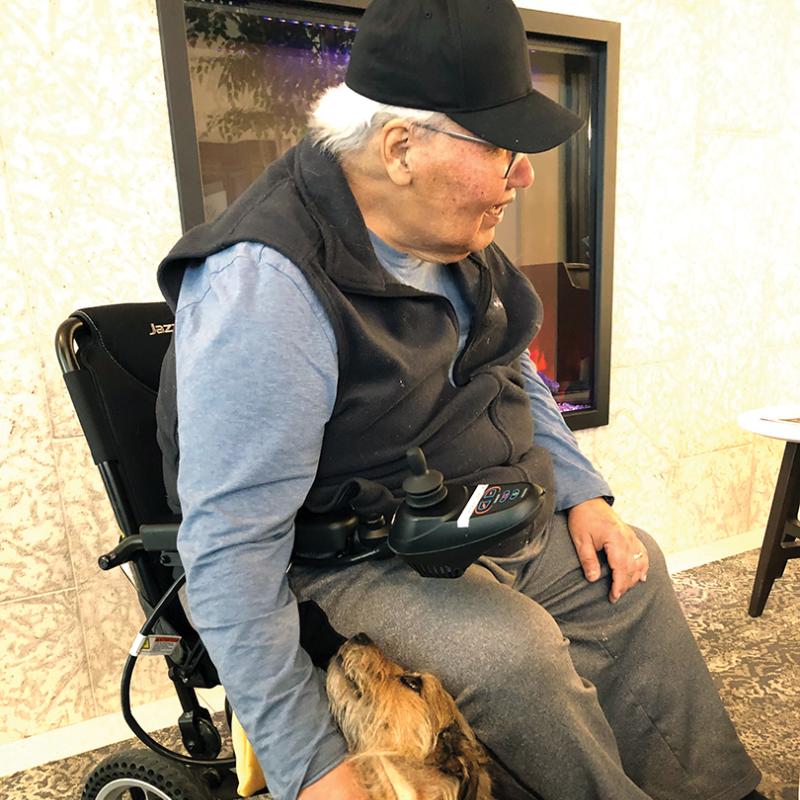


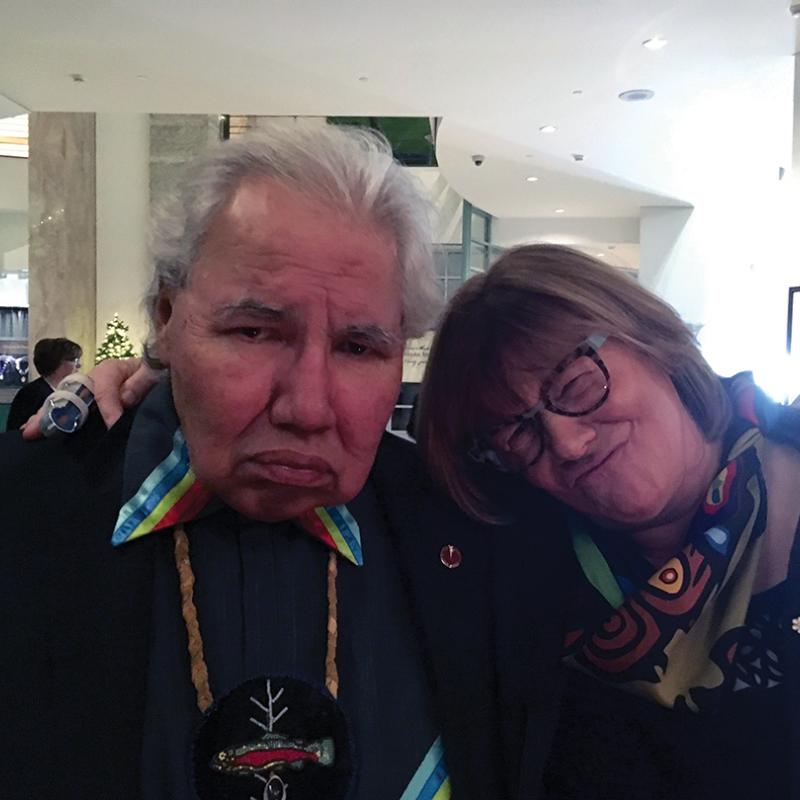
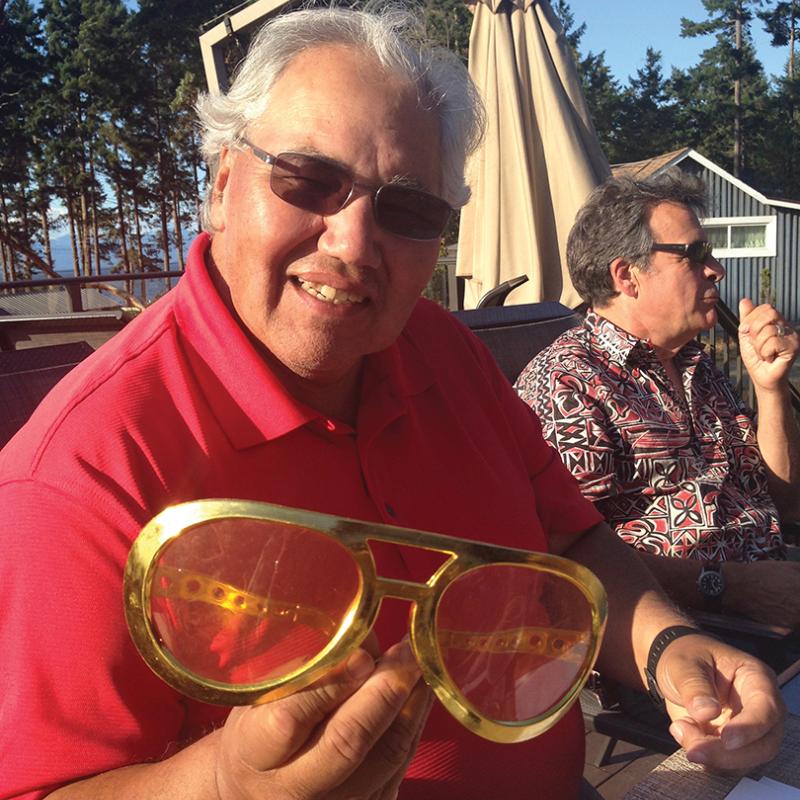
Fourteen years ago, I discovered Murray and I were related generations back through Nahoway Sinclair, a shared ancestor. When I told him about this connection, he gave me a big hug and said, “Hi, Cuz,” and never called me Shelagh again.
In the summer of 2015, Murray needed peace and quiet as he worked to complete the final TRC Report, and our home at the time on Gabriola Island, B.C., offered him both. His office was our rustic guest cabin and when he needed coffee, he’d ring a cowbell and we’d deliver a made-to-order frothy cappuccino. It seems coffee is a through-line in our relationship! After spending a full day editing and re-writing the draft of the six-volume report, Murray and I would walk my schnauzer, Sam, down to the shoreline where we often watched pods of orcas break the surface and smack the water with their long, powerful bodies. He marvelled at how they played with such abandon in “the world’s biggest swimming pool.” When he presented Bill S-203 for third reading in the Senate, perhaps he was thinking about those orcas, and our collective connection to them, when he addressed the senators, asking: “How would you feel if you had to live the rest of your life in a bathtub?”
It had been an honour to have him stay with us, and one day I told him so. His response was: “Had been? I don’t know why you think I’m leaving. There’s no guarantee of that until you actually see me drive away!” He stayed for weeks. That time with him is now a cherished gift.
Murray was my friend, Cuzzin, mentor and sometimes, therapist. He coached me through a rupture in my long marriage and helped suture it back together. During that time, he texted: “When you stand on the edge, it’s important to know you’ll be OK if you step back. But it’s always better to have a hand to hold in those moments. I will always be there for you.”
I don’t know how he did it. At the memorial held one year after his passing, people shared remembrances and I realized he was “always there” for so many. And I profoundly thank his immediate family, especially his five children, for sharing him with us, with Canada.
When my chosen brother, the writer Richard Wagamese, was in a treatment centre, Murray sent Richard a photo of himself holding up a paper that read: Stay Strong, Be Brave, Fart into the Wind. Richard said it was the first real laugh he’d had in months, and that laughter was healing for him. A year and a half later, we would lose Richard. Cuz wrote this poem, which I received via email, hours before emceeing Richard’s memorial:
He Found Peace
He heard her song
as he sat lonely on the ground
Her footsteps moving gently
Through the trees
He could not see
But he could feel her
Dancing slow
In ever smaller circles
Around his lodge of twigs and leaves
He heard her thoughts
and felt both pain and sweetness
as she held and rocked him
while he once again became
the child he always was
And as she soothed him in her mother arms
And whispered words of comfort in his ear
He slipped away into that momentary dark
And left behind the sadness
That had burdened him so long
And placed his feet upon the road
That takes you to the place where dreams and spirits dwell.
And he found peace.
I read it at the ceremony, fresh off my iPhone, and I remember feeling blanketed by his words, as I do now. Richard wrote about family, friendship, community, reconciliation and love, particularly in his poems. They were concurrent themes in Murray’s life and work. I once asked him how my, and Tina Turner’s, favourite question – “What’s love got to do with it?” – would apply to reconciliation. He answered: “All of us want to have a better relationship for our children and grandchildren and their children and grandchildren, because we love them. And because we love our children and our grandchildren, we need to do things better so that they will be able to have a better relationship as well.” Regarding his own cherished grandchildren, he said: “I am what I am, for them. I do what I do, for them.”
For Murray, love had everything to do with it.
Murray Sinclair thought ahead to the children yet to come. He lived to honour the sacredness of Creation and the interconnectedness of all beings. He led with kindness and love. He was the personification of what I call “the humes:” humility, humour, and humanity. When I accepted the wondrous invitation to become chancellor of our university, I knew there would be challenges and complex issues to sort through. Murray told me not to worry, “just put me on speed dial.” Now, if only I had his number ...
I miss my Cuzzin but, like you, I’m so grateful for his life, his leadership and his legacy. May he find peace in “the place where dreams and spirits dwell” in that beautiful place where he is now. May his spirit always guide us, and may we listen to that guidance.
To honour the memory of Mazina Giizhik-iban Murray Sinclair, let us make friendships, create community, and work together for the generations ahead of us. Come to think of it, that’s a great call to action for our university. We have the scaffolding. Let’s build.
A legacy that will live on
We asked Indigenous members of the Queen’s community to tell us what it meant to them when the Honourable Murray Sinclair was named chancellor in 2021.
I remember being so thrilled upon learning that Murray-iban was to be the new chancellor of Queen’s. I had long admired him for his wisdom and humanity in guiding the Truth and Reconciliation Commission and his willingness to share his knowledge and his time. It was wonderful to learn that our new chancellor would be such a renowned Indigenous person, and I felt that it spoke to the commitment the university had made to cultivating more meaningful, respectful, and right relationships with Indigenous Peoples. I felt privileged and looked forward to having the opportunity to work with him on issues of importance to the Indigenous community in and around the university, the city, and the region.
Kanonhsyonne (Janice Hill), Ed’99
Retired Associate Vice-Principal, (Indigenous Initiatives and Reconciliation)
I did not have the opportunity, while I was a student, to meet Murray Sinclair Iban during his time at Queen’s. I was fortunate to hear him speak at conferences and greatly admired his approach and his work. His role as the first Indigenous chancellor marked a significant change at Queen’s. I now find myself in a seat at Queen’s where we can draw inspiration and encouragement from his legacy as we continue the work.
Lisa Maracle, MA’24
Associate Vice-Principal, Office of Indigenous Initiatives
Chancellor Emeritus Sinclair was a very kind, caring man and did a lot for the Indigenous and non-Indigenous people. I am grateful that I had the opportunity to work with him here at Queen’s. May he rest in peace.
Te ho wis kwûnt (Allen Doxtator)
Cultural Advisor, Office of Indigenous Initiatives
As an Indigenous education leader who had the privilege of meeting Justice Murray Sinclair several times, his appointment as Queen’s University chancellor after my 2019 graduation represented a vital step toward weaving Indigenous knowledge into mainstream education. His transformative work through the Truth and Reconciliation Commission and unwavering dedication have deeply inspired my own journey in educational leadership. Justice Sinclair’s visionary guidance challenged institutions to move beyond surface-level changes, advocating for the fundamental integration of Indigenous ways of knowing into academic frameworks. His role as chancellor symbolized Queen’s commitment to creating learning environments where Indigenous perspectives are valued as essential foundations of knowledge. This historic appointment demonstrated that meaningful change is possible when institutions embrace Indigenous wisdom and leadership.
Andre O’Bonsawin, MMIE’19
Indigenous Affairs Advisor, Toronto Catholic District School Board
Chancellor Emeritus Sinclair had always been a guiding light for me – and for so many Canadians – through his courageous leadership of the Truth and Reconciliation Commission. He approached these difficult conversations with empathy, inclusiveness, and patience. He reminded us that reconciliation is not an Indigenous issue alone – it is a shared responsibility, a call to action for every Canadian. One of my most meaningful experiences during his tenure was seeing Queen’s embrace his guidance as we prepared to mark the first National Day for Truth and Reconciliation. His sage advice helped us move beyond symbolism toward genuine reflection and commitment. For me personally, those moments were transformative – they deepened my understanding of what it means to lead with integrity and to listen with purpose.
Rahswahérha (Mark Green), Sc’87
Professor and NSERC Scholar in Residence, Smith Engineering
As a proud Indigenous graduate of Queen’s University, the installation of the always Honourable Murray Sinclair as chancellor was one of my proudest moments as an alumna. The Honourable Mr. Sinclair brought the highest dignity and respect to this important office at Queen’s University. His life’s work to foster compassion for Indigenous Peoples and to advance reconciliation in Canada made him an exceptional leader. Dr. Sinclair’s professional accomplishments speak for themselves, but those who knew him best speak to his personal character: his unwavering commitment to the advancement of Indigenous Peoples and rights, justice, compassion, and fairness. To see Dr. Sinclair in this office inspired a new generation of Indigenous changemakers who can now see that truly anything is possible. His legacy, both personal and professional, will live well beyond his years.
Jaimie Lickers, Artsci’03, Law’07
Senior Vice-President, Indigenous Markets, CIBC
Our institution had the good fortune of hosting Dr. Sinclair as we convened a national gathering of Indigenous academics to formulate a response to the Calls to Action. Dr. Sinclair was the North Star for many of my generation, starting from his groundbreaking work for the Manitoba Justice Inquiry and his life’s work with the Truth and Reconciliation Commission. What matters now is that much of his work remains undone and many recommendations need further dedication. Murray lifted our sight and ambitions as First Nations Peoples and as Canadians. Our mission is to give life to the remaining recommendations of the TRC – being partly reconciled with our collective past is no reconciliation at all.
Blaine Favel, Law’90
Chancellor, University of Saskatchewan
While working as the Advisor at Four Directions Indigenous Student Centre, I had the chance to meet the Honourable Murray Sinclair when he accepted his honorary doctorate in 2019. What I remember was his gentle spirit cloaked in humility. While we were all aware of his accolades and accomplishments, he made it a point to talk to students, staff, and faculty and was genuinely interested in each person and conversation. To me, Dr. Sinclair’s appointment as chancellor was an exciting shift in the importance of Indigenous values and ways of knowing at Queen’s. As an alum (Artsci’02), I was acutely aware that Queen’s was not always welcoming to this. I have realized that values and attitudes will change with the people and the relationships that are built. I believe that Dr. Sinclair was among those who have, and continue to, contribute to the journey of reconciliation at Queen’s University.
Vanessa McCourt (Maracle), Artsci’02
Director, Four Directions Indigenous, Student Centre
As a former member of Queen’s Truth and Reconciliation working group, I was (and am still) so grateful for the path the Honourable Murray Sinclair led so that the rest of us could follow. While we still have a long way to go, Canadians would be nowhere near where they are now in their education on Canada’s dark past and its impact on Indigenous Peoples. Murray Sinclair has inspired so many Indigenous Peoples to speak their truth and demand nothing short of equality on these lands. I had the absolute honour of meeting Murray Sinclair when he received an honorary degree from Queen’s Law. I was in awe of his humility and grace. We shared some laughs, and he even told me to call him “Uncle Murray.” It is a memory that I will always cherish. My soul hurts when I think about how he is no longer in this world with us. But I know that his spirit and his legacy were so powerful that they will live on in all of us and in this country forever. Nya:wen’kowa, chi miigwetch Mi-zhana-Gheezhik. You will forever be in our hearts, minds, and spirits.
Lauren Winkler, Artsci’17, Law’20
Policy Analyst, Mohawks of the Bay of Quinte
The Honourable Murray Sinclair’s role as the chancellor of Queen’s University served as a monumental milestone as the first Indigenous chancellor in the university’s history. However, his presence also served as a reminder of the importance of values. Murray Sinclair embodied in his work and in his life values of justice, fairness, equity, and integrity. Not for Indigenous Peoples solely, but for everyone. The Honourable Murray Sinclair’s legacy and teachings will in no doubt continue to inform and inspire all of us in recognizing that we all have a responsibility to be agents of change.
Stacia Loft, Law’20
Director, Indigenous Initiatives and EDII, Programs, Faculty of Law

