
When students get hungry, they can head to one of the campus food halls, from the cafeteria in Mac-Corry to refectories in Leonard Hall and Ban Righ.
But birds, bees, and other pollinators have their own place to dine at Queen’s.
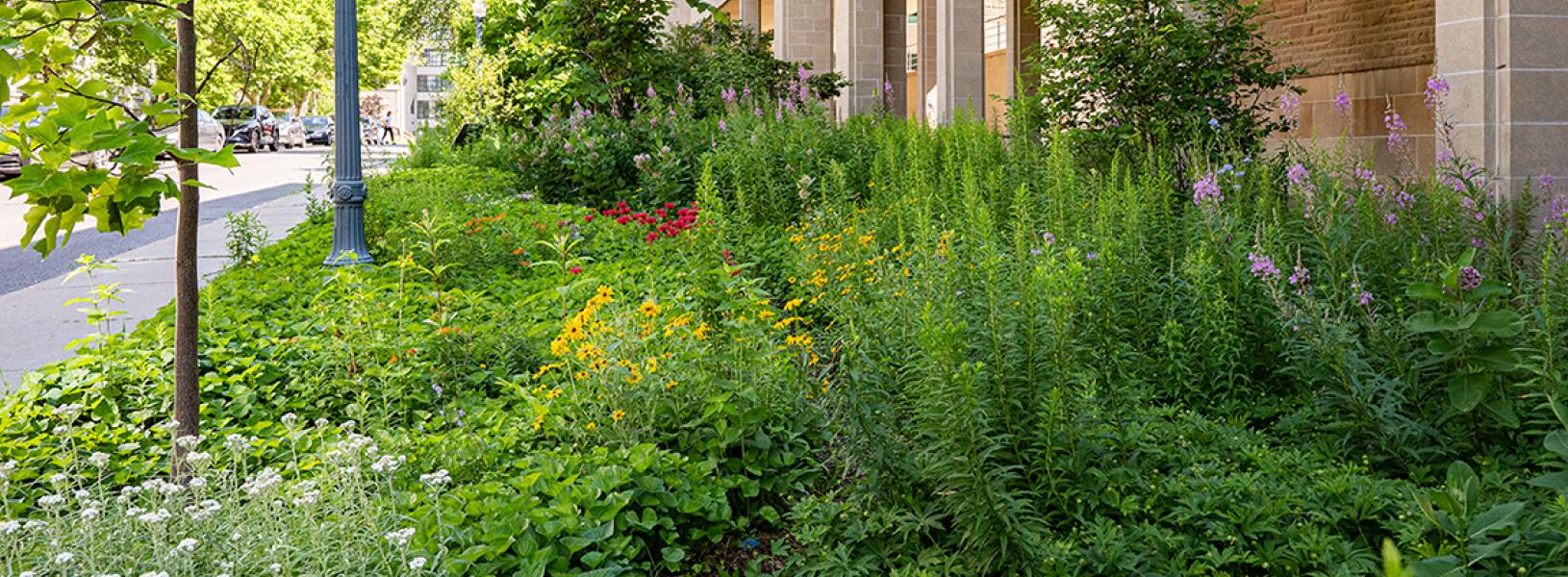
Tucked beneath the morning shade of the Biosciences Complex, the Native Pollinator Garden provides food and shelter for insects and avians alike, while supporting other wildlife. Dozens of native plant species grow here, from blue flag irises and black-eyed Susans to pale purple coneflowers and pearly everlastings.
Established nearly 20 years ago, the garden is overseen by the local chapter of the Society for Conservation Biology (SCB), with support from university faculty, and maintained by Queen’s students in a summer work program. The gardens also support Queen’s efforts to advance the United Nations’ Sustainable Development Goals (SDGs) such as SDG 4, Quality Education (experiential learning opportunities), SDG 15, Life on Land (protection of biodiversity), and SDG 11, Sustainable Cities and Communities (creation of green spaces for wellness and education).

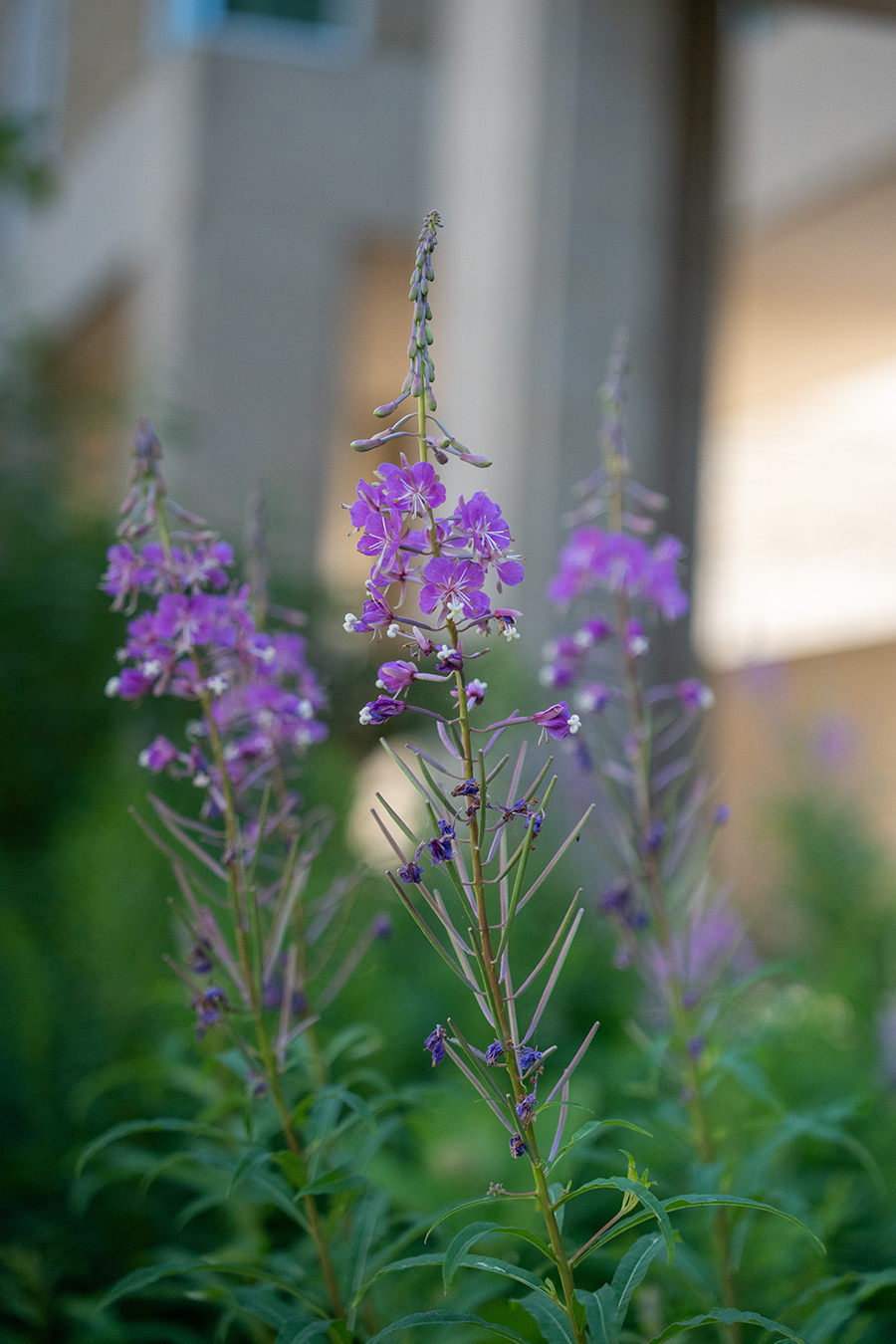


Many people think pollinator gardens are just for honeybees, says Julia Atteck, Artsci’26, MSc’28, with SCB. But they also provide nectar for hummingbirds, bats, bumblebees, moths, and butterflies, which help pollinate flowers well beyond the garden.
“They support overall biodiversity. And they’re beautiful to look at,” she says.
Some species get more than a meal. Monarch butterflies lay their eggs on the underside of milkweed leaves, while solitary bees nest inside holes drilled into one of several wooden bug houses.
Last year, a Queen’s plant mapping project conducted by students identified 477 plant species growing on campus. Of those, 64 per cent were non-native or invasive, says Dr. Baharul Choudhury, an instructor in the Department of Biology. The pollinator garden, he says, shows how Queen’s can create more space for native plants.
Another plus: plants here bloom at different times, providing a steady source of food throughout the growing season. Violets and wild strawberries flower in spring, bee balm and evening primrose bloom in early summer, while asters and goldenrod take over later in the season.
Ms. Atteck wants passersby to stop and admire the flowers. But she also hopes they leave inspired. “I’d like them to start their own pollinator garden at home.”

