
We are an analytical chemistry group building new tools to measure complex chemical and biological systems. Our work spans surface energy traps, ambient ionization mass spectrometry (LMJ-SSP), and 3D-printed instrumentation — combined to tackle problems in chemical imaging, diagnostics, and direct analysis of real-world samples.
The Namib Desert beetle (Stenocara sp.) survives one of the driest places on Earth by harvesting water from morning fog: hydrophilic patches on its back collect droplets that, once heavy enough, roll down hydrophobic channels to its mouth. We apply the same principle to analytical chemistry. By patterning surfaces into hydrophilic and omniphobic regions — using laser micromachining, photolithography, and plasma treatment — we create surface energy traps (SETs) that capture precise, reproducible volumes of fluid on contact with a solvent. This phenomenon, discontinuous dewetting, lets us generate droplet arrays whose shape and size direct fluid for measurements such as mass spectrometry imaging, calibration, and standard addition.

We develop ambient ionization mass spectrometry to analyze complex samples directly in their native state, with little or no sample preparation. Our work centres on the Liquid Microjunction Surface Sampling Probe (LMJ-SSP), which we use and refine to push the sensitivity, selectivity, and spatial resolution achievable when sampling surfaces in real time — from natural product profiling in bacteria to detecting opioids on mail and packages.
That same spatial resolution makes the approach powerful for medical imaging. In cancer surgery, tumour margins are traditionally assessed by "bread-loafing" — slicing the excised tissue into sections that a pathologist annotates as cancerous or clean — a slow process where an incomplete result can send the patient back for a second operation. Mass spectrometry offers a faster route to margin detection. We image tissue by combining surface energy traps with polysynchronous solvent extraction: a tumour section is stamped with an array of SETs, and the extracted material is rendered as a heat map that highlights regions of interest
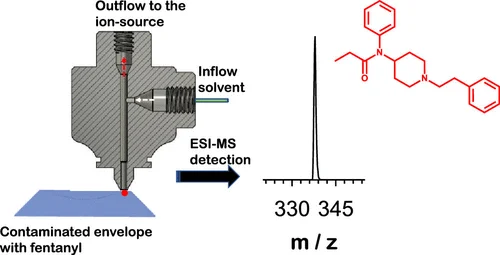
We use 3D printing to make mass spectrometry more capable, accessible, and affordable. By designing and fabricating custom components in-house — sample introduction systems, imaging platforms, and other hardware — we adapt instruments to our experiments rather than the other way around, often at a fraction of commercial cost.