|
PEARLPaleoecologicalEnvironmentalAssessment andResearchLaboratory |

|
- Home
- People
- Research
- Outreach
- Blog
|
|
PEARLPaleoecologicalEnvironmentalAssessment andResearchLaboratory |
|
Rideau Lakes Project
Stretching 202-km across eastern Ontario, the Rideau Canal links Ottawa to Kingston through a chain of rivers, channels, and lakes. Completed in 1832, the canal was originally built as a military supply route but has since transformed into a UNESCO World Heritage Site and a hub for recreation, tourism, and cottage life. Over its nearly two centuries of use, the system has undergone profound changes from early canal construction, flooding, logging, settlement, and agriculture to the modern impacts of cottage development, invasive species, and climate warming. These overlapping human influences have left a lasting imprint on the connected lakes of the Rideau system.
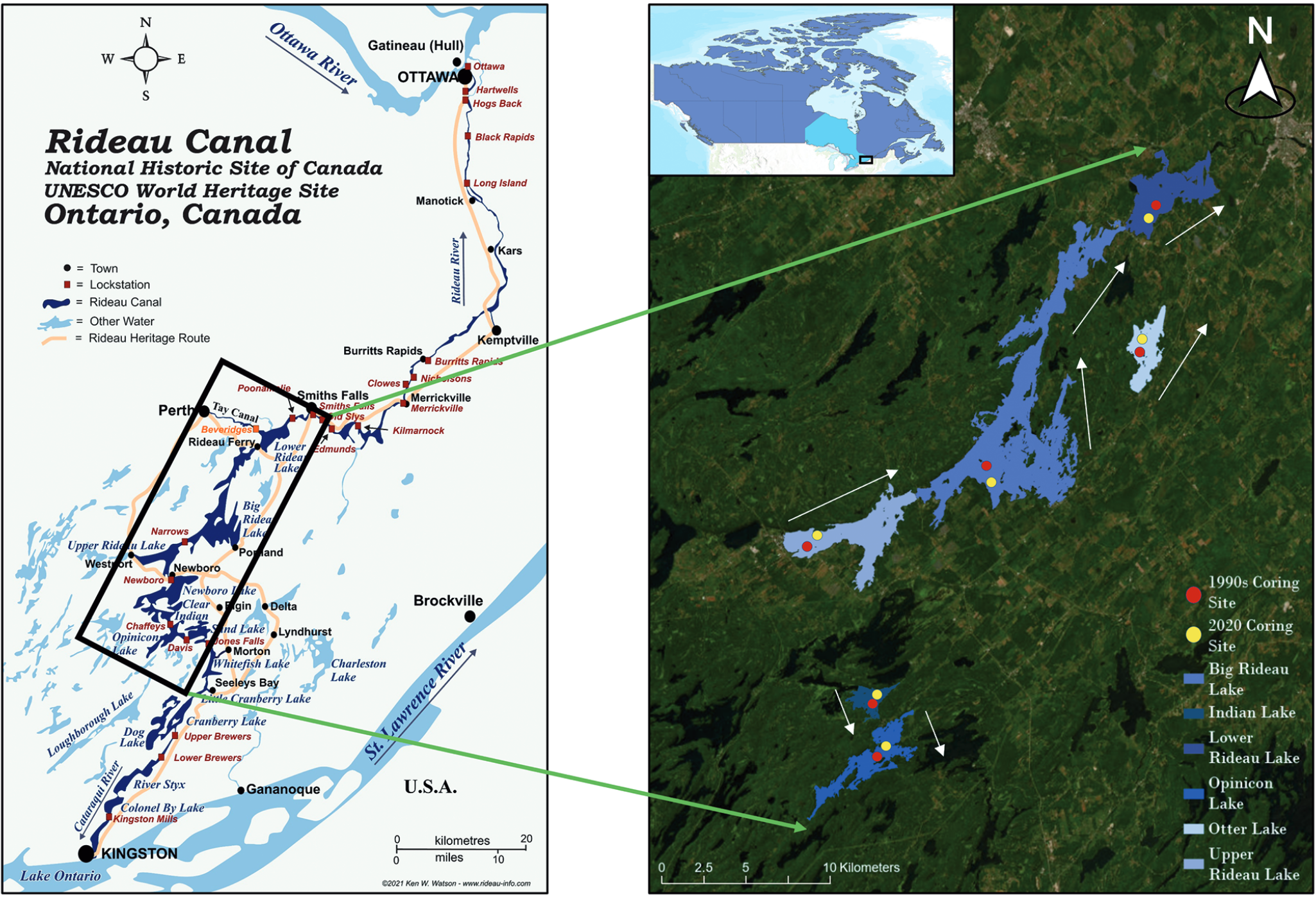
Sediments accumulating at the bottom of aquatic systems act as natural archives, recording past environmental conditions in their layered deposits. Using paleolimnology, the study of sedimentary records, we can reconstruct how these lakes have responded to human and climatic disturbances over time. Earlier studies from cores collected in the 1990s from several Rideau Canal lakes (e.g., Opinicon, Big Rideau, Indian, Upper Rideau, and Lower Rideau), as well as a reference lake outside the canal (Otter), found that ecological responses to eutrophication following 19th-century canal construction and related logging were most striking in deeper lakes than in shallow, macrophyte-dominated systems (such as Lake Opinicon), given the strong moderating influence of aquatic plants. However, a resampling of these same lakes in recent years showed evidence that changes in aquatic communities are now largely driven by accelerated regional warming, resulting in changes to lake mixing regimes and a decline in deep-water oxygen concentrations.
By revisiting these historically studied lakes and expanding our studies to other sites throughout the Rideau Canal watershed (e.g., Cranberry Lake), our research provides a long-term perspective on ecosystem change. By analyzing sediment cores for biological, chemical, and physical indicators, including diatoms, Cladocera (water fleas), and chironomid (aquatic insect) remains, sedimentary chlorophyll a, and geochemical markers, we can track shifts in water quality, nutrient loading, primary production, trophic status, and oxygen dynamics. Together, these paleolimnological records reveal how this iconic and heavily managed system has changed since the early 1800s and can be used to help guide future lake management, conservation, and restoration across the Rideau region.
 |
 |
 |
|
Map of the study region. |
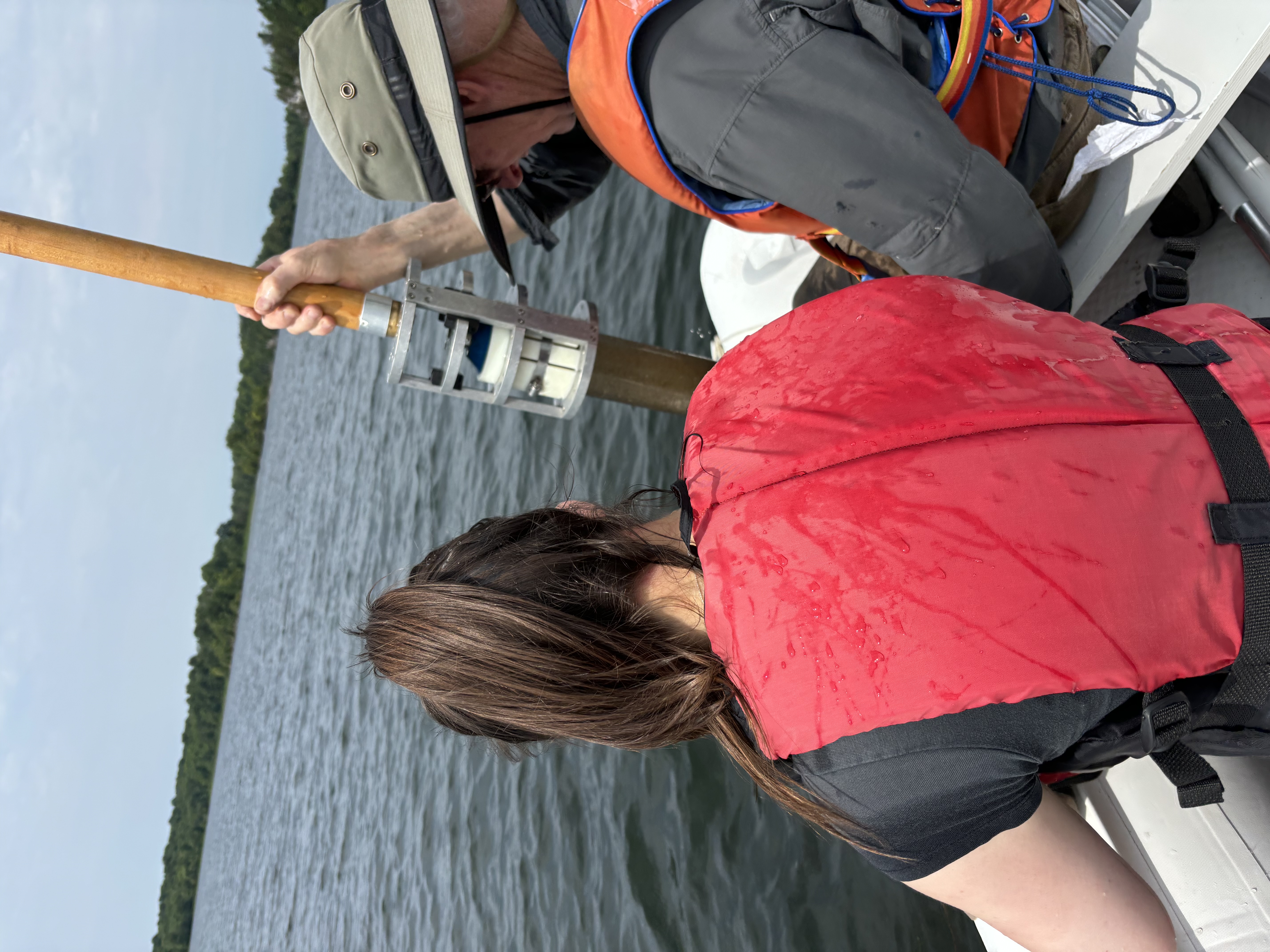
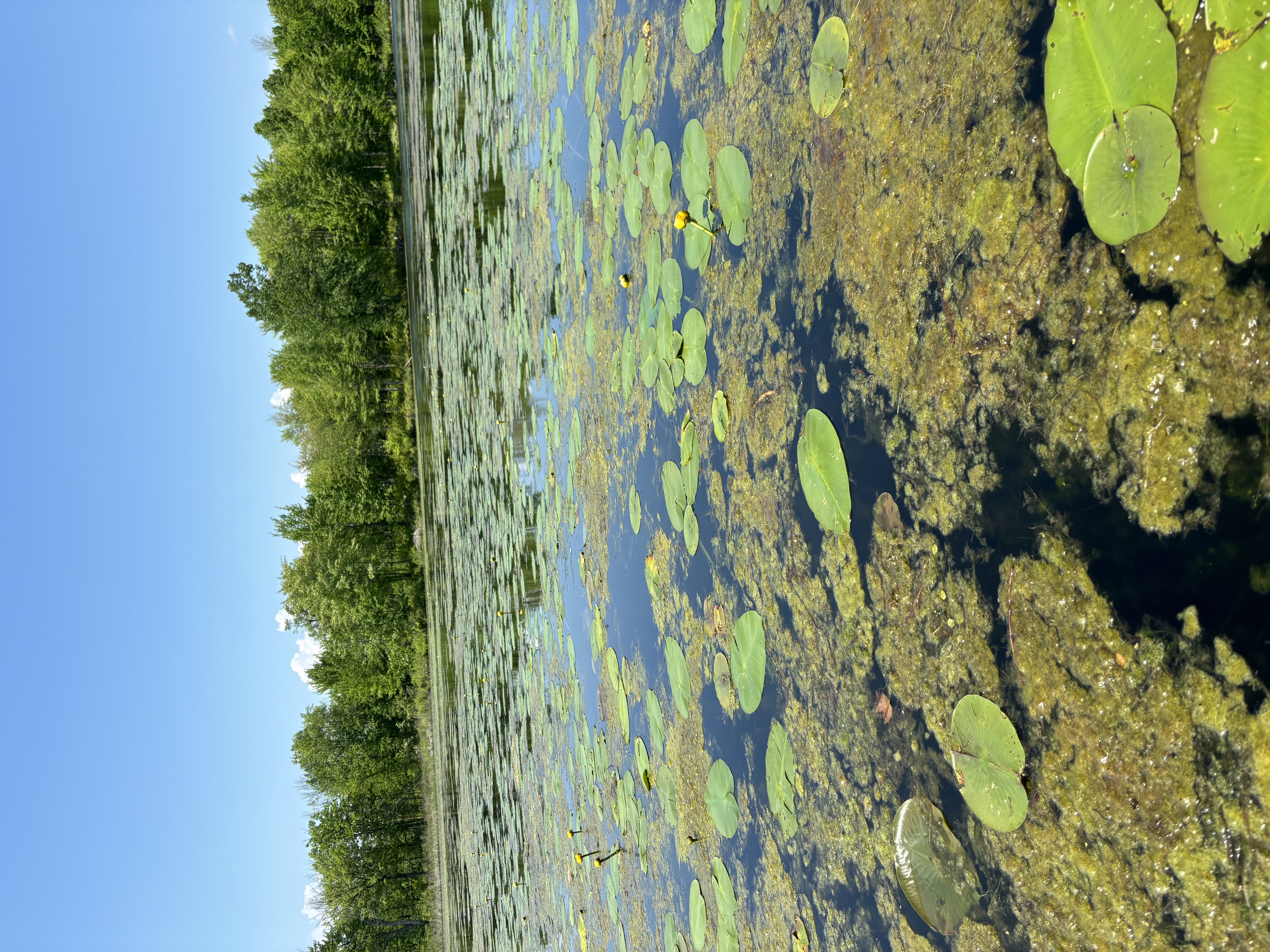
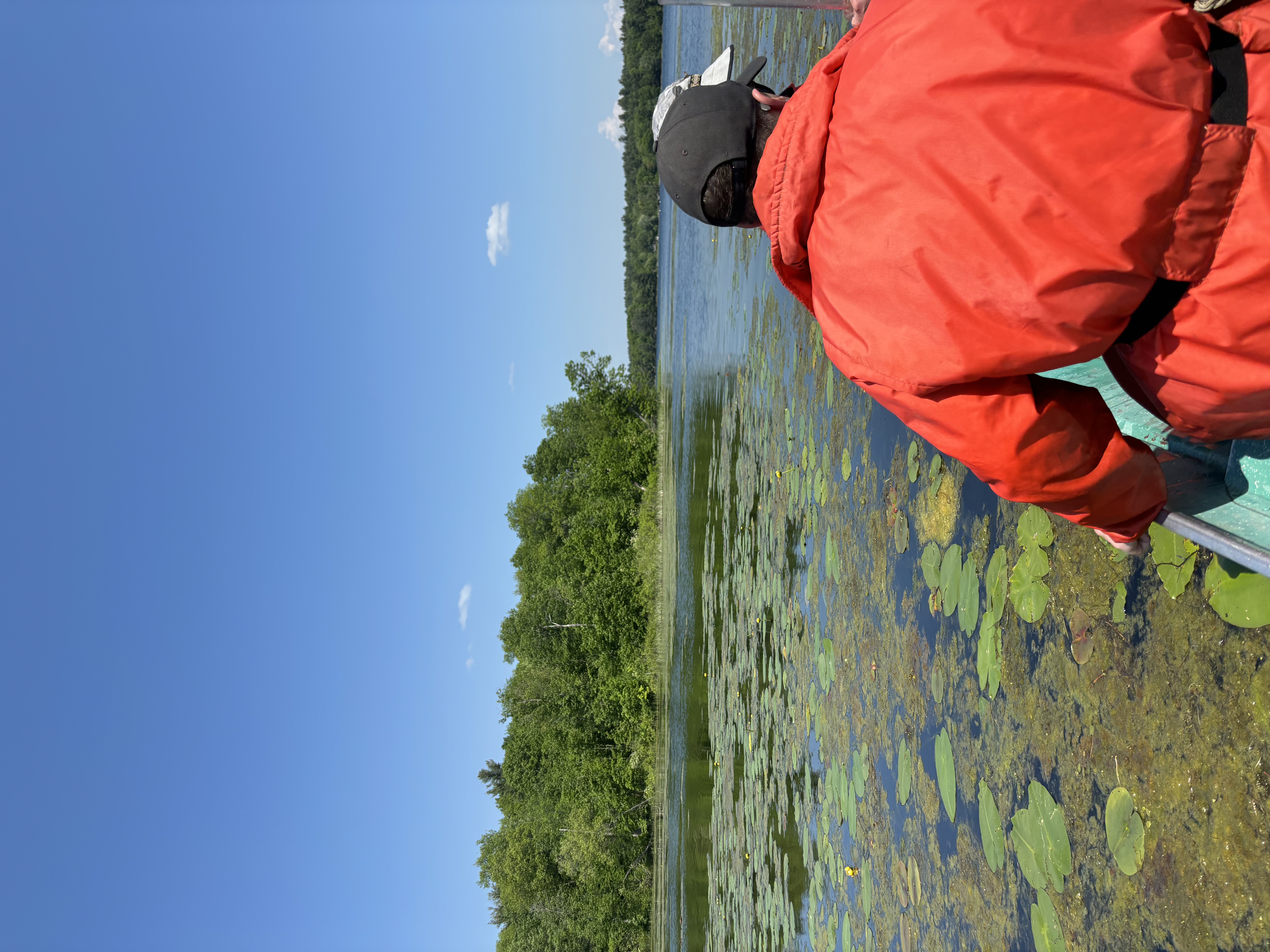
Push coring in 5m of water on Cranberry Lake. |
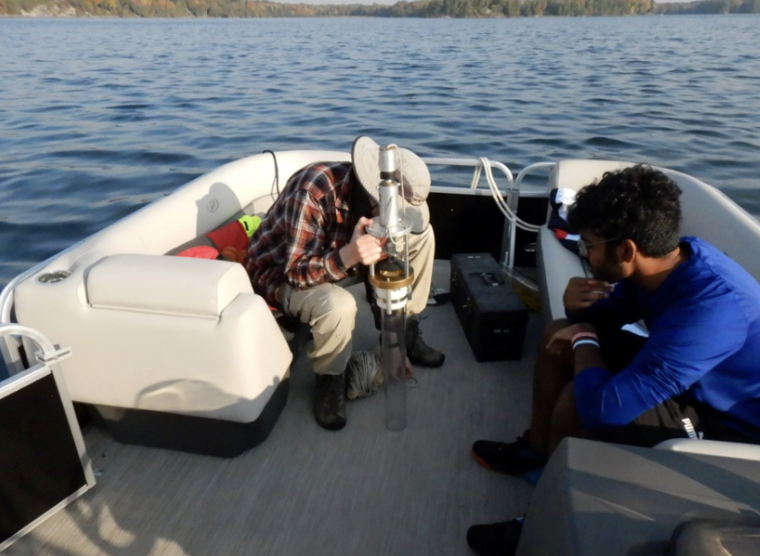
Rideau lakes deep water coring. |
|
|
|
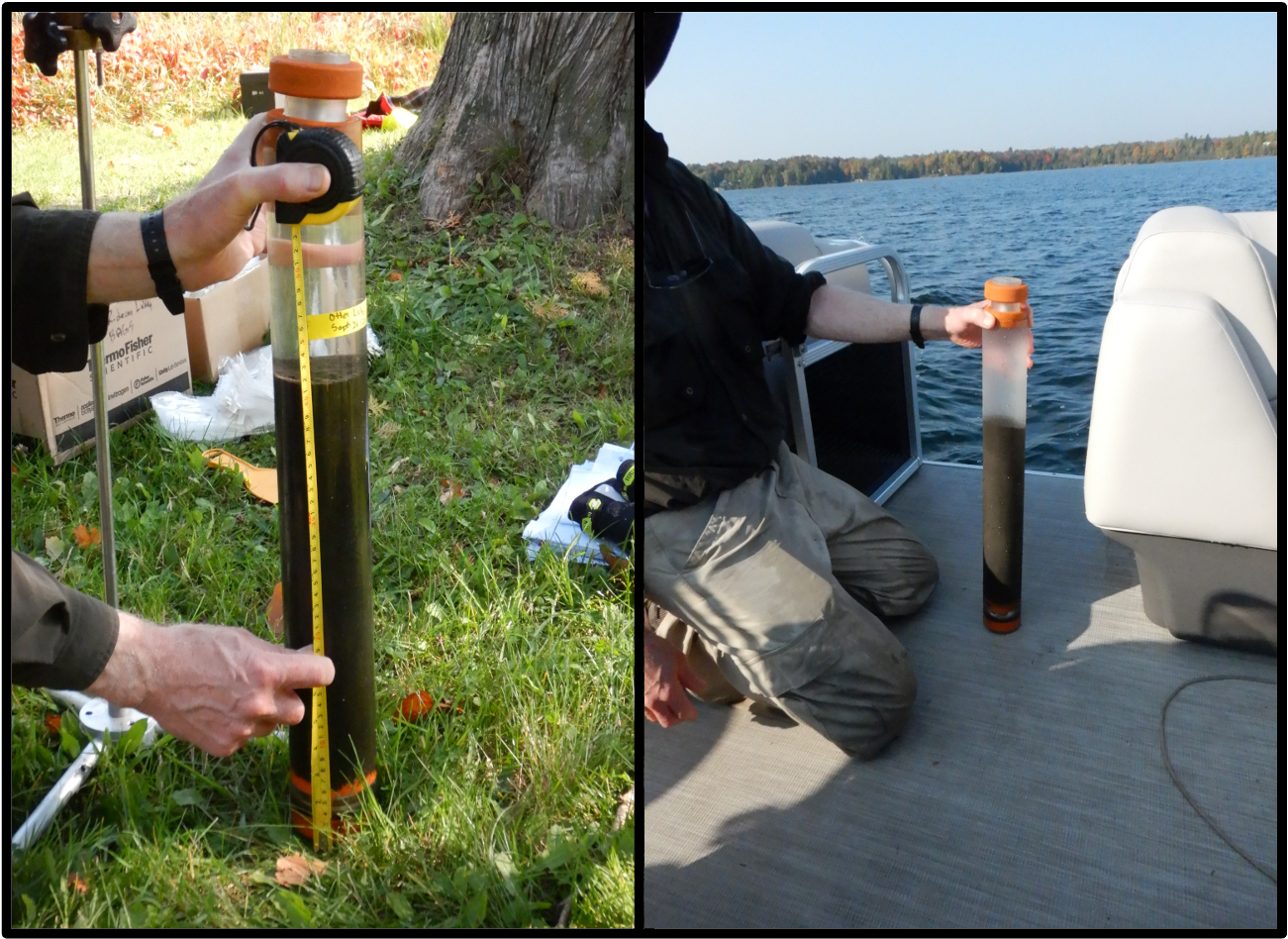 |
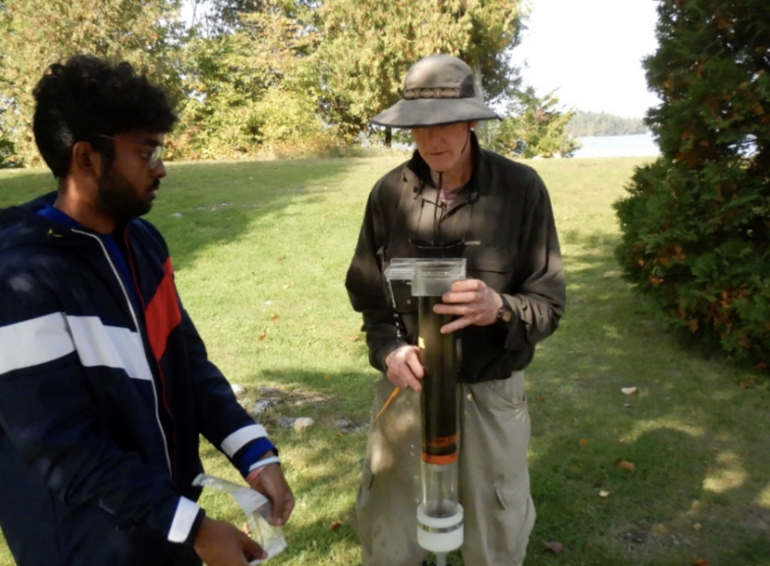
| Kap and Chris sectioning. | Kap sectioning Opinicon core. | Rideau sediment cores |
 |
 |
 |
| Coring site. | Cranberry Lake. | text for next photo. |
 | text |
Publications from this project: Please contact John Smol (smolj@queensu.ca) if you cannot access these papers.
Christie CE, Smol JP (1996) Limnological effects of 19th century canal construction and other disturbances on the trophic state history of upper Rideau Lake, Ontario.
Lake Reserv Manage 12:448–454
Karst TL, Smol JP (2000) Paleolimnological evidence of limnetic nutrient concentration equilibrium in a shallow, macrophyte-dominated lake. Aquat Sci 62:20–38
Little JL, Smol JP (2000) Changes in fossil midge (Chironomidae) assemblages in response to cultural activities in a shallow, polymictic lake. J Paleolimnol 23:201-212 Forrest F, Reavie ED, Smol JP (2002) Comparing limnological changes associated with 19th century canal construction and other catchment disturbances in four lakes within the Rideau Canal system,
Ontario, Canada. J Limnol 61:183–197
Balasubramaniam K, Rühland KM, Smol JP (2023) A diatom-based paleolimnological re-assessment of previously polymictic Lake Opinicon, Ontario (Canada): crossing an ecological threshold in response to warming over the past 25 years. J Paleolimnol 69:37-55.
Graves EL, Balasubramaniam K, Rühland KM, Paterson AM, Smol JP (2024) Changes in cladoceran assemblage composition linked to early nineteenth century canal construction, land-use changes, and recent climate change in a macrophyte-dominated Ontario lake. J Paleolimnol 72:49–61
Lansing DJ, Graves EL, Balasubramaniam K, Michelutti N, Paterson AM, Smol JP (2025) Declining bottom-water oxygen concentrations recorded by subfossil chironomid assemblages follow climate-driven changes in thermal stratification. Journal of Paleolimnology 73: 537 - 555. https://doi.org/10.1007/s10933-025-00377-9Balasubramaniam, K., Rühland, K., Paterson, A.M., and Smol, J.P. 2025. Revisiting lakes within the Rideau Canal system (Ontario, Canada) to assess the impacts of multiple environmental stressors over the past ~25 years using diatom-based paleolimnology. Journal of Limnology 84: 2192.
Gallinger M, Rühland KM, Graves EL, Paterson AM, Smol JP (2026) A diatom-based assessment of multiple stressors over the past ~220 years on shallow Cranberry Lake in the Rideau Canal (Ontario, Canada). Botany, 104: 1-14.
Links to media coverage of this work:
|
|