
World-leading expertise
Queen’s recruits internationally recognized engineer in infrastructure and mining from U.S.
August 27, 2026
Share
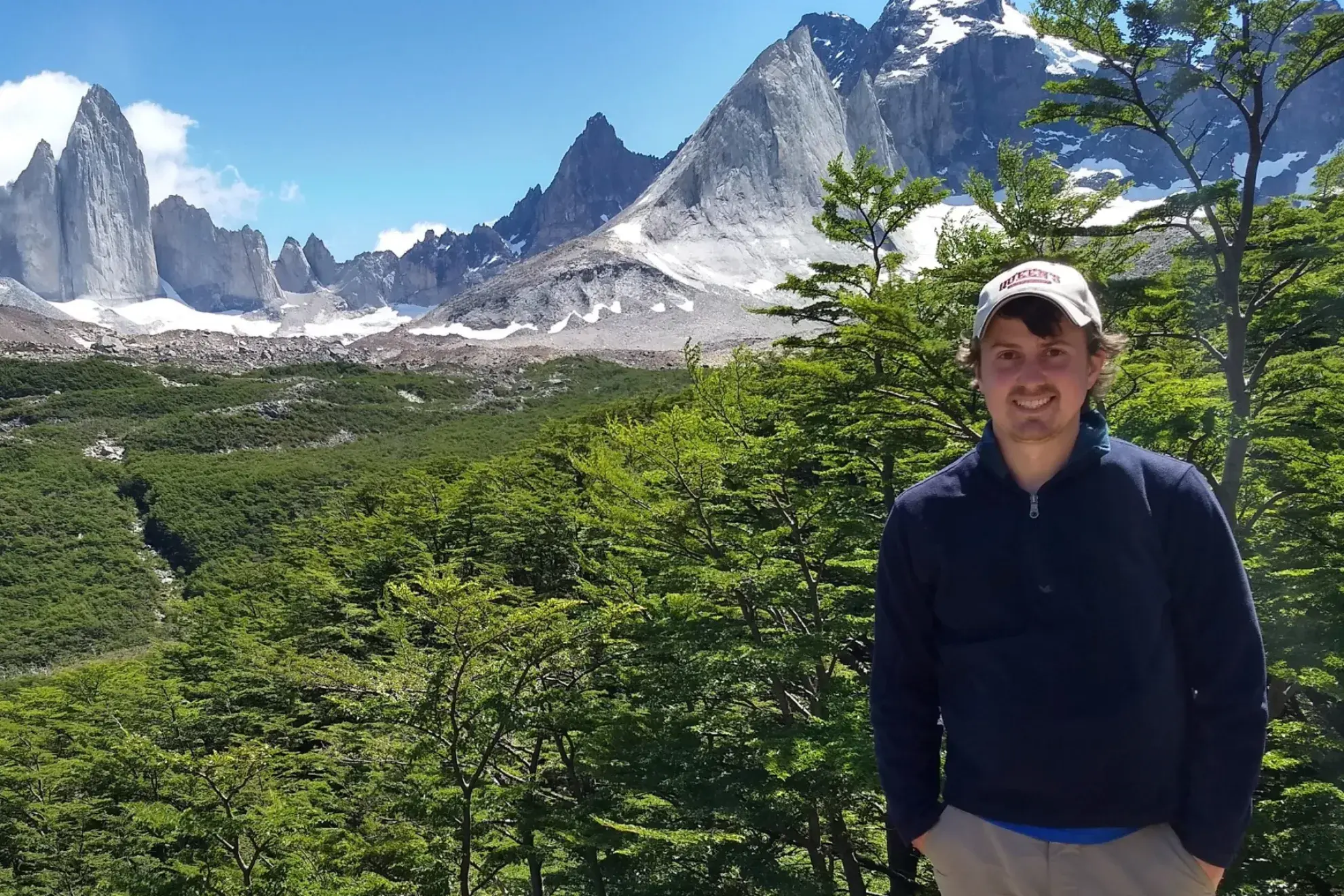
Dr. Gabriel Walton will join Queen’s in 2027 from the Colorado School of Mines, bringing expertise in landslides, rockfalls and other slope hazards.
Queen's has announced that Gabriel Walton will join the university as an inaugural Eddie Goldenberg Research Chair of Canada in Slope Geohazard Management for Infrastructure and Mining in a Changing Climate. Dr. Walton is one of 64 inaugural chairholders unveiled nationally today as part of a $1 billion federal government program, formerly known as the Canada Impact+ Research Chairs. This major initiative is designed to attract world-leading researchers to Canada and strengthen the country’s research and innovation capacity, economic security, and sovereignty.
“We’re thrilled to welcome Dr. Walton to Queen’s as an Eddie Goldenberg Research Chair of Canada,” says Nancy Ross, Vice-Principal (Research). “Bringing leading researchers to Canada is essential to strengthening our nation's research capacity, and this appointment will create new opportunities for research, training, and collaboration in an area of growing importance.”
Dr. Walton is currently a professor and associate department head at the Colorado School of Mines, ranked first in the world for mineral and mining engineering in the 2026 QS World University Rankings by Subject. He will join the Department of Geological Sciences and Geological Engineering, which supports interdisciplinary programs and research across the Faculty of Arts and Science and Smith Engineering. The federal program will provide $8 million in funding over eight years to support his work at Queen’s.
Dr. Walton’s appointment marks a return to Queen’s, where he completed both his undergraduate degree (BASc’11) and PhD (PhD’14) in geological engineering before establishing his academic career in the United States.
Understanding slope failure
As the climate changes, landslides, rockfalls and other slope hazards are a growing concern for roads, railways, mines, and communities across Canada. Dr. Walton and his team's work at Queen's will focus on building a more complete picture of slope hazards by looking at how slopes fail and how they respond to both sudden and longer-term environmental changes, including how thawing permafrost affects the behaviour of rock, soil, and ice in northern environments.
His team will also investigate how networks of fractures within rock contribute to failures, ranging from rockfalls to much larger slope movements. Those questions matter for highways and railways, open-pit mines, and other critical infrastructure projects in remote areas, where slope failures can have serious consequences for safety, access, and operations.
“Geohazards are complex problems that draw on both scientific and engineering expertise,” says Kevin Kee, Dean of the Faculty of Arts and Science. “Dr. Walton’s research is a natural fit for the interdisciplinary strengths of Geological Sciences and Geological Engineering and will create new opportunities to connect expertise across those areas.”
His work will build on Queen’s expertise in geomechanics, mining, and civil engineering, including the Queen’s–RMC GeoEngineering Centre and the new Climate Adaptive infraStructure Testing and Longevity Evaluation (CASTLE) laboratory. These partnerships will help identify where infrastructure is most vulnerable, when mitigation is needed, and how future projects should respond to changing hazards.
“Dr. Walton’s research addresses the kinds of complex, real-world problems that are central to engineering practice,” says Kevin Deluzio, Dean of Smith Engineering. “His work will help connect advances in geohazard research with the decisions engineers make in the field.”
Over eight years, the research program will support the training of more than 40 graduate students, alongside postdoctoral researchers and other trainees, helping develop the next generation of experts. Dr. Walton will collaborate with infrastructure owners, engineering firms, mining companies, government agencies, and communities to identify and address critical problems related to slope hazards.
“Queen’s is one of the top geological engineering schools in the world,” says Dr. Walton. “The opportunity to not only have this research program but also be embedded in a community with an outstanding group of students and faculty, collaborators, both in the department and across the university, that’s a very special opportunity as well.”
Learn more in the Government of Canada’s media release.


