
A Social and Material History of Italian Renaissance Sculpture
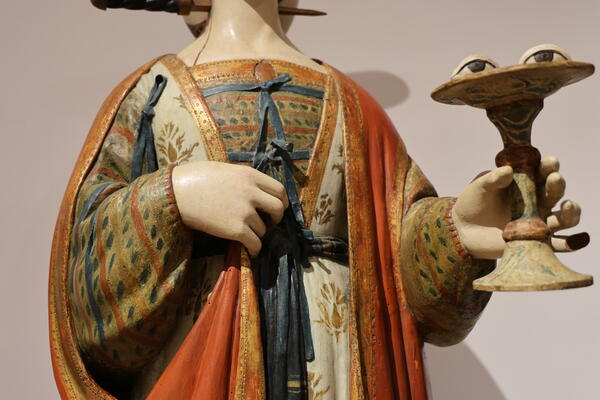
Clothing was the subject of anxiety, pride, commerce, moralizing, censorship, and devotion in the Italian Renaissance. Adults and children of different genders and backgrounds and playing various roles in society wore clothes that were controversial. Preachers, government officials, and intellectuals railed about excesses and scantiness in male and female dress, and sumptuary legislation governing the colors, materials, and forms of clothing needed to be regularly renewed, because those wealthy enough to afford fine clothes were happy to pay the fines that the law demanded in order to continue to display their bodies, power, and wealth through clothes dripping with pearls, silks, and gold. Large parts of the Italian Renaissance economy focused on the local production of textiles and the importation of fabrics from the Europe, the Middle East, and beyond. Sculptures performed key roles in the exchange and display of clothing. Women gave rich articles of clothing to religious statues, which were dressed in these clothes for important ceremonies. This was an act of devotion, but also what better way was there for a woman to display her piety and prestige than by giving her sumptuous dress to a statue of the Virgin Mary to wear during a sacred festival? Other sculptures were not dressed in actual fabric clothing but are sculpted, painted, and gilded with a variety of clothing, sometimes luxurious, sometimes rags. Many of these sculptures are devotional works, embodying the paradoxes of a religion that preaches that the humble will be exalted. When depicting the saints, God, or angels (genderless, bodiless beings), artists used clothing to make the figures both like people on earth and raised above them and to recount the history of the world and what it means to be human.
In this course, you will examine a wide variety of visual and textual primary sources in order to carry out your own original research into dress and Italian Renaissance sculpture. You will work collaboratively with your peers to research, write, curate, and publish a digital exhibition that decodes Renaissance dress.
Instructor: U. D'Elia
Assessments
To be confirmed
A complete syllabus will be distributed in the first week of class.