
Honours Seminar in Human Geography I: Critical Geographies of the Digital Urban
one-way Exclusions
One 3-hour seminar per week
- Attoh K, Wells K, Cullen D (2019) “We’re building their data”: Labor, alienation, and idiocy in the smart city. Environment and Planning D: Society and Space 37(6): 1007–1024.
- Caprotti F, Liu D (2022) Platform urbanism and the Chinese smart city: The co-production and territorialisation of Hangzhou city brain. GeoJournal 87(3): 1559–1573.
- Datta, A. and Muthama D. M. (2025) Peripheralised Labour: The digitisation of Nairobi’s land information system, in Datta, A. and Hoefsloot, F. eds. Informational Peripheries: Rethinking the urban in a digital age. London: UCL Press.
- Klein & Taylor (2026) End Times Fascism and the Fight for the Living World. MacMillan Publishers. ($32)
- Levenda AM, Mahmoudi D (2019) Silicon forest and server farms: The (urban) nature of digital capitalism in the pacific northwest. Culture Machine 18: 1–14.
- Muldoon J (2025) Love Machines: How Artificial Intelligence is Transforming our Relationships. Faber and Faber. ($25ish)
- Nowak, S. (2023). The social lives of network effects: Speculation and risk in Jakarta’s platform economy. Environment and Planning A, 55(2), 471-489. https://doi.org/10.1177/0308518x211056953
- Pachico J (2024) Jungle House. Serpent’s Tail. ($20ish)
- While AH, Marvin, Kovacic M (2021) Urban robotic experimentation: San Francisco, Tokyo and Dubai. Urban Studies 58(4): 769–786.
Please note that course information listed in the Arts and Science Course Calendar supersedes any information listed on the Geography and Planning website.
For the most current course offerings, registered Queen’s students should consult SOLUS.
Course Description
Seminars offered by regular and visiting faculty on Geography topics related to their research interests. Consult the departmental homepage for further details of specific course offerings each academic year.
Course Overview
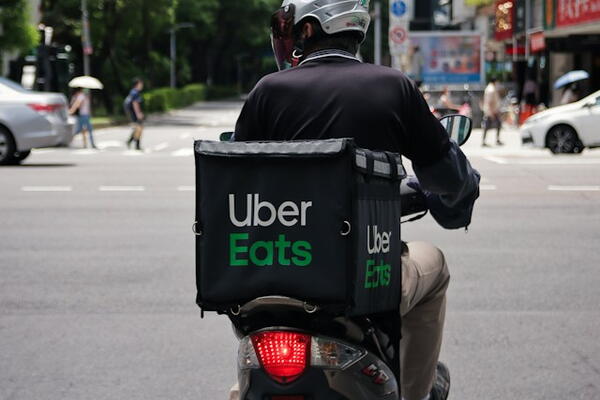
In many ways our urban lives seem thoroughly digital – we navigate city space through Google maps, click through dating app profiles to see who’s nearby, order food from online platforms like Skip the Dishes. Recent events have brought to the fore some of the concerns with how the digital is becoming integrated into the urban fabric: in Los Angeles, the policing apparatus has enrolled Waymo driverless vehicles into surveillance of protestors, while drones have been spying on drivers in Kingston to catch distracted behaviour. Large data centres at the fringes of cities and in urban areas use massive amounts of fresh water while xAI operates polluting gas turbines in South Memphis. Landlords, too, are beginning to use digital algorithms to score potential renters and surveil tenants. In this course we seek to firmly emplace, ground, and spatialize geographies of the digital through cities and processes of urbanization. Drawing on concepts developed over the course of an undergraduate degree in geography, we’ll materialize the cloud by thinking with geographers and critical journalists who interrogate the environmental impact of data centres on urban life; the labours involved in creating artificial intelligence databases; the affective economies and intimacies of machine agents; the types of discriminations built into urban policing hot-spotting systems; the warfare and destruction of cities wrought through AI targeting; and the effects of the digital – and especially artificial intelligence – in our own lives.
Course Topics
Data colonialism; platform urbanism; algorithmic bias; racial capitalism; technofascism; data grabbing; digital revolutions; urban metabolism; environmental racism; urbicide and genocide; surveillance; sanitation
Learning Outcomes
- Critically evaluate complex social issues using spatial and geographical analysis drawing on concepts such as place, space, and scale.
- Integrate theoretical and methodological approaches from various subfields of geography to analyze and explain social and environmental issues widely considered important.
- Apply advanced geographical methods to explore complex questions in human geography.
- Research and communicate complex geographical ideas and concepts in written and verbal forms through written assignments and classroom participation.
- Communicate key concepts from the course in plain language format to a non-academic audience to practice transferable skills beyond the class.
Assessments
Subject to Change
- Participation
- Presentation
- Reading reflections
- Final digital project & event