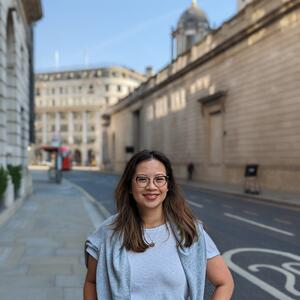
Professor Matthew Reeve presents: "Queer Family Romance and Collecting at Horace Walpole's Strawberry Hill"
Date
Tuesday March 20, 20182:30 pm - 5:30 pm
Location
Watson Hall 517Date
Tuesday March 20, 2018Location
Watson Hall 517Date
Wednesday March 28, 2018Location
Agnes Etherington Art Centre AtriumThis talk is co-sponsored by The Departments of Art History and Art Conservation, Geography and Planning, Psychiatry, the Graduate Program in Cultural Studies, the Principal's Development Fund, and the Agnes Etherington Art Centre.
Start Date
Thursday April 5, 2018End Date
Saturday April 7, 2018Time
12:00 pm - 12:00 pmLocation
Agnes Etherington Art Centre, Queen’s University
|
Hosted by: |
Queen’s University, Art Conservation Program |
|---|---|
|
When: |
April 5-7, 2018 |
|
Where: |
April 5
April 6
April 7
|
Please find the schedule here: ANAGPIC 2018 Schedule
Please find the list of student speakers and abstracts here: Speakers and Abstracts
The Art Conservation Program at Queen’s University is pleased to host the 44th annual ANAGPIC student conference on April 5-7, 2018. The conference will give student representatives from each of the eight ANAGPIC member institutions the opportunity to present the research, treatment, and/or technical analyses undertaken at their respective institutions. Speaker sessions will take place at the Bellevue Ballroom at the Holiday Inn Kingston Waterfront on April 6, and the Biosciences Complex Auditorium at Queen’s University on April 7. We will be hosting a welcome reception at the Agnes Etherington Art Centre and a banquet dinner at the University Club at Queen’s University on April 5 and 6 respectively.
This year’s Angelica Rudenstine Lecture will be given by Heidi Swierenga, Senior Conservator and Head of the Collections Care, Management, and Access department at the UBC Museum of Anthropology. She is an object conservator specializing in the care and use of Indigenous belongings. She is also an associate in the department of Anthropology at UBC where she teaches the conservation of organic and inorganic materials. She has published and lectured on conservation issues, has developed and delivered several workshops in her region on collections care and preservation, and has also served as a consultant on numerous special projects ranging from the care and movement of monumental works to the care of family belongings in communities. Her lecture, to be given on April 6, is entitled “Rights of Use and Permissible Risk: 7 Objects that Shaped a Practice.”
Queen’s University is situated on traditional Anishinaabe and Haudenosaunee territory. We have paid homage to the Anishinaabe and Haudenosaunee peoples through our logo: the Thunderbird is a powerful spiritual symbol for the Anishinaabe, while the Two Row Wampum signifies the 1613 mutual treaty agreement declaring peaceful coexistence between the Haudenosaunee and Dutch settlers. This year’s proceedings will be blessed by Mishiikenh (Vernon) Altiman, Cultural Counsellor at Four Directions Aboriginal Student Centre, Queen’s University, who will be opening and closing our conference with a pipe ceremony to first welcome and later wish our guests safe travels as they return home.
Thank you to our conference co-chairs, Colette Hardman-Peavy, Valerie Moscato, Lauren Osmond, and Rosaleen Hill for their work in preparation for this conference. We would also like to thank our generous sponsors:


Start Date
Tuesday December 3, 2019End Date
Wednesday December 4, 2019Time
12:00 pm - 12:00 pmLocation
Interested in studying in Vienna this winter? From December 3-14, 2018, join instructor Prof. Ron Spronk for ARTH 844, Topics in Northern Renaissance Art, "The Hand of the Master; Materials and Techniques of Pieter Bruegel the Elder". The seminar is in conjunction with the Kunsthistorisches Museum's Bruegel exhibition in Vienna.
Download the course description (1.3MB)
Date
Monday November 4, 2019Location
Julie Hollenbach, an Art History PhD graduate from Queen's has curated a show at the Mount Saint Vincent University Art Gallery in Nova Scotia.
Date
Saturday October 20, 2018Location
15 Bader Ln, Agnes Etherington Art Centre ExtensionStart Date
Saturday November 3, 2018End Date
Saturday November 17, 2018Time
12:00 pm - 12:00 pmLocation
Come find out more about your community-to-be. Explore your learning spaces, talk to your professors, hear from current students and get a feel for how awesome Kingston is to live in. All 30+ of our Arts and Science departments will have professors and students to talk to. Most importantly Fall Preview will give you a feel of what it will be like to sit in our classrooms - participate in a tour, a living lecture or hands-on demonstration.
Date
Wednesday January 16, 2019Location
Agnes Etherington Art Centre 36 University Ave, Kingston, ONThis presentation by Chris Stavroudis will introduce the various uses of silicone solvents for art conservation in both theory and practice and will review the formation and uses of emulsions, both conventional and microemulsions.
Silicone solvents, relatively new to conservation, possess many properties of great utility to conservators. They are relatively non-toxic, have little to no odor, and are sublimely nonpolar. They have uses as neat solvents; in solvent mixtures; as protective, water-repellant barriers; and as components in microemulsions and polymeric emulsion stabilized systems. Modified silicone solvents, liquids and gels will be discussed as ways to extend the utility of the silicone world.
Chris will also provide an introduction to The Modular Cleaning Program (MCP), a systematic approach he developed to assist cleaning artworks. The MCP consists of a series of concentrated stock solutions and a computer database which may be adapted for the creation of liquid, emulsified and gelled cleaning agents.
Chris Stavroudis is a private paintings conservator in Los Angeles. He developed the Modular Cleaning Program in 2002 as an off-shoot of the work of Richard Wolbers and the Gels Cleaning Project at the Getty Conservation Institute. The Modular Cleaning Program is both an approach to cleaning and a FileMaker Pro database. He has codified the scientific basis of aqueous cleaning and solvent theories into the logic of the computer database. The program models aqueous chemistry at a given pH, reflects an ad-hoc theory of solvent gel formulation, and makes calculations in Hansen solubility space as it guides the conservator in the preparation of test cleaning solutions.
Chris obtained undergraduate degrees in Chemistry and Art History from the University of Arizona and his Master’s degree from the University of Delaware/Winterthur program in 1983.
Date
Monday February 4, 2019Location
Are you interesting in learning about our Art Conservation program? Then please join us for a webinar which will include faculty and students.
Date
Tuesday February 26, 2019Location
Various