 Queen's 2015 Nobel Prize in Physics
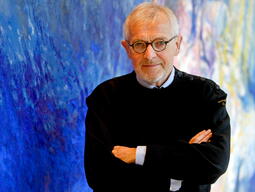
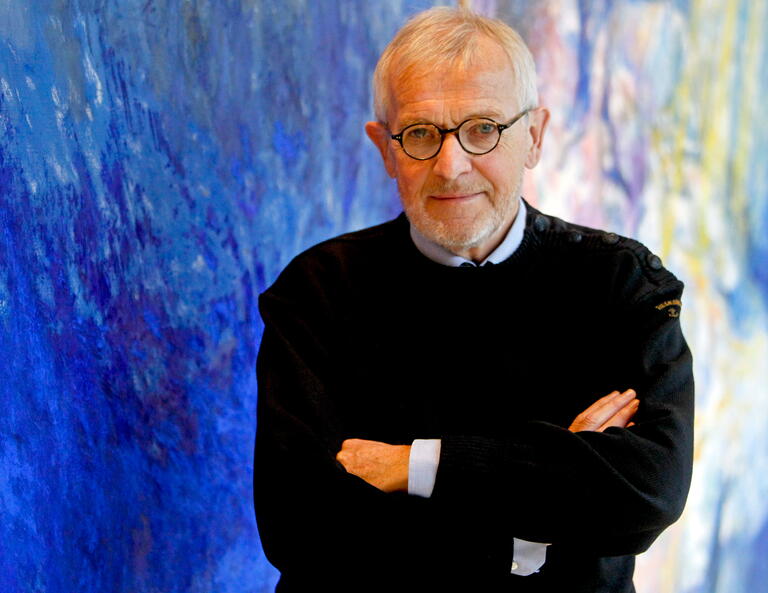
Professor Francis Halzen (University of Wisconsin at Madison) was announced Tuesday morning as the winner of the 2026 Nobel Prize in Physics, for "decisive contributions to the IceCube Neutrino Observatory and the discovery of high-energy neutrinos of astrophysical origin."
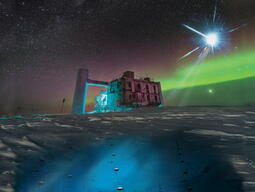
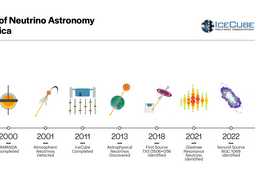
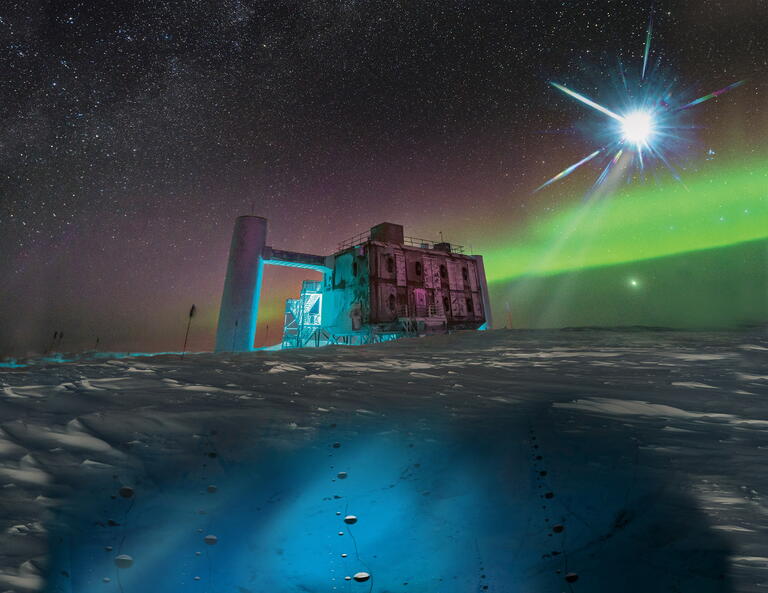
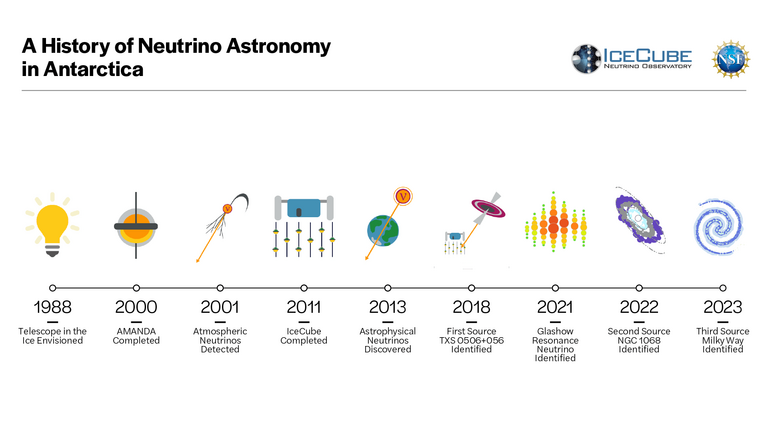
The Observatory is located at the Amundsen-Scott South Pole Station in Antarctica and is a cubic-kilometre-sized detector located 1.45 km beneath the geographic south pole. The in-ice detector is a three-dimensional array of photosensors that detects the faint light generated by particles travelling faster than the speed of light in the ice. This measurement requires sophisticated analysis and long exposures to overcome the huge background induced by cosmic ray particles, allowing them to detect the ghostly signatures of cosmic neutrinos. Construction of the IceCube detector was completed in 2011 after decades of development, including the precursor experiment AMANDA. IceCube comprises 86 strings containing 5,160 digital optical modules. The collaboration announced the first detection of astrophysical neutrinos, originating from outside the solar system, in 2013. Since the discovery, the collaboration has seen hundreds of neutrinos of extraterrestrial origin, and has identified the sources of only a few of these high-energy neutrinos. Neutrino astronomy remains in its infancy, and the highest-energy neutrinos still maintain many secrets yet to be uncovered.
The IceCube collaboration currently counts more than 450 members from 58 institutions in 14 countries. This includes scientists in the Department of Physics, Engineering Physics and Astronomy at Queen’s University: Professors Park, Vincent and Clark (former member), Dr. Thwaites, and graduate students (Owens, Brisson-Tsavoussis), searching for the origin of high-energy neutrinos with IceCube and future observatories: IceCube-Gen2, P-ONE (Canada) and TAMBO (Peru). Professor Halzen has many connections to researchers at Queen’s, and last visited in 2019 to deliver the Ewan Lecture public talk. One digital optical module built for the IceCube detector is currently on display in the McDonald Institute Visitor Centre, located on the 3rd floor of Stirling Hall.
Nobel Prize Official Website CBC News IceCUBE press releaseFrancis’s 2019 Ewan Lecture