

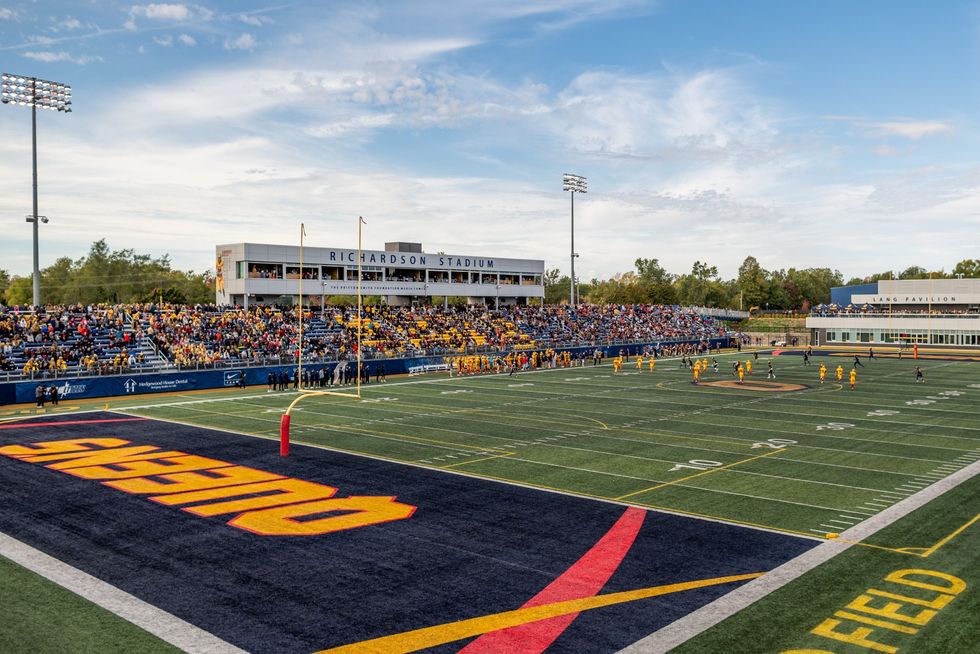
Ten years ago this September, on a wet and windy Saturday afternoon, the Gaels’ Nick Liberatore, Artsci’21, Ed’22, sent the first kickoff 53 yards downfield at the newly revitalized Richardson Stadium.
A crowd of 5,786 came out to see Queen’s take on Western, with fans arriving early to connect and take in their gleaming new surroundings. The Gaels would lose 27-13, but the stadium itself was the story of the day.
“It’s beautiful and all the players were in awe,” linebacker Michael Moore, Artsci’18, told the Kingston Whig-Standard afterward.
The next day, Richardson was all about soccer. Queen’s women and men took to the new artificial turf alongside local teams for Kingston Community Soccer Day.
It was a fitting opening weekend for what the new stadium was meant to be – a place built to strengthen Queen’s football but designed from the start to serve all of Queen’s and the wider Kingston community.
Ten years later, it’s done that and then some, says Linda Melnick, Queen’s Executive Director of Athletics and Recreation. Richardson has given football a stronger platform to recruit and compete, while at the same time becoming a home for other varsity teams, student and alumni traditions, major championships, community sport, and even a sold-out rock concert.
“When we celebrate the 10th anniversary of the revitalization of Richardson Stadium, we’re not simply celebrating a building,” says Melnick. “We’re celebrating the vision of those who believed in the exceptional meaningfulness of the Queen’s experience.”
That vision was championed by football alumni who formed the Red Banner Society (RBS) in 2015. Their plan for helping strengthen the football program centred on coaching, athletic awards, and first-class facilities.
“Basically, we said: What is required to attract the nation’s best? Whether it’s students, researchers, or athletes, that same question needs to be asked,” says founding RBS member and former Gaels defensive back Bob McFarlane, Com’83.
The new stadium was one key answer.
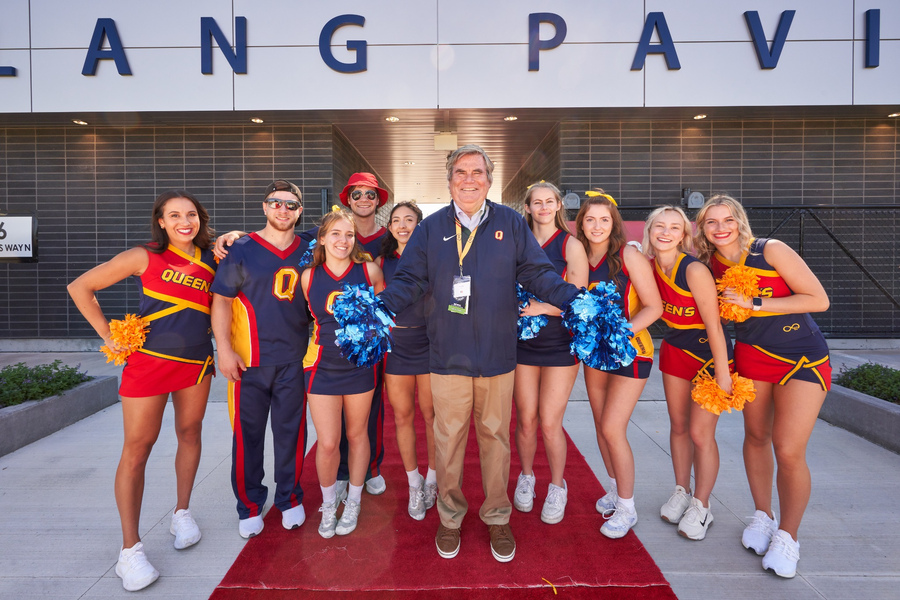
Stu Lang, Sc’74, joins Queen’s cheerleaders at the opening of the Lang Pavilion in September 2023.
More than $17 million of the $20-million project was donor-funded, with the RBS leading the charge. Former Gaels star receiver Stu Lang, Sc’74, and his wife, Kim, Artsci’76, pledged $10 million, while the Richardson Foundation gave another $5 million.
The result was a dramatically different Richardson Stadium: artificial turf for Hand Field, bowl seating pulled closer to the action, an upper concourse, modern lighting, and new video and sound systems for The Britton Smith Foundation Media Tower.
The final piece came in 2023 with the Lang Pavilion. More than 300 donors gave more than $11 million for the addition, which brought locker rooms, therapy and meeting spaces, coaches’ offices, and the Bob McFarlane Family Plaza elevated viewing area.
For the Gaels, change was immediate. They went from competing in an aging facility that was literally falling apart to calling one of the premier venues in Canadian university sport home.
“I’ll never forget seeing student athletes walking in for the very first time and experiencing the ‘wow factor,’” says Melnick. “It sends a clear message that Queen’s cares and this is where excellence is pursued.”
That pursuit has increasingly shown up on the gridiron. From 2021 to 2025, the Gaels won a whopping 37 games, reached the Yates Cup three times, and advanced to at least the Ontario University Athletics semifinal every season. Last fall, they captured their first Yates Cup since 2009.
For McFarlane, that sustained success is clear evidence the larger plan is working.
“We’re winning, but we’re winning in the right way,” he says, pointing to players who have gone on to play pro football, become Academic All-Canadians, and succeed after football. “Culture matters. With the leadership of Linda Melnick and Head Football Coach Steve Snyder, we have great leaders that are building that cultural foundation for sustained success.”
But again, he and Melnick stress that Richardson’s impact has been bigger than football.
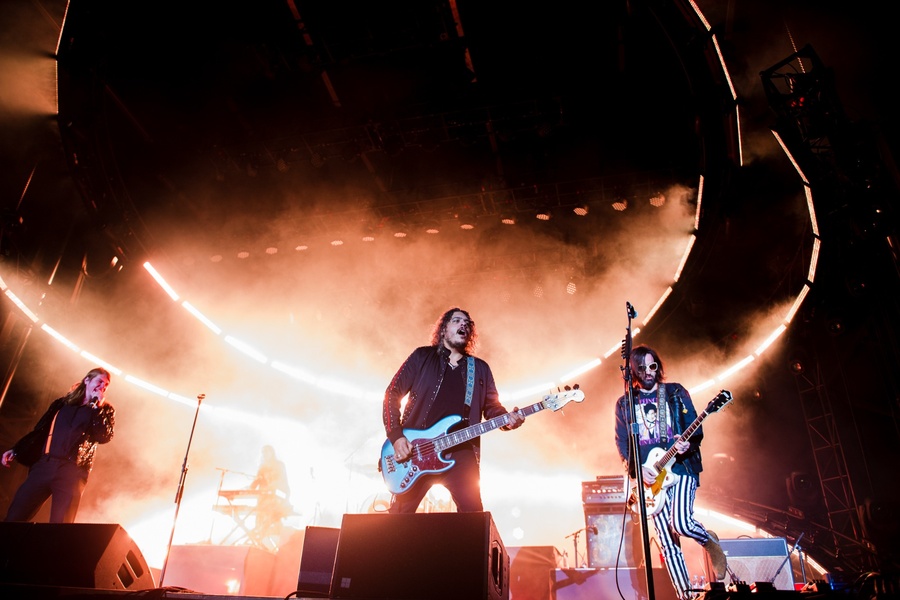
The Glorious Sons performed at Richardson Stadium in September 2019, when about 15,000 people packed the venue for a sold-out concert.
In 2025-26 alone, the stadium logged nearly 1,400 hours of programmed field time, compared with roughly 200 annually before the revitalization.
“This is a gathering space,” says Melnick. “It builds community. It’s a place where people congregate and engage with one another in really meaningful and special ways.”
Exhibit A happens every fall, when Queen’s entire incoming first-year class parades to the stadium for the official welcome. The stadium has also hosted back-to-back Vanier Cups, three straight national youth flag football championships, the 2023 U SPORTS Women’s Soccer Championship, and the CFL’s Ottawa REDBLACKS training camp.
And in September 2019, hometown rock band The Glorious Sons packed about 15,000 people into Richardson for a sold-out concert.
For McFarlane, that night crystallized the wider aspirations of the RBS and everyone who made the new stadium a reality.
“That’s when I really went, ‘You know what? We delivered the goods. That was what the vision was all about.’”
A decade on, he sees Richardson as part of something even larger.
“Queen’s is clearly an outstanding academic institution. But what sets it apart from other leading academic universities is the student experience and its traditions – and this stadium is huge for both,” he says.
“I really encourage anyone to drop in. You’ll be proud of what you see.”
Help strengthen the teams, programs, and spaces that bring the Queen’s community together. Support Athletics and Recreation at Queen’s.
