

More than a million Canadians and Newfoundlanders served in uniform during the Second World War – an astounding number given Canada’s population was just 12 million in 1945.
Some 45,000 never came home.
Among them were some 175 members of the Queen’s community.
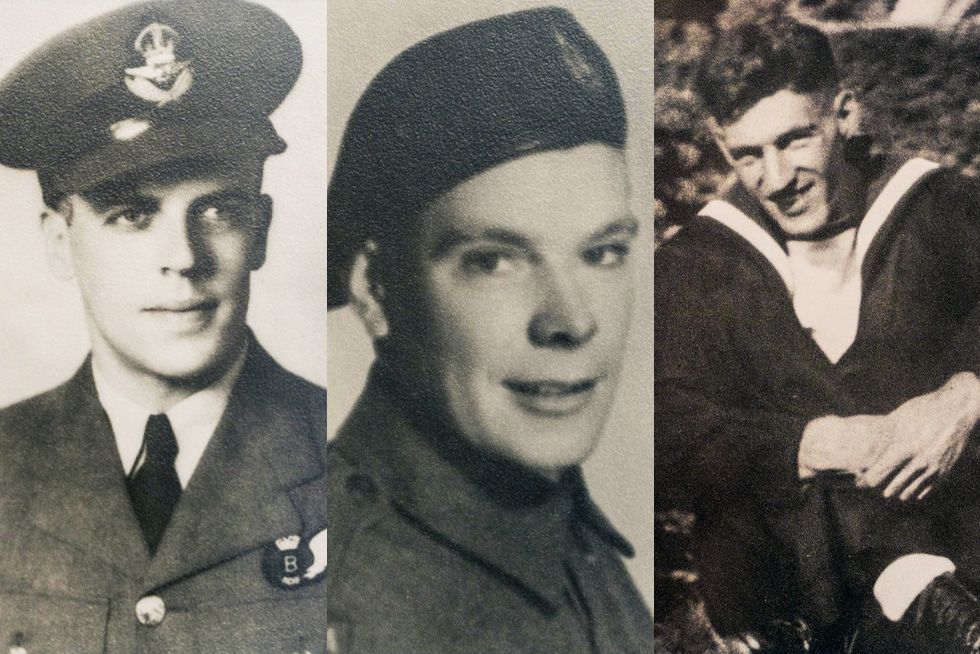
Eighty years after the war’s end, their names and faces will once again have a permanent place of honour inside the newly renovated John Deutsch University Centre (JDUC). Framed photographs of those who died will be displayed in the building – a lasting tribute to ensure their sacrifices are never forgotten.
The photos are scheduled to go up in the JDUC in the coming months. First, they’ll be exhibited at the Service of Remembrance on Nov. 11 in Grant Hall. Following the service, all their names will be read aloud during a ceremony at the 5th Field Company Plinth on campus near the intersection of Union Street and Fifth Field Company Lane.
The fallen represented all three branches of the military: army, air force, and navy. They came from across Canada, first to Queen’s, and then, between 1939 and 1945, to fight for their country.
Most were alumni, such as Lieutenant Bruce MacKenzie Deans, Com’38, from Barrie, Ont., who served with the Canadian Armoured Corps. He took part in the D-Day landings in Normandy, on June 6, 1944. Five days later, as Canadian forces pushed inland, he was killed in a tank battle at Le Mesnil-Patry, France.
Others were students who cut their studies short to join the war effort. Flying Officer George Publow Kinnear, Meds’47, from Kingston, spent a year at Queen’s before enlisting in the Royal Canadian Air Force in 1942. He became a bombardier and was killed on April 23, 1944, when his Halifax bomber was shot down over Dusseldorf.
Like Deans and Kinnear, many died in Europe as Allied forces advanced toward Berlin. But some losses came closer to home. Able Seaman Donald Winchester White, Com’36, of Peterborough, Ont., died April 16, 1945, when a German U-boat torpedoed his ship, HMCS Esquimalt, near Halifax.
Putting the photos of Queen’s community members who died in the war on permanent display is an important way to honour their service, says Cathi Corbett, Artsci’76, Artsci’80. “They are part of Canadian history that we need to remember.”
Corbett has a personal connection to the project. Her mother, Beatrice Corbett, BA’44, MA’95 – who served as a codebreaker on Vancouver Island, B.C., during the war – worked in the 1990s with Queen’s faculty, staff, and alumni to identify the servicemen in the photos.
Their photographs were originally displayed after the war in the Students’ Memorial Union (now the JDUC) but were removed after a 1947 fire. When the photos and a separate list of names were rediscovered in the 1980s, the crucial document linking names to faces had been lost, leaving the servicemen’s pictures unidentified.
That sparked a lengthy effort by Professor Stewart Webster, Queen’s archivists, Beatrice Corbett, and others to restore the record. Alumni, military regiments, and community members were called on for help. The Queen’s Alumni Review even published unidentified photos in hopes that classmates could recognize them.
Eventually, all the names were matched to their photos. In 1995, the framed portraits were once again displayed in the JDUC with each service member’s name, rank, military branch, and grad year below. When JDUC renovations began in 2022, they were removed for safekeeping.
With construction now complete, Cathi Corbett says she’s delighted the frames will soon return to their rightful place. “I think it’s important that we keep their memory alive,” she says.
While these servicemen never came home to their loved ones, they will once again have a permanent home at Queen’s.
