

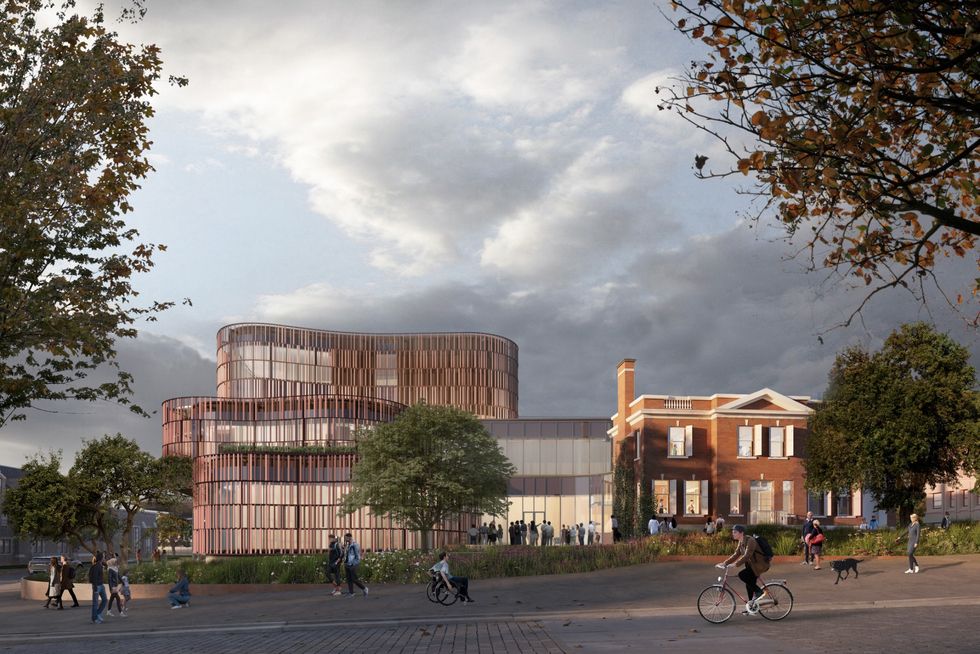
Over on University Avenue, the new Agnes Etherington Art Centre is still a construction zone. But inside its temporary home in the Rideau Building, the Agnes team is already figuring out how to bring it to life.
On a big table sits a scale model of the new galleries and spaces, letting staff test how works might be arranged. They can even put a phone inside and take photos to create lifelike images of how exhibits might look to visitors.
It won’t be long, though, until that tiny model becomes real and a new chapter in Agnes’s long story of generosity begins.
Thanks to a landmark US$75-million gift from Bader Philanthropies, along with public investment and years of community input, the Agnes Reimagined project is transforming the art centre into the largest public university-affiliated museum in Canada. When it reopens later in 2027, it will be what the Agnes team calls a “living museum” – a place designed as much for gathering and connection as for viewing art.
“It’s going to be so much more than just an extension of a museum,” says Michael Charlebois, Agnes’s communications and marketing coordinator. “It’s going to really help people rethink how they can experience art and what museums can actually be.”
That rethink will take many forms: twice as much gallery space, a hub for performances and events, a café, new spaces for Indigenous cultural practices, and an artist’s residency in Etherington House.
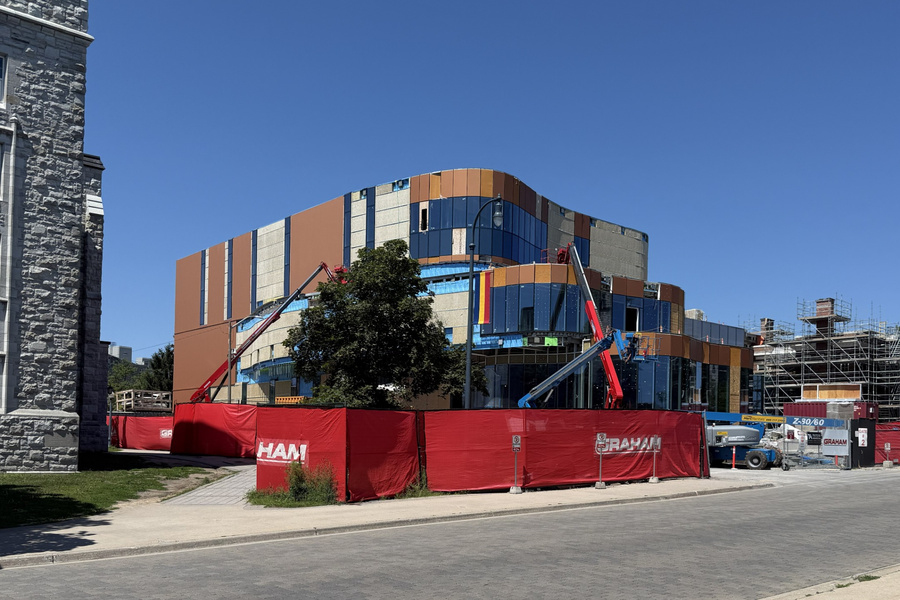
The reimagined Agnes takes shape on University Avenue in August 2026. (Michael Charlebois)
The public can follow the construction progress on Agnes’s livestream, but finishing the building is only one part of the project. Gallery setup, collection moves, exhibition installation, and other preparations are expected to continue well into 2027. That work may be largely out of sight, but it isn’t entirely new territory for the Agnes team. Since closing for construction in spring 2024, Agnes has had to reframe how – and where – it works.
For the rest of 2024, Agnes went on a nomadic adventure, taking exhibitions, performances, lectures, screenings, and programming to sites across Queen’s, Kingston, and Ontario.
Since late 2024, its home base has been the Rideau Building, where it used a street-level garage and other spaces for exhibitions and programming. That off-site exhibition phase has now wrapped as Agnes prepares to return home, though programming and some exhibitions continue at satellite sites in Kingston and beyond.
The past couple of years have been a big learning curve, says Charlebois.
“It’s experimentation and finding new ways of working, building relationships with partners and communities, and, on the bigger-picture level, realizing that art isn’t defined by a museum or a single building,” he says. “It can happen outdoors. It can happen in other spaces.”
Meanwhile, the 17,000-plus objects in Agnes’s collection are securely stored at an offsite location under precise temperature, humidity, and security conditions.
Moving them back has been a big topic of conversation around the office, says Charlebois.
“It’s going to be an enormous task, and it’s going to be all hands on deck no matter who you are.”
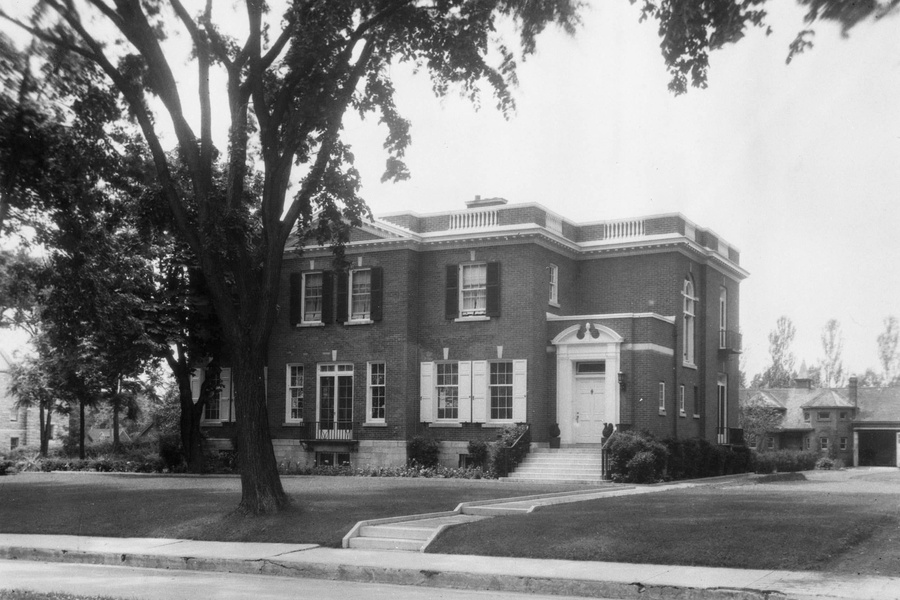
Agnes Etherington’s home in the 1930s-40s before it became an art gallery. Part of the upstairs is currently being converted into a two-bedroom residence for artists-in-residence while the downstairs will be a community hub, with a café and art studio. (Queen’s Archives)
Once students and visitors return, the focus will be hospitality and connection, just as it has been from the very beginning of the design process.
A focal point will be what the architect calls a lily pad – a three-storey pavilion that supports some of Agnes’s newest spaces. Among them is a flexible, 250-person arts and events hub for everything from concerts and performances to screenings, art installations, conferences, and weddings. Elsewhere are new learning areas, Indigenous self-determination spaces, 5,000 square feet of new exhibition rooms, outdoor spaces, and a big open “living room” that welcomes people into the building.
And amid all this change, the red-brick house that Agnes Etherington bequeathed to the university and Kingston community in 1954 will still stand. It’s currently being returned to a home – a two-bedroom residence where artists-in-residence can temporarily live, work, and give back to the community themselves.
But before anyone moves into Etherington House or visitors walk through the front doors, there is still plenty to do. Specialized museum systems need to be tested, galleries and collection storage need prepping, exhibitions and programming need planning, and the day-to-day workings of a much larger museum need building from scratch.
Charlebois sees that work as part of the same story of generosity that began with Etherington’s home and has continued through the Baders’ remarkable gift, public support, and the time, knowledge, and ideas given by the community.
Soon, Agnes will have more to give back itself.
“It’s all about being able to cast our net even wider,” says Charlebois.
Help carry Agnes’s tradition of generosity forward. Consider giving to the Celebrating Agnes Fund to support exhibitions, artist talks, tours, screenings, and outreach programs that bring the new centre to life.
