Chelsea Dunn

Chelsea Dunn

Chelsea Dunn

Network Coordinator (RN-WPS)

Dept. of Political Studies

Queen's University

chelsea.dunn@queensu.ca

Mackintosh- Corry Hall, Room B307

About

Chelsea Dunn is a doctoral student in the Department of Political Studies at Queen's University where she specializes in International Relations and Comparative Politics. She holds an M.A. in Political Science from the University of Victoria and a B.A. (Hons.) in Political Studies from Queen's. Chelsea’s research considers the global political economy of environmental governance. Using a feminist historical materialist lens, she aims to examine the global relations of power that produce uneven ecological outcomes in the context of climate change. Specifically, her work interrogates efforts to contain escalating ecological disruptions in urban settings, which are simultaneously spaces of everyday survival—linking housing, employment, and social reproduction—and sites of production and circulation driving global capitalism.

Chelsea’s doctoral research focuses on the multi-scalar governance of flooding in Manila, Philippines. By exploring how flooding alters urban rhythms of survival and accumulation in a relational manner, she hopes to reveal who benefits from current configurations of flood governance and the power relations therein. She is also currently working on a project that examines the discourses, myths, and governance practices surrounding climate change-induced migration and displacement.

Research Interests

  • Global Political Economy
  • Environmental Politics
  • International Relations

Recent Publications

  • Dunn, C. and Sharma, S. E. (under review). ‘Governing climate-induced displacement: Resilience and rendering disposable in the global South.’ Review of International Political Economy.

Online

Philip T. Gebert

Philip T. Gebert

Philip Gebert

Political Advisor

Office of the Minister of Immigration

Refugees and Citizenship Canada

About

Philip T. Gebert is a political advisor in Canada’s federal government, specializing in policy analysis, strategic planning, and stakeholder engagement, with a focus on complex policy issues and geopolitics. Known for his strong communication skills and ability to build high-level partnerships, he excels in fast-paced, politically sensitive environments.

A former Royal Canadian Air Force officer, he now serves as an officer in the Royal Westminster Regiment. He holds a MA in War Studies and a BA in Political Science (Hon.) from the Royal Military College of Canada, and has studied International Affairs at the Lee Kuan Yew School of Public Policy in Singapore. His writing reflects a deep interest in geopolitics, political philosophy, international economics, and civil-military relations.

Research Interests

  • Civil-Military Relations
  • Great Power Competition
  • American Foreign and Defence Policy

Recent Publications

Online

  1. LinkedIn: https://www.linkedin.com/in/philiptgebert

Aditi Malhotra

Aditi Malhotra

Aditi Malhotra

Editor-in-Chief, Canadian Army Journal

Department of National Defence

About

Dr. Aditi Malhotra is the Editor-in-Chief of the Canadian Army Journal. She is also a Fellow at the Canadian Global Affairs Institute.

Malhotra is the author of two books, Understanding Security Role Evolution of US, China and India: Setting the Stage (Routledge, 2022), and India in the Indo-Pacific: Understanding India's Security Orientation towards Southeast and East Asia (Verlag Barbara Budrich, 2022). Before her current role, she was the co-editor for the Journal for Intelligence, Propaganda and Security Studies (Graz, Austria). She was previously a Visiting Fellow at the Henry L. Stimson Center (Washington, D.C.) and the Norwegian Institute for Defence Studies (Oslo).

Malhotra has also held positions as a Senior Research Fellow at the National Institute of Advanced Studies and an Associate Fellow at the Centre for Land Warfare Studies (CLAWS) in India. At CLAWS, she was also the deputy editor of Scholar Warrior, a bi-annual security journal.

Malhotra earned her Ph.D. in Political Science from the University of Muenster, Germany, and holds a Master’s in International Studies from the University of Sheffield, United Kingdom. She writes on security issues in the Indo-Pacific region and nuclear deterrence and proliferation in Southern Asia.

Research Interests

  • Indo-Pacific Security
  • International Relations
  • Nuclear proliferation and deterrence   

Recent Publications

Online

LCol Andrew L. Brown, PhD

LCol Andrew L. Brown

Andrew Brown

Associate Professor

Dept. of History

Royal Military College of Canada

About

Dr. Andrew L. Brown is an associate professor at the Royal Military College of Canada, where he teaches history and serves as the Associate Chair of the War Studies graduate program. He is also an Army Intelligence Officer. He has served in the Royal Canadian Regiment, 3 Commando (the Canadian Airborne Regiment), Canadian Special Operations Forces Command, and in various capacities at the tactical, operational, and strategic levels. He is a graduate of the Canadian Army Command and Staff College and the Joint Command and Staff Programme. His operational deployments include tours in Somalia, Rwanda, Bosnia, and Afghanistan.

Research Interests

  • The Canadian Army in the World Wars
  • Officer and NCO training in the Canadian Army
  • The role of intelligence in military operations

Recent Publications

  • “Battle Exhaustion and Manpower Conservation:  Canadian Army ‘Human Salvage Operations’ in Northwest Europe, 1944-45.”  Journal of Military History 89, no. 2 (2025): 397-423.  

  • Building the Army’s Backbone:  Canadian Non-Commissioned Officers in the Second World War.  UBC Press, 2021.   

  • “Stepping in New Directions:  The Canadian Army’s Observer Program in the Asia-Pacific Region, 1944-45.”  Canadian Military History 28, no.1/article 2 (2019):  1-36. 

  • “Cutting its Coat According to the Cloth:  the Canadian Militia and Staff Training before the Great War.”  War & Society 34, no. 4 (October 2015):  263-286. 

  • “New Men in the Line: An Assessment of Reinforcements to the 48th Highlanders in Italy, January-October 1944.”  Canadian Military History 21, no. 3 (2012):  35-47.

Online

  •  

Marie-Michèle Doucet

Marie-Michelle Doucet

Marie-Michèle Doucet

Department Head, Professor

Dept of History

Royal Military College of Canada

About

Dr Marie-Michèle Doucet is a professor at the Department of history at the Royal Military College of Canada since 2016. She teaches social European history, international relations history of the first half of the 20th century as well as many specialized classes in history of genocide and women's history.

She completed her PhD in history in 2016 at the University of Montreal under the supervision of professor Carl Bouchard. Her main field of research are European peace movements after the First World War, as well as women's roles and places in early 20th century European society. She also has many publications on the topic of women and the Armenian genocide. Dr Doucet is currently chair of the Department of History.

Research Interests:

  • Gender studies
  • Women and security
  • Disarmament

Recent Publications:

  • Peacekeeping: Perspectives Old and New, edited by Howard Coombs, Magali Deleuze, Kevin Brushett & Marie-Michèle Doucet, Martello Papers, April 2023
  • « Celles qui n’entrent pas dans la guerre : quand les pacifistes françaises préparent la paix et la réconciliation (1915-1920) », La paix dans la guerre. Espoirs et expériences de paix (1914-1919), Jean-Michel Guieu & Stéphane Tison (eds.), Éditions de la Sorbonne, 2022. 
  • « ‘So That Our Sons Have Not Died in Vain': Calls for Peace from Pacifist and Non-pacifist Mothers after the Great War », Beyond the Great War: Making Peace in a Disordered World, Norman Ingram et Carl Bouchard (eds.), University of Toronto Press, 2022.
  • « Les pacifistes françaises et l’occupation de la Ruhr », numéro spécial « 1918-1920 : les peuples font la paix », sous la direction de Carl Bouchard et Jean-Michel Guieu, Matériaux pour l’histoire de notre temps, Vol. 2, No. 129-130, 2019, pp. 48-53. 
  • « Faire la paix par l’humanitaire. Les pacifistes françaises au secours des enfants d’Allemagne, un premier pas vers un rapprochement franco-allemand (1919-1925) », numéro spécial « Paix, pacifisme et dissidence en temps de guerre (XXe- XXIe) », Cahiers d’Histoire, Vol. 35, No. 2, 2018, pp. 25-41.

Online

  •  


Maximum Canada with guest speaker Tim Martin

Date

Friday October 25, 2024
12:00 pm - 1:00 pm

Location

Queen’s University, Robert Sutherland Hall Rm. 334

Tim Martin


Kandahar, Afghanistan was maximum Canada. Canada’s longest war and biggest military operation since the Korean war took our government to its limits of military and civilian capacity — and political will too. What did that look like and feel like to those who were there? What are the lessons we can’t afford to forget the next time our country is called upon to serve in the epicentre of a geopolitical crisis? Tim Martin the last RoCK (Representative of Canada in Kandahar) and author of Unwinnable Peace is proud, mad and sad. Let him tell you why.


Biography:

Tim MartinA career diplomat, Tim has led in the epicenters of geopolitical crises from Somalia to Kandahar. He was the Horn of Africa foreign policy officer during Canada’s Somalia mission and saw the crisis unfold in both Mogadishu and Ottawa. When Canada established diplomatic relations with the Palestinian authority, Tim went to Ramallah to open and head up Canada’s Representative Office to the West Bank and Gaza. He was there for three years from the high point of the peace process to the eruption of the second intifada. In Nairobi he tracked the pillaging of Congo resources in the aftermath of the Rwanda genocide and went on to be Chairman of the Kimberley Process to ban blood diamonds.
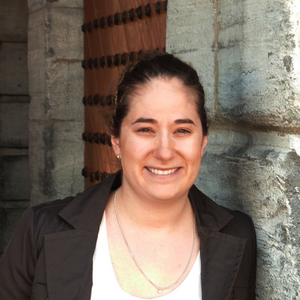
A career diplomat, he has served as Ambassador to Colombia and Argentina.  He was the last Representative of Canada in Kandahar, Afghanistan (RoCK). Leading a joint Canadian/US provincial reconstruction team of over 100 civilian and military personnel, Tim was responsible for delivering governance, development, humanitarian assistance, prison reform and police training alongside the NATO military mission in Kandahar— homeland of the Taliban.

Now dedicated to writing, Unwinnable Peace follows his debut political thriller, Moral Hazards.

Amarnath Amarasingam

Amarnath Amarasingam

Amarnath Amarasingam

Associate Director Publications

School of Religion

Queen's University

aa152@queensu.ca

Theological Hall - Room 405

About

Amarnath Amarasingam is an Assistant Professor in the School of Religion, and is cross-appointed to the Department of Political Studies, at Queen’s University in Ontario, Canada. His research interests are in terrorism, radicalization and extremism, conspiracy theories, online communities, diaspora politics, post-war reconstruction, and the sociology of religion. He is the author of Pain, Pride, and Politics: Sri Lankan Tamil Activism in Canada (2015), and the co-editor of Stress Tested: The COVID-19 Pandemic and Canadian National Security (2021) and Sri Lanka: The Struggle for Peace in the Aftermath of War (2016). He has also published over 60 peer-reviewed articles and book chapters, has presented papers at over 100 national and international conferences, and has written for The New York Times, The Monkey Case, The Washington Post, CNN, Politico, The Atlantic, and Foreign Affairs. He has been interviewed on CNN, PBS Newshour, CBC, BBC, and a variety of other media outlets.

Dr. Amarasingam is an experienced field researcher, having conducted hundreds of interviews for his PhD dissertation on social movement activism, organizational dynamics, and youth identity in the Sri Lankan Tamil diaspora, as well as over 50 interviews with former fighters of the Liberation Tigers of Tamil Eelam (LTTE, or Tamil Tigers) throughout the former war zones of Sri Lanka in 2013 and 2014. He has also conducted field research in Syria, Iraq, Morocco, Somalia, Lebanon, and Israel/Palestine. He co-directed a study on foreign fighters in Syria and Iraq, based at the University of Waterloo, for six years during which he conducted numerous social media and in-person interviews with current and former foreign fighters in Syria and Iraq, as well as parents and close friends of those who travelled to fight. He has also conducted several interviews with former extremists on the far-right and conspiratorial movements.

Research Interests

  •  

Recent Publications

  •  

Online

  • Twitter: @AmarAmarasingam

Caroline D'Amours

Caroline D'Amours

Caroline D'Amours

Assistant Professor

Dept. of History

Royal Military College of Canada

About

Caroline D’Amours, earned a BA in history and an MA in Canadian military history from Université Laval. She earned her PhD in Canadian military history from the University of Ottawa in 2015. Her thesis focused on infantry reinforcement training for the Canadian Army during the Second World War (1939-1945). Dr. D’Amours was then a postdoctoral fellow with the International History Institute at Boston University where she focused on the participation of the Lower St. Lawrence region in the Second World War. Her current research focuses on Quebec’s contribution to the conflict and the combat training of the Canadian Army. She is also interested in the impact of culture on the behaviour of soldiers and populations in conflict situations.

Research Interests

  • Military Culture
  • French Canada’s reaction to, and participation in, world wars
  • Canadian Army Combat Training in the Second World War

Recent Publications

  • 2025 | “’La victoire par l’épargne’ : mobiliser le Québec pour l’achat des Obligations de la Victoire lors de la Seconde Guerre mondiale (1940-1945)”, Revue d’histoire de l’Amérique française (in press).

  • 2025 | “Des groups mobilisés derrière la conscription: les élites rimouskoises et le Camp 55”, Bulletin d’histoire politique (in press).

  • 2025 | “Ready for combat? The impact of French-Canadian Infantry Reinforcements during the Battle of the Scheldt,” in Nicholas Wheeler (ed.), Canada and the Liberation of the Scheldt, 1944-1945, Vancouver, UBC Press (accepted)

  • 2024 | Caroline D’Amours, Hannah Young and Catherine Mavriplis, The Chairs for Women in Science and Engineering Program: Thirty Years of Action Across Canada, from 1989 to 2021. Cham, Springer Nature, 179 p. 

  • 2023 | “Le Centre d’instruction no 55 à Rimouski”, in Soldats de la côte : L’histoire régimentaire des Fusiliers du St-Laurent, 1869-2019 (In Press). 

Online

Mihai Giboi

Mihai Giboi

Mihai Giboi

MA Researcher

Dept. of Political Studies

Queen's University

24glj@queensu.ca

Robert Sutherland Hall, Rm 411

About

Mihai Giboi is a Master's student in the Department of Political Studies at Queen's University, where he will be researching the impact of Russian hypersonic missiles on North American security for his Major Research Project. He is a Research Fellow with the North American and Arctic Defence and Security Network, and has interned with the Conference of Defence Associations (CDA) Institute and the Institute for Peace and Diplomacy as a Research Assistant. Mihai also holds an MA in History degree from Wilfrid Laurier University, where he studied the Canadian Rangers, and a BA in History degree from Mount Allison University. His research interests are in North American and Arctic security, military transformation, deterrence theory, and Russian foreign policy. His forthcoming paper, "Hypersonic Myths and Strategic Realities," is also the first prize winner in the Journal of Military and Strategic Studies 2024 Annual Student Award of Excellence.

Research Interests

  •  

Recent Publications

  •  

Online

  •  

The Military Gateway to a New Life: Stories of Immigrant Soldiers in the Five Eyes

Date

Friday September 20, 2024
12:00 pm - 1:00 pm

Location

Queen’s University, Robert Sutherland Hall Rm. 334

Grace Scoppio

Many countries rely on immigration to sustain their population growth and workforce.  Canada and some of its allies are no exception, having very high rates of foreign-born among their population. On the other hand, immigrants leave their homes in search of a better life, to reunite with family, for economic or humanitarian reasons, and they bring to their new country much needed human capital to fill workforce gaps, including serving in their new country’s military. Due to the limited research on immigrants in the armed forces, we embarked on a qualitative study to explore different immigration and military service experiences, using narrative inquiry to elicit the stories of immigrant soldiers, aviators and sailors serving in the militaries of the Five Eyes countries: Canada, the US, Australia, the UK and New Zealand.


Project Authors:

Grazia Scoppio, PhD

  • Affiliation: Royal Military College of Canada & Queen’s University
  • Tel: (613) 876-4001   Email: scoppio-g@rmc.ca

Aimee Vieira, PhD

Sawyer Hogenkamp PhD Candidate


Biographies:

Grazia ScoppioDr. Grazia Scoppio is a Professor in the Department of Defence Studies, Royal Military College of Canada (RMC), cross-appointed in the Department of Political Studies at Queen’s University and Fellow at the Centre for International and Defence Policy (CIDP) at Queen’s. She held several appointments including Acting Deputy Director Research, Dallaire Centre of Excellence for Peace and Security; Fulbright Canada Research Chair in Peace and War Studies at Norwich University, Vermont, USA; and Dean of Continuing Studies at RMC. She is a member of the Editorial Boards of the Canadian Military Journal and the Comparative and International Education journal (CIE) and was the Editor (French) with Dr. Marianne Larsen, Editor (English) of the CIE journal. Her multidisciplinary research focuses on military personnel issues including: diversity and gender in military organizations; immigrants in the armed forces; indigenous people in the military; and military education. She presented her research at many national and international conferences and authored or co-authored several publications, including the book The Power of Diversity in the Armed Forces – International Perspectives on Immigrant Participation in the Military, co-edited by Scoppio and Greco. She received grants and awards from the Social Sciences and Humanities Research Council of Canada, the Department of National Defence, and Fulbright.
Dr. Aimee Vieira is a Professor of Sociology recently retired from Norwich University in Vermont, USA. She earned her Ph.D. in Sociology from Université de Montréal, in Quebec, Canada. Dr. Vieira has extensive experience conducting qualitative interviews with minority populations, rural residents, immigrants, adult “Third Culture Kids”, entrepreneurs, and military service members. She served as Director of the School of Justice Studies and Sociology at Norwich from 2018 through 2020, and as Deputy Director and Senior Fellow at the Institute for the Study of Culture and Language at the Norwich University Applied Research Institute from 2013-2016. She has collaborated with the Places Institute at SUNY-Oneonta and has served on the Diversity Committee of the Rural Sociological Society and is a past chair of the Racial and Ethnic Minorities Research Interest Group of the same organization. Her publications include research on the use of interpreters in conflict zones, language dimensions of cross-cultural engagements, and minority community rural economies. She also co-authored a US government funded cross-cultural training course for US Army soldiers at the JFK Special Warfare Center and School.         

Sawyer Hogenkamp is a Ph.D. Student in Social Welfare, at University of California Los Angeles (UCLA). He completed a Master of Education (M.Ed.) in Human Development and Psychology at Harvard University and holds a M.Ed. and B.Ed. from Queen’s University in Kingston, Ontario, Canada. Sawyer is pursuing a Ph.D. to further the study of violence and safety in school and community contexts, particularly in under-supervised spatial contexts, and among underserved populations of youth and school staff. Sawyer was a research assistant in the study of the Regular Officer Training Plan using Gender-Based Analysis Plus, examining the experiences of officer cadets in Canadian Military Colleges through an intersectional lens, with the aim to better support women and ethnic minorities in officer training programs. In addition to this project, Sawyer is working with the APA Taskforce on Violence Against Educators, organizing and analyzing data from school psychologists, social workers, counselors, administrators, teachers, and other school staff regarding their perceptions and experiences of violence and safety in their workplace.