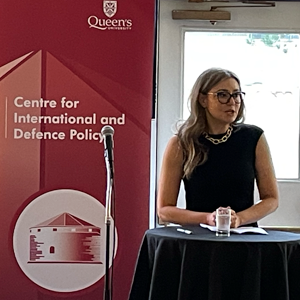
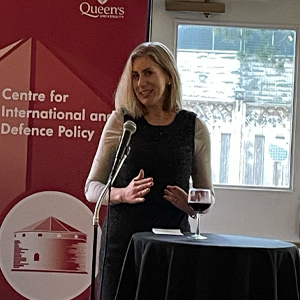
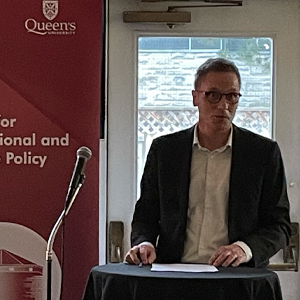
War and Human Security in an Evolving World

Start Date

Tuesday November 19, 2024

End Date

Thursday November 21, 2024

Time

8:30 am - 3:30 pm

Location

Donald Gordon Centre | Kingston, ON

War and Huma Securiy in an Evolving World

Registration Now Open!

Human security in today’s international environment is a complex and pressing issue. Human security goes beyond traditional notions of state security and encompasses the well-being, dignity, and rights of individuals. In a world marked by rapid geopolitical shifts, global challenges, and emerging threats, ensuring human security requires a multifaceted approach covering a range of issues.

Due to the diversity of ongoing and future challenges to people’s safety and well-being, human security needs a holistic and synchronized approach that recognizes the interconnectedness of global issues and prioritizes the well-being of individuals and communities.

Join us in person this November for the KCIS Conference “War and Human Security in an Evolving World”.


visit the KCIS 2024 Conference Page

Michael A. Rostek

Michael A. Rostek

Michael Rostek

Defence Scientist

Defence Research and Development Canada (DRDC)

About

Dr. Rostek is a veteran of the Canadian Armed Forces.  He retired from the Regular Force in 2011 and served as a Reservist until 2022. He obtained his Doctorate (War Studies), from the Royal Military College of Canada and he holds two master’s degrees - a Master of Management in Defence Studies, University of Canberra, Australia and a Master of Arts (Defence Management and Policy), Royal Military College of Canada.  He has held several leadership, academic and research positions in the military and academia. He is currently employed as a Defence Scientist with Defence Research and Development Canada – Toronto Research Centre, member of the Intelligence, Influence and Collaboration Team.

Research Interests

  • International Relations - Security and Deterrence
  • Human Dimension – CAF Operations and the Reserve Force
  • Organizational Change - Strategic Foresight

Recent Publications

  • ROSTEK, M. & Gizewski, P., Deterrence Through Whole-of-Society Resilience – Meeting the Challenge of Hybrid Threats in the Grey Zone, Research Report, Queen’s University (CIDP), 2025.
  • Rostek, M., Revisiting Military Models in Support of Human Security, Forthcoming book:  War and Human Security in an Evolving World, Queen’s University, Center for International and Defence Policy (CIDP), 2025.
  • ROSTEK, M., Coombs, H. & Kelly, P., Measuring Regular and Reserve Force Integration in the Canadian Armed Forces, Forthcoming Canadian Military Journal, DND, Interim Approval granted February 2025.
  • ROSTEK, M., Qasrawi, Y., Teeple, N., Dizboni, A., & Gizewski, P. Development of the American, British, Canadian, Australian, and New Zealand (ABCANZ) Human Dimension Interoperability Survey (HDIS), Forthcoming Canadian Army Journal, GoC, Interim Approval granted October 2024.
  • ROSTEK, M., Qasrawi, Y., Teeple, N., Strategic Foresight: A planning tool for uncertainty and change, Canadian Army Today Magazine, Volume 9, Issue Number 1, May 2025.

Online

Katherine Rossy

photo of Katherine Rossy

Katherine Rossy

Deputy Director

History Dept (RMC)

Katherine.rossy@rmc-cmr.ca

Robert Sutherland Hall, Rm 407

About

Dr. Rossy is Assistant Professor of International History at the Royal Military College of Canada in Kingston, and Deputy Director of Research at the CIDP. She completed her PhD in History from Queen Mary University of London in 2018, where she held a Joseph-Armand Bombardier Canada Doctoral Scholarship before becoming a SSHRC Postdoctoral Fellow at Carleton University from 2019-2022. Dr. Rossy’s expertise lies in the Second World War and early Cold War eras, particularly the history of humanitarianism, human rights, and the laws of armed conflict. She is currently working on a monograph about the evolution of United Nations emergency humanitarianism in all theatres of conflict during the Second World War and its immediate aftermath (1943-48). She is the recipient of a number of awards, including the Alice Wilson Award from the Royal Society of Canada (2019) and the Young Alumna of the Year Award from Concordia University (2020).

Research Interests

  • The Second World War and the Early Cold War
  • The history of humanitarian aid
  • Human rights and the laws of armed conflict

Recent Publications

  • Rossy, Katherine and Samantha K. Knapton, Relief and Rehabilitation for a Post-War World: Humanitarian Intervention and the UNRRA. London: Bloomsbury, 2023
  • Rossy, Katherine. “The Forgotten ‘R’: UNRRA’s Central Tracing Bureau and the Recovery of Missing Persons in Post-war Germany, 1945-47.” In Relief and Rehabilitation for a Post-War World: Humanitarian Intervention and the UNRRA. Edited by Katherine Rossy and Samantha K. Knapton. London: Bloomsbury, 2023. 133-150.
  • Rossy, Katherine and Samantha K. Knapton. “Introduction: Among the Ruins” In Rehabilitation Among the Ruins: The United Nations Relief and Rehabilitation Administration. Edited by Katherine Rossy and Samantha K. Knapton. London: Bloomsbury, 2023. 1-16.
  • Rossy, Katherine. "The (Bio)Politics of Relief: United Nations’ Food Policy Toward Displaced Children in Post-WWII Europe.” In Child Migration and Biopolitics. Edited by Beatrice Scutaru and Simone Paoli. London: Routledge, 2020.
  • Rossy, Katherine. "Forgotten Targets: The Case of Kidnapped and Germanised Children in Post-War Europe.” In Forgotten Fronts: The Unknown Conflicts of the Second World War. Edited by Christopher Murray. London: Routledge, 2019. 209-229.

Online

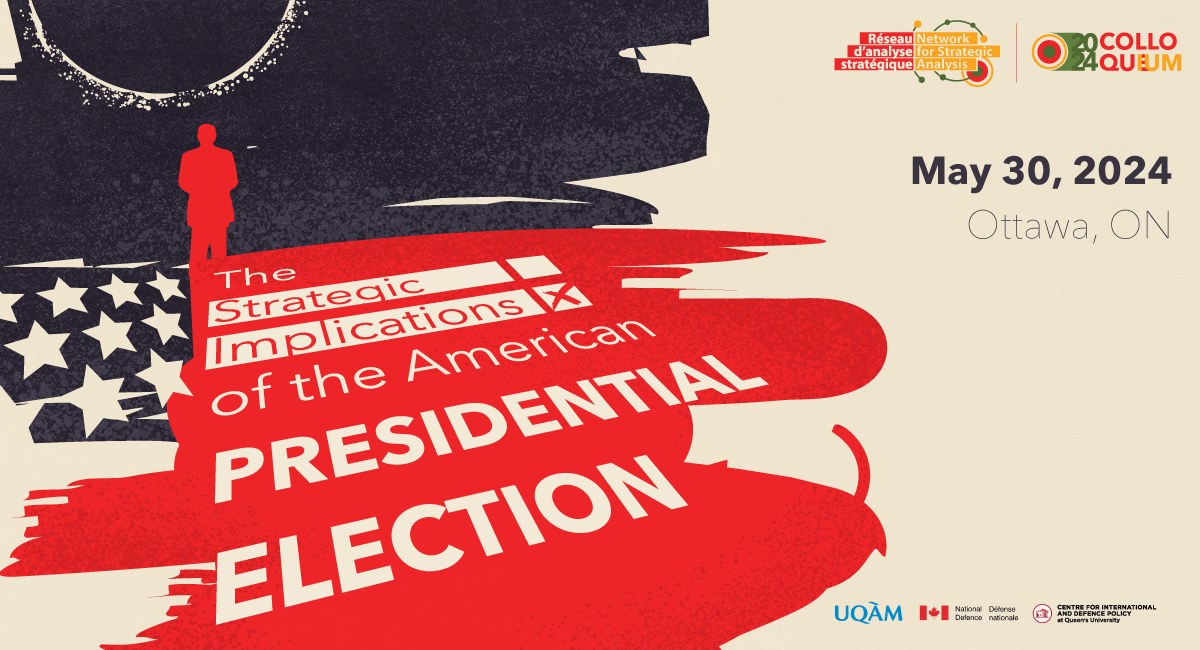
The Strategic Implications of the American Presidential Election

Date

Thursday May 30, 2024
9:00 am - 4:45 pm

Location

Demarais (DMS) 4101, University of Ottawa | Ottawa, ON
2024 Colloquium


This colloquium seeks to analyze the strategic implications of the upcoming U.S. presidential elections on the landscape of international relations, with a particular focus on Canada’s position and strategies. At a time of significant political change in the U.S., we will explore how the election results could reshape global alliances, foreign policies, and international security frameworks by exploring different possible scenarios. The first panel aims to explore the challenges posed by public distrust of institutions, the rise of misinformation, engendering an era of post-truth that intensifies social and political tensions, leading to an escalation of violence. The second panel focuses on the repercussions of a potential American withdrawal from international institutions, signaling a shift towards a more unilateral approach or one based on ad hoc alliances by various states, which could call into question established international norms and rules. It aims to analyze the consequences of this evolution for the international community, and the role of countries like Canada in this new paradigm. Finally, the last panel takes place in a context where the evolution of American policy could lead to a significant change in global leadership. What actions should be envisaged to counter the absence of the United States? International cooperation and diplomacy.


Free Registration


Conference Agenda:

9:00 – 9:15: Opening remarks

9:15 – 10:15: Keynote speaker

10:15 – 10:30: Health break

10:30 – 12:00: Round Table – The Evolving Strategic Environment in a Changing Political World

We’re facing an ever-changing world, where geopolitical dynamics are rapidly evolving, shaping the international landscape. In view of the upcoming U.S. elections and the various scenarios anticipated following a change of leadership, this round table aims to discuss Canada’s strategic issues in relation to the research themes at the heart of the research initiatives identified by our partners.

12:00 – 13:00: Lunch

13:00 – 14:30: Panel 1 – The Post-Truth Era

The contemporary political environment is marked by public distrust of the legitimacy of knowledge and public institutions, shaped by hybrid media, misinformation and contestation. A worrying consequence of this post-truth era is the increase in violence in response to these contested political environments. Social and political tensions are intensifying, fueled by polarized and often manipulated narratives, creating a climate conducive to conflict escalation and radicalization. In such a context, this panel highlights the challenges faced by countries like Canada, seeking to strengthen their resilience in the face of these political and social pressures.

14:30 – 14:45: Health break

15:00 – 16:30: Panel 2 – The Weakening of International Institutions (Post-Rule)

With the upcoming US presidential elections, it is possible to anticipate a potential change in the international order, more specifically in relation to a disengagement of the United States from international institutions. Instead of relying on institutions such as the United Nations, the World Trade Organization or various regional alliances to resolve conflicts and manage global affairs, many states are considering following their own interests unilaterally or through ad hoc alliances, ignoring established rules and norms. This panel aims to explore the implications of this paradigm shift for the international community as a whole, but also what avenues Canada can contribute in such a context of weakening international institutions.

16:30 – 16:45: Closing remarks

17:00 – 18:30: Networking Event

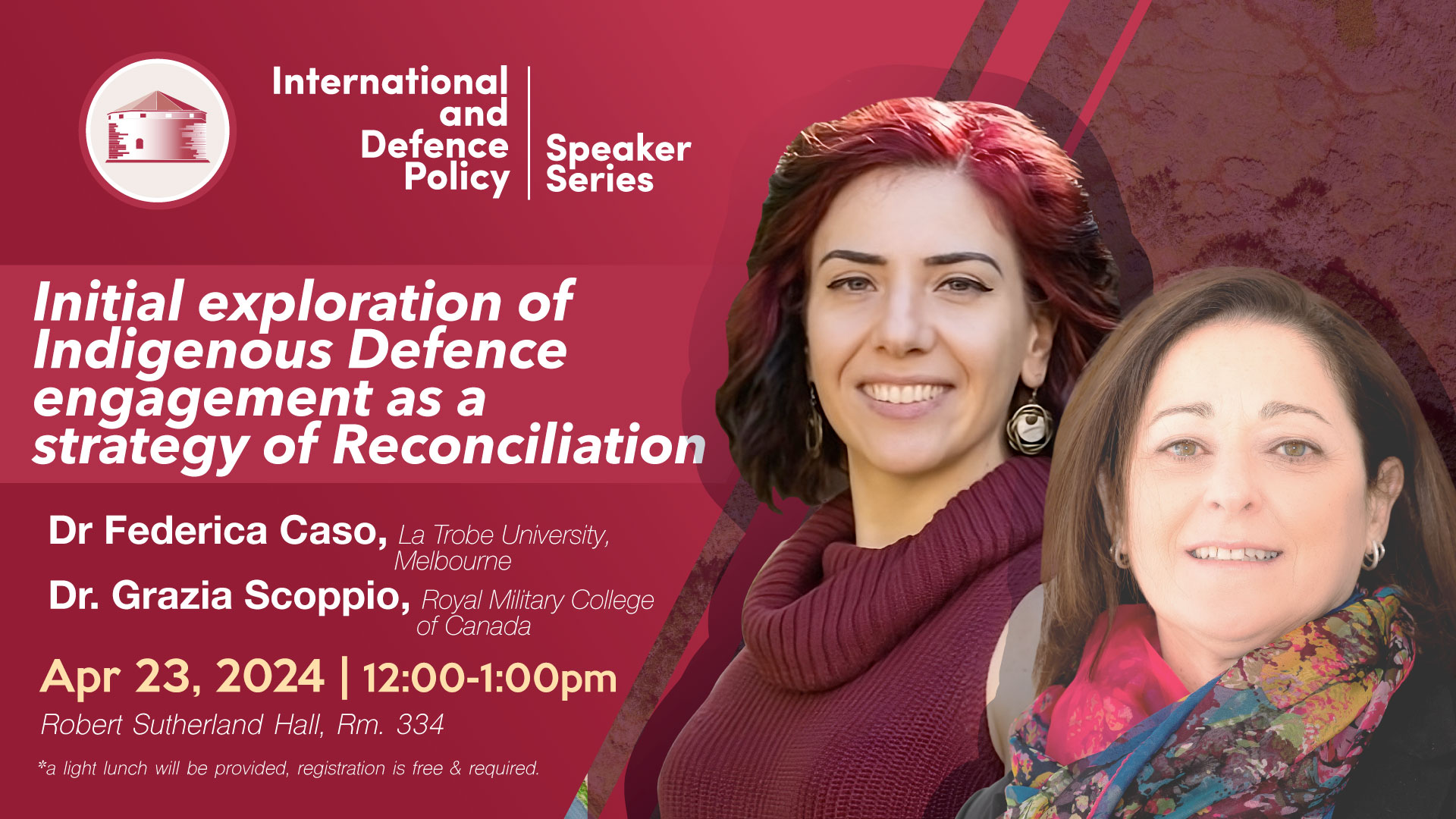
Initial exploration of Indigenous Defence engagement as a strategy of Reconciliation

Date

Tuesday April 23, 2024
12:00 pm - 1:00 pm

Location

Queen’s University, Robert Sutherland Hall Rm. 334

Indigenous-Defence

Initial exploration of Indigenous Defence engagement as a strategy of Reconciliation

In this presentation, Federica Caso and Grazia Scoppio will introduce the initial steps of a pilot project titled Indigenous Leadership in the Canadian Armed Forces. The project aims to examine the formal and informal leadership opportunities that the Canadian Armed Forces generates for Indigenous service men and women and how these opportunities can advance national reconciliation.


Bios:

Federica Caso portraitDr Federica Caso was born in Sardegna, a Mediterranean island belonging to Italy, where she developed intimate familiarity with questions of militarism and cultural self-determination. In 2015, she moved from the UK to Meanjin/Brisbane to pursue a PhD at the University of Queensland, which she gained in 2019. Federica researches the relationship between Defence and settler colonialism which she gathers under the concept of ‘settler military politics’. She has recently concluded a project that maps the history and politics of Australia’s war commemoration along the development of the settler (martial) state. This research is collected in the forthcoming book Settler Military Politics: Militarisation and the Aesthetics of War Commemoration (2024, Edinburgh University Press). She is now focusing on Indigenous military service in the present, including Indigenous participation in the Regional Surveillance Units (of which NORFORCE is the most recognisable), Defence Indigenous Procurement, and the contribution of Indigenous women in Defence to gender equality and reconciliation. She is working to establish a network of scholars interested in settler military politics across Australia, Canada, and New Zealand.
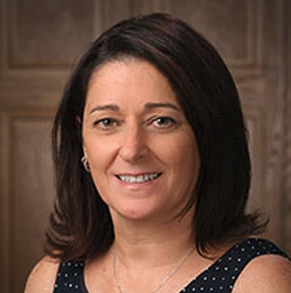
 

Grazia ScoppioDr. Grazia (Grace) Scoppio is a Professor in the Department of Defence Studies at the Royal Military College of Canada (RMC) and is cross-appointed in the Queen’s University Department of Political Studies. In 2021, she was a Fulbright Canada Research Chair in Peace and War Studies at Norwich University, in Vermont, USA.  Dr. Scoppio was the Dean of Continuing Studies at RMC from 2017 to 2020 after having served as Associate Dean from 2013 to 2016. Between 2002 and 2013, she held various appointments at the Canadian Defence Academy and the Canadian Forces Leadership Institute (CFLI). She has authored or co-authored numerous publications including books, technical and scientific reports, journals articles and chapters in edited books. One of Scoppio’s recent publications is a book that she co-edited with Sara Greco, entitled: The Power of Diversity in the Armed Forces – International Perspectives on Immigrant Participation in the Military. She has presented her multidisciplinary research at many national and international conferences. Her interdisciplinary research areas include: diversity and gender in military organizations, indigenous people and the military, organizational culture, migration, military education, distance learning, comparative and international education, whole of government & comprehensive approach, lessons learned & organizational learning.

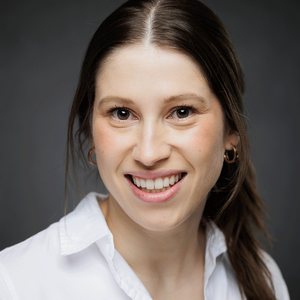
Sarah-Myriam Martin-Brûlé

Sarah-Myriam Martin-Brûlé

Sarah-Myriam Martin-Brûlé

Full Professor

Department of Politics and International Studies

Bishop’s University

About

Sarah-Myriam Martin-Brûlé is Full Professor at Bishop’s University and Non-Resident Fellow at the International Peace Institute, New York. She is the Deputy Director of the Centre FrancoPaix.  In 2018–2019, she was the Canada Fulbright Research Chair for Peace and War Studies.  In 2021, she was awarded the 3M National Teaching Fellowship. She is an associate faculty member of the Center for International Peace and Security Studies (CIPSS) and of the Montreal Center for International Studies (CERIUM). Her research focuses on peacekeeping-intelligence, peace operations and security issues related to intra-state wars.  Her most recent publications include “Competing for Trust: Challenges in UN Peacekeeping-Intelligence“.  Author of the first UN guidelines on Gender and Peacekeeping-intelligence, she is also co-author of the first United Nations Field Handbook on Joint Mission Analysis Centres (United Nations, 2018), she recently conducted fieldwork at the MINUSCA (Central African Republic), MINUSMA (Mali), MONUSCO (Democratic Republic of Congo), UNOCI (Côte d’Ivoire) and UNMISS (South Sudan). She is co-hosting the podcast “Conseils de sécurité” a co-production of the CDSN-RCDS and RAS-NSA and “Au FrancParler” as part of the Centre FrancoPaix of la Chaire Raoul-Dandurand.

Research Interests

  • Peackeeping
  • Intelligence
  • Dis/Mis/Malinformation

Recent Publications

  • 2024. « Le renseignement onusien »   in Paul Charon and Jean-Baptiste Jeangène-Vilmer, eds. Les Monde du Renseignement, Presses universitaires de France (PUF).
  • 2024.  “In Search for Trust: Challenges in UN Peacekeeping-Intelligence, ed. T. Juneau and J. Massie. Intelligence Cooperation in a Multilateral World: Non-American Perspectives.  University of Toronto Press.
  • 2023. “Integrating Gender in Canadian Armed Forces Operations” Canadian Defense Academy.
  • 2022. “Gender and Peace and Peacekeeping-Intelligence Guidelines”. United Nations.
  • 2021. “ Competing for Trust: Challenges in United Nations Peacekeeping-Intelligence”, International Journal of Intelligence and CounterIntelligence, DOI: 10.1080/08850607.2020.1798153

Online


Margaret (Maggie) BK Shepherd

Margaret (Maggie) BK Shepherd

Margaret (Maggie) BK Shepherd

Dean

Williams School of Business

Bishop’s University

Margaret BK Shepherd, better known as Maggie, currently serves as the Dean of the Williams School of Business at Bishop’s University. Professor Shepherd is a graduate of Laval University, RMC (Kingston), and went on to complete a post-graduate program on Negotiation through Harvard. Her doctoral work is a study from a Canadian context on the impact of social media on small and medium businesses. Understanding influence and complex change are integral to her varied roles as a professor, a consultant, and researcher. As a scholar-practitioner, Maggie focuses her research on practical outcomes and improving real-world application. With a career in the federal government and higher education spanning more than 27 years, Maggie has held various senior academic administrative roles at The Royal Military College of Canada, including Associate Dean of Graduate Studies, Chair of the MBA program, Interim Dean of Graduate Studies and Associate Vice-Principal. Maggie currently serves on the editorial Board of the Canadian Military Journal and the International Perspectives on Military Education journal through the Marine Corps Press. Maggie's commitment to community extends to mentorship with the Loran Scholar's Foundation since 2015 and volunteering in the not-for-profit sector as a member of the Kingston Health Sciences Hospital Board of Directors.

Research Interests

  • Strategy and Leadership
  • Influence and Negotiation
  • Human Security and Women Peace and Security

Recent Publications

  •  

Online