The UN in a World of Turmoil

Date

Monday November 23, 2015
7:00 pm - 9:00 pm

Location

Currie Hall, Royal Military College of Canada

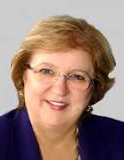
Louise FrechetteLouise Fréchette

UN Deputy Secretary-General
1998-2006

Global Leadership Foundation

Biography

Louise Fréchette was the first Deputy Secretary-General of the United Nations. A national of Canada, she assumed her duties on 2 March 1998, after having been appointed by Secretary-General Kofi Annan. She remained in the post until 31 March 2006.

As Deputy Secretary-General, Mme. Fréchette assisted the Secretary-General in the full range of his responsibilities and also represented the United Nations at conferences and official functions. She chaired the Steering Committee on Reform and Management Policy and the Advisory Board of the United Nations Fund for International Partnerships.

Before joining the United Nations, Mme. Fréchette pursued a career in the Public Service of Canada, serving notably as Ambassador to Argentina with concurrent accreditation to Uruguay and Paraguay (1985-1988), Ambassador and Permanent Representative to the United Nations (1992-1994), Associate Deputy Minister of Finance (1995) and Deputy Minister of National Defence (1995-1998).

Mme. Fréchette began her career in 1971 in Canada's Department of External Affairs. She was part of her country's delegation to the General Assembly in 1972, and then served as Second Secretary at the Canadian Embassy in Athens until 1975. From 1975 to 1977, Mme. Fréchette worked in the European Affairs Division in Canada's Department of External Affairs. Returning to Europe, she served as First Secretary at the Canadian Mission to the United Nations in Geneva from 1978 to 1982. After serving as Deputy Director of the Trade Policy Division in the Department of External Affairs from 1982 to 1983, Mme. Fréchette became Director of the European Summit Division from 1983 to 1985. Mme. Fréchette was named Assistant Deputy Minister for Latin America and the Caribbean in the Department of External Affairs and International Trade in October 1988. In January 1991 she became Assistant Deputy Minister for Economic Policy and Trade Competitiveness.

Activity after public service

Mme. Fréchette is the Chair of the Board of CARE Canada and a member of the Board of CARE International. She is also a member of the Board of Essilor International and chairs its committee on corporate social responsibilities.

From 2006 to 2012, she was a Distinguished Fellow at the Centre for International Governance Innovation of Waterloo, Ontario. She chaired a project on nuclear energy and the challenges of global governance which concluded with a report issued in February 2010. In 2012, she published a study entitled “UN peacekeeping: 20 years of reform”.

Memberships and Affiliations

  • Chair of UN's Senior Advisory Group on the reimbursement to troop contributors (2012)
  • Member of the International Atomic Energy Agency’s Commission of Eminent Persons (2008)
  • Member of Advisory Committee to the International Commission on Nuclear Non-Proliferation and Disarmament (2008-2010)
  • Chair of the Board of Directors of the Pearson Peacekeeping Centre (2008-2011)
  • Member of the International Advisory Board of Security Council Report in New York
  • Member of the Advisory Board of the Institute for the Study of International Development, McGill University

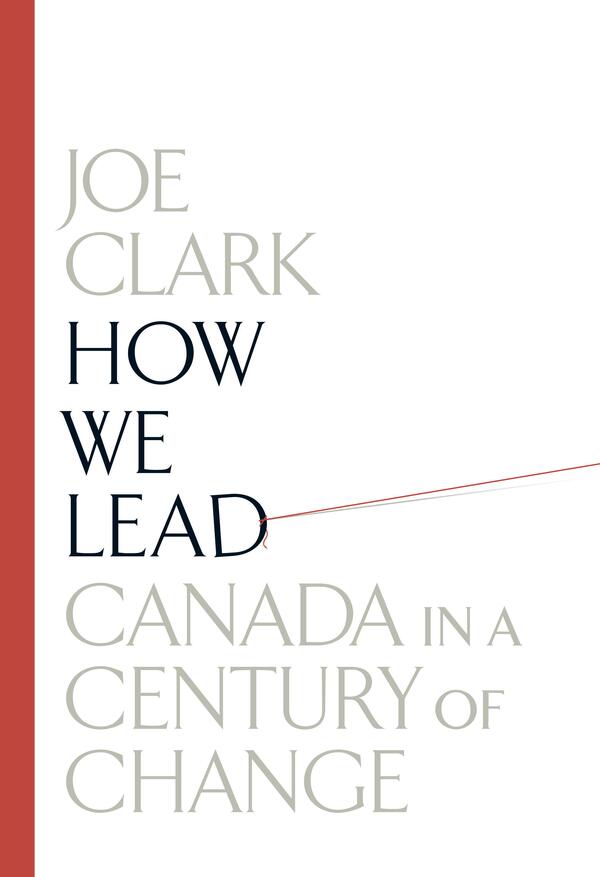
How We Lead: Canada in a Century of Change

Date

Tuesday March 4, 2014
7:00 pm - 9:00 pm

Location

Grant Hall, University Avenue

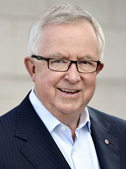
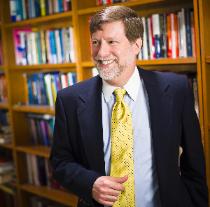
Rt. Hon. Joe ClarkRt. Hon. Joe Clark

A passionate argument for Canada's reassertion of its place on the world stage, from a former prime minister and one of Canada's most respected political figures.


How We LeadIn the world that is taking shape, the unique combination of Canada's success at home as a diverse society and its reputation internationally as a sympathetic and respected partner constititute national assets that are at least as valuable as its natural resource wealth. As the world becomes more competitive and complex, and the chances of deadly conflict grow, the example and the initiative of Canada can become more important than they have ever been. That depends on its people: assets have no value if Canadians don't recognize or use them, or worse, if they waste them.  A more effective Canada is not only a benefit to itself, but to its friends and neighbours. And in this compelling examination of what it as a nation has been, what it has become and what it can yet be to the world, Joe Clark takes the reader beyond formal foreign policy and looks at the contributions and leadership offered by Canada's most successful individuals and organizations who are already putting these uniquely Canadian assets to work internationally.

Author Bio

JOE CLARK was elected in 1979 as Canada's sixteenth and youngest prime minister. During the Mulroney government, he served as minister of external affairs from 1984 to 1991, and as president of the Privy Council and minister responsible for constitutional affairs from 1991 to 1993. After several years away from public life he was elected again to the House of Commons in 2000, where he represented Calgary Centre until leaving politics in 2004. He now works as a political and business consultant in Ottawa, where he lives with his wife, Maureen McTeer. 

The Warrior State: Pakistan in the Contemporary World

Date

Monday February 10, 2014
7:00 pm - 9:00 pm

Location

Robert Sutherland Hall, Room 202, Queen's University, 138 Union Street

T.V. PaulT.V. Paul

James McGill Professor of International Relations
McGill University


The Warrior StateThis lecture is based on T.V. Paul's new book with the same title published by Oxford University Press, New York, January 2014.

In 2013 Pakistan ranked 133rd out of 148 countries in global competitiveness. Currently, Taliban forces occupy nearly 30% of the country, and it is perpetually in danger of becoming a failed state--with over a hundred nuclear weapons that could easily fall into terrorists' hands. In recent years, many countries across the developing world have experienced impressive economic growth and have evolved into at least partially democratic states with militaries under civilian control. Yet Pakistan, a heavily militarized nation, has been a conspicuous failure. Its economy is in shambles, propped up by international aid, and its political system is notoriously corrupt and unresponsive, although a civilian government has come to power. Despite the regime's emphasis on security, the country is beset by widespread violence and terrorism. What explains Pakistan's unique inability to progress? Paul argues that the "geostrategic curse"--akin to the "resource curse" that plagues oil rich autocracies--is the main cause. Since its founding in 1947, Pakistan has been at the center of major geopolitical struggles--the US-Soviet rivalry, the conflict with India, and most recently the post 9/11 wars. No matter how ineffective the regime is, massive foreign aid keeps pouring in from major powers and their allies with a stake in the region. The reliability of such aid defuses any pressure on political elites to launch far-reaching domestic reforms that would promote sustained growth, higher standards of living, and more stable democratic institutions. Paul shows that excessive war-making efforts have drained Pakistan's limited economic resources without making the country safer or more stable. The book offers a comprehensive treatment of Pakistan's insecurity predicament drawing from the literatures in history, sociology, religious studies, and international relations. It is the first book to apply the "war-making and state-making" literature to explain Pakistan's weak state syndrome. It also compares Pakistan with other national security states, Turkey, Egypt, Indonesia, Taiwan and Korea and their different trajectories.

Author Bio

T.V. Paul is James McGill Professor of International Relations in the Department of Political Science at McGill University, Montreal, and a leading scholar of international security, regional security, and South Asia. He was director (founding) of the McGill/University of Montreal Centre for International Peace and Security Studies (CIPSS) during 2009-12. His 15 books include: The Warrior State: Pakistan in the Contemporary World (Oxford University Press, 2014);Status in World Politics (co-edited, Cambridge University Press, 2014);Globalization and the National Security State (co-authored, Oxford University Press, 2010);The Tradition of Non-use of Nuclear Weapons (Stanford University Press 2009);India in the World Order: Searching for Major Power (co-authored, Cambridge University Press 2002);The India-Pakistan Conflict: An Enduring Rivalry (Cambridge University Press, 2005); andSouth Asia's Weak States: Understanding the Regional Insecurity Predicament (Stanford University Press 2010).

More on T.V. Paul can be found at: www.tvpaul.com

Leaving Without Losing: The War on Terror after Iraq and Afghanistan

Date

Thursday September 20, 2012
7:00 pm - 9:00 pm

Location

Pump House Steam Museum, Kingston, ON

Mark N. KatzMark N. Katz

Professor of Government and Politics
George Mason University, US

Dr. Katz has a BA in international relations from the University of California at Riverside, an MA in international relations from the Johns Hopkins University School of Advanced International Studies, and a PhD in political science from M.I.T. He writes on Russian foreign policy, the international relations of the Middle East,  transnational revolutionary movements, and other subjects. He has been a research fellow at the Brookings Institution, held a temporary appointment as a Soviet affairs analyst at the U.S. Department of State, was a Rockefeller Foundation international relations fellow, and was a Kennan Institute research scholar and research associate. He has also received a U.S. Institute of Peace fellowship and grant, and several Earhart Foundation fellowship research grants. Recently, he was a visiting scholar at the Hokkaido University Slavic Research Center, and at the Kennan Institute.

Dr. Katz is the author of The Third World in Soviet Military Thought(Johns Hopkins University Press, 1982), Russia and Arabia: Soviet Foreign Policy toward the Arabian Peninsula (Johns Hopkins University Press, 1986), Gorbachev's Military Policy in the Third World (Center for Strategic and International Studies, 1989),Revolutions and Revolutionary Waves (St. Martin's Press, 1997), and Reflections on Revolutions (St. Martin's Press, 1999). He is also the editor of The USSR and Marxist Revolutions in the Third World (Wilson Center/Cambridge University Press, 1990), Soviet-American Conflict Resolution in the Third World (U.S. Institute of Peace Press, 1991), and Revolution: International Dimensions (CQ Press, 2001).

Does Ottawa follow Washington? Evidence from the "Arab Spring"

Date

Tuesday March 1, 2011
7:00 pm - 9:00 pm

Location

 Est-ce qu'Ottawa s'aligne sur Washington? Le cas du 'printemps arabe"

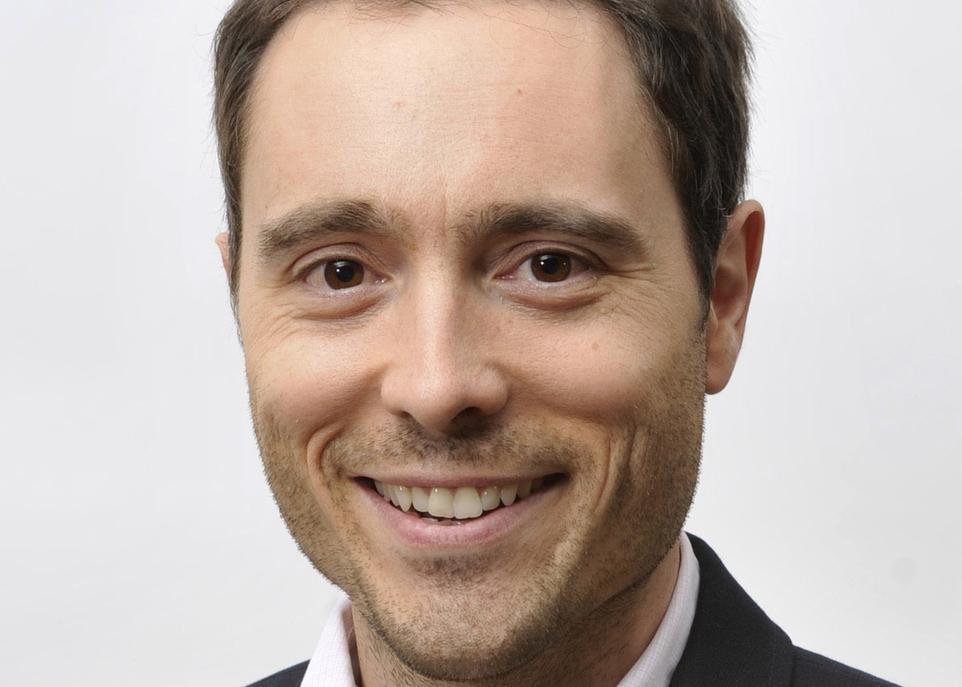
jonathan PaquinJonathan Paquin, Université Laval

Jonathan Paquin is professor of Political Science at Université Laval. He has written numerous articles on foreign policy and international relations