Education, Outreach and Research at the NATO Defense College

Date

Wednesday November 25, 2020
12:00 pm - 1:00 pm

Location

Zoom

The NATO Defense College is not a well known organization. However, the professional education that it offers, along with engagement activities and ongoing research, provide effective knowledge mobilization in support of NATO initiatives. Dr Howard Coombs, a former NATO Defense College Research Fellow, will discuss the College and present an overview of the work that this institution conducts to support twenty-first century Alliance activities.

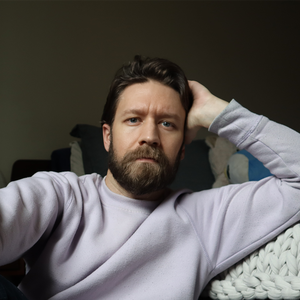
Howard CoombsHoward G. Coombs

Associate Professor - Royal Military College of Canada

Howard G. Coombs is an Associate Professor and the Associate Chair of War Studies at the Royal Military College of Canada, in Kingston, Ontario. He is also a part-time Canadian Army reservist with the Office of the Chief of Reserves, located at the Canadian Armed Forces National Defence Headquarters. Coombs received his PhD in Military History from Queen’s University, in Kingston. His research interests are Canadian professional military education, in addition to post-Cold War Canadian military operations and training . In 2020 he was the first Canadian Mobilising Insights in Defence and Security Programme (MINDS) Fellow at the NATO Defence College in Rome, Italy.

The Fractured International Order: Implications for the Defence of Canada

Start Date

Thursday December 10, 2020

End Date

Friday December 11, 2020

Time

9:30 am - 1:00 pm

Location

Canada must adapt to an unpredictable international environment, defined by increased great power competition and the proliferation of regional conflicts to which it is often called upon to respond. The Network for Strategic Analysis’ annual colloquium will examine the theme of a fractured international order by considering the adaptation of different regions to this new international architecture, the viability of multilateralism as a model for interstate cooperation, and the more visible role of capacity building in conflict management.

Day 1 - December 10

09:30 - 09:45      Welcoming Remarks by Co-directors

  • Dr. Stéfanie von Hlatky (Centre for International and Defence Policy, Queen's University) and 
  • Dr. Justin Massie (Université du Québec à Montréal)

09:45 - 10:45      The Fractured International Order 

Moderator: Jonathan Paquin (Université Laval)

  • Anessa Kimball (Université Laval): Adapting under Uncertainty: American Leadership and The Future of The Fractured Order
  • Ting-Sheng Lin (Université du Québec à Montréal): South China Se: Military Dimension of Chinese Behaviour
  • Thomas Juneau (University of Ottawa): The Middle East, Between Trump and Biden

11:00 - 12:00      Keynote Speaker

  • Lieutenant-General M.N. Rouleau, CCM, MSC, CD (Department of National Defence)

12:00 - 13:00      Lunch

13:00 - 14:00     Capacity Building and Conflict Management

 Moderator: Théo McLauchlin (Université de Montréal)

  • Lee Seymour (Université de Montréal): Capacity Building and Security on The Ground 
  • Bruno Charbonneau (Collège militaire royal de St Jean): The Return of Human Security? 
  • Yolanda Bouka (Queen's University): Women, Peace and Security


Day 2 - December 11

09:30 - 09:40      Welcoming Remarks by Co-directors

0940 - 10:40       Multilateralism in Free Fall? 

 Moderator: Sarah-Myriam Martin-Brûlé (Bishops University)

  • Marie-Joëlle Zahar (Université de Montréal): Back to the Future? The United Nations in Turmoil
  • Stéphanie Martel (Queen's University): ASEAN's Contributions to Multilateralism and Regional Order in Asia-Pacific
  • Costanza Musu (University of Ottawa): The European Union and Multilateralism

11:00 - 12:00     Keynote Speaker

  • Marina Henke (Hertie School)


RAS logoMINDS logo

The Many Faces of Diversity in Military Employment

Start Date

Wednesday November 4, 2020

End Date

Thursday November 5, 2020

Time

9:00 am - 3:00 pm

Location

Synopsis

An enduring question for armed forces is how to recruit, develop, support, and retain the best people, people who are smart, skilled, physically fit and willing to lay down their lives if necessary. This workshop focussed on the ability of the armed forces to meet its person-power requirements based on the establishment of an organizational culture of inclusiveness and cohesion.

We achieved this by showcasing research and practice which examines the recruitment, employment, and retention of under-represented groups as outlined in the Employment Equity Act, particularly women, visible minorities, and Indigenous peoples. The workshop also addressed other forms of diversity and identity within the defence organizations, such as the generational and LGBTQ2S+ perspectives. In line with the broadly adopted diversity lens, we will also examine diversity from a Whole Force perspective, including institutional distinctions related to regular and reserve force personnel, military members and defence civilians, as well as cultural differences among the military services.

Retention of trained and experienced personnel is particularly important in the armed forces because militaries must select, train, and promote from within, yet retention is getting harder in today’s competitive job market. The Canadian Chief of the Defence Staff and others have argued that the military needs more flexible personnel policies to attract and keep talent, especially for specialized skills for emerging challenges. Is this something that other armed forces have done successfully?

Understanding the concerns of specific groups is important to tackle integration challenges as the Canadian Armed Forces and the Department of National Defence strive to become more diverse and incorporate cultural change at the institutional level. This workshop brought together subject matter experts across the Canadian defence and security community, including university scholars, researchers and practitioners in the CAF/DND, as well as international experts to exchange information and co-develop knowledge in the military personnel domain.


Deliverables


Agenda

Panel 1 

 Diversity and the Culture of the Armed Forces: Part 1

  • Justin Wright and Maj. Felix Fonséca
    Making Sense of Diversity and Inclusion in the Profession of Arms [Presentation - PDF 99kb]

 Panel 2 

 Prospective Recruits and Service Members: Ethnicity and Race Perspectives 

  • Nancy Otis (Director General Military Personnel Research and Analysis): 
    Enhancing the representation of visible minorities in the CAF- Insights from CAF prospective recruits, applicants, and service members [Presentation - PDF 480kb]
  • Grazia Scoppio (Royal Military College of Canada), Nancy Otis (Director General Military Personnel Research and Analysis), and Yan (Lizzie) Yan (Queen’s University): 
    The military as a path to citizenship, integration, and identity? Visible minorities and immigrants’ perspectives about the military in Canada [Presentation - PDF 865kb]
  • Vanessa Brown (Canadian Forces College): 
    Diversity and Inclusion within the Canadian Armed Forces: An Intersectional Approach [Presentation - PDF 132kb]

 Panel 3 

 LGBTQ2S+: History and Practice in the Canadian Armed Forces

  • Carmen Poulin (University of New Brunswick) and Lynne Gouliquier (Laurentian University): 
    25 years of Research with LGBTQ+ Military Members and Partners: Celebrating Cultural Transformation 
  • Penny Foster (Directorate Human Rights and Diversity): 
    LGBTQ2+ inclusion: Implementing policies, program and practices
  • Lynne Gouliquer (Laurentian University) and Carmen Poulin (University of New Brunswick):
    Making Room for Diversity by Examining Lingering Mundane Discrimination [Presentation - PDF 1.8mb]

 Panel 4 

 Gender Inclusive Employment in the Military

  • Barbara T. Waruszynski (Director General Military Personnel Research and Analysis): 
    The Attraction, Recruitment, and Employment of Women in the Canadian Military
  • Maya Eichler (Mt. Saint-Vincent University): 
    Women Veterans: Challenging the Transition Paradigm
  • Linna Tam-Seto (Queen’s University): 
    Mentorship and Women in the Canadian Armed Forces [Presentation - PDF 1.1mb]

 Panel 5 

 Post-Millennials and Generational Employment Considerations

  • A.C. Okros (Dallaire Centre of Excellence for Peace and Security: 
    Harnessing the Potential of Post-Millennials 
  • Stéfanie von Hlatky (Queen’s University) and Steve Taylor (former Commanding Officer, Princess of Wales’ Own Regiment): 
    Recruitment and retention in the Reserves: A case study of the Princess of Wales’ Own Regiment [Presentation PDF 384kb] 
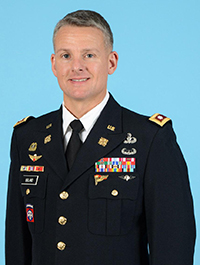
  • LCol. Mike Meumann (US Army): 
    The role of mentorship and coaching in the US Army’s new personnel talent management system

 Panel 6

 Total Defence Workforce Personnel Integration and Collaboration

  • Irina Goldenberg (Director General Military Personnel Research and Analysis): 
    Military and Civilian Personnel Integration within the Total Defence Workforce 
  • Vince Connelly (Oxford Brookes University; UK Ministry of Defence): 
    Reserve Forces - Identity and Integration in a Total Defence Workforce [Presentation PDF 670kb]
  • Ryan Kelty (US Air Force Academy):
    Private Military and Security Contractors: Dynamic Tension within the Modern Military’s Total Force [Presentation PDF 810kb]

Panel 7

 Diversity and the Culture of the Armed Forces: Part ll

  • Col. Remi Hajjar (US Military Academy, West Point): 
    The Necessity of Cross-Cultural Competence for Building and Leading Inclusive and Diverse Military Forces [Presentation PDF 1.6mb]
  • Meaghan Shoemaker (Directorate Human Rights and Diversity): 
    Understanding the CAF Diversity Strategy: Challenges, Opportunities, and Next Steps [Presentation PDF 576kb]
  • Karen D. Davis (Director General Military Personnel Research and Analysis): 
    Shifting Socio-Cultural Dynamics in Military Context: Will we know when we get…where? [Presentation PDF 860kb] 


Defence Engagement Program (DEP)


CDSN logo


DGMPRA logo


Asleep in the Arctic: The Geopolitical Risks of Canada's (in)activity in the North

Date

Wednesday March 13, 2019
3:30 pm - 5:00 pm

Location

Conference Room 202, Robert Sutherland Hall, Queen's Universityy

Kingston International Lecture Series

As an arctic nation, Canada has a unique opportunity in terms of access to a region with immense potential. However, Canada is not alone in this opportunity and other arctic nations such as Russia, are actively pursuing this same potential and leaving Canada behind. In addition, states such as China, which although are not geographically contiguous to the arctic, are also making claims to arctic access. In this talk, Matthew will draw on his extensive experience, reflecting on what he has observed is happening in our own backyard and what it means for our prosperity and our country.

Matthew FisherMatthew Fisher 

Resident Visiting Scholar in defence and security
The Bill Graham Centre for Contemporary International History and Massey College,
University of Toronto 


About Matthew Fisher 

Matthew Fisher is the first Resident Visiting Scholar in defence and security at the Bill Graham Centre for Contemporary International History and Massey College, University of Toronto, and a fellow of the Canadian Global Affairs Institute. He is Canada's most experienced foreign correspondent, with 45 years of experience, having been to 172 countries and lived in Belgium, Germany, Russia (8 years in Moscow), Hong Kong, Britain, Iraq, Jerusalem and Afghanistan.  During his travels he has observed 19 wars and conflicts from Central America and Rwanda (the genocide) to Chechnya, Nagorno-Karabakh, the Balkans, the Middle East, Somalia, Timor, South Asia and Abu Sayyaf's Islamic war in Mindanao and he visited 34 of Canada's 52 Arctic communities as well as Greenland, Alaska and Siberia. He was the international affairs columnist for the Toronto-based National Post and Postmedia for 17 years. Before that he worked as a columnist for Canada’s Sun Media newspapers and as the Toronto Globe and Mail's bureau chief for Alberta and the Far North.

Killing Citizens: Legal Dilemmas in the Targeted Killing of Canadian Foreign Terrorist Fighters

Date

Tuesday February 13, 2018
7:00 pm - 8:00 pm

Location

Conference Room 202, Robert Sutherland Hall, Queen's University

Leah West SherriffLeah West Sherriff 

Anti-Terrorism Fellow 
University of Ottawa Faculty of Law

Biography

Leah West Sherriff is Counsel with the National Security Advisory and Litigation Group of the Department of Justice. Her work predominantly involves litigation around the protection of national security information. She is also a member of the team responsible for drafting and implementing Bill C-59 “An Act respecting national security matters”. Before joining DOJ, Leah was involved in advocacy work related to human trafficking, security certificates, lawful access and the reform of Bill C-51. She also worked for a  private intelligence firm in Virginia consulting on business development in the area of spectator sports security. Leah is proud to have served as an Armoured Officer in the Canadian Army for ten years with whom she deployed to Afghanistan as the junior operations officer in 2010. While overseas Leah was involved in the targeting process on a daily basis, and also worked closely with Special Forces from various allied countries during the planning of operations in Kandahar.  Leah is a graduate of the Royal Military College, U of T Law, and  holds an MA in Intelligence Studies. She is currently the Antiterrorism Law Fellow at the University of Ottawa where she is completing her LLM with a concentration in International Humanitarian and Security Law.

Separating Fact from Fiction: Canada, the U.S. and Foreign Policy in a 140 Character World

Date

Thursday March 9, 2017
7:00 pm - 9:00 pm

Location

Conference Room 202, Robert Sutherland, Hall Queen's University

Murray BrewsterMurray Brewster

CBC Correspondent
Senior Parliamentary defence and foreign policy

Biography

Murray Brewster is an Ottawa based correspondent for CBC News, where he is the senior Parliamentary defence and foreign policy writer. Previously, he was senior defence writer at The Canadian Press for over a decade. He has filed most recently from Iraq and Ukraine, but also spent 15 months in Afghanistan during the five year Kandahar combat mission, travelling with troops and unilaterally throughout the country. His book, The Savage War: The Untold Battles of Afghanistan, was published in 2011 by John Wiley and Sons, and he was the lead writer on the documentary Kandahar Journals, which aired on CBC Documentary Channel and released in the U.S. in the fall of 2015. Also last fall, he contributed to a book on former prime minister Stephen Harper’s policy legacy entitled The Harper Factor, published by McGill-Queen’s University Press. Murray has won 12 regional and national Radio and Television News Director Awards; two Atlantic Journalism Awards; the Ross Munro (2010) Award for war corresponding; appeared as a finalist twice in the Michener Awards for public service in journalism (1989 and 2014); and was a finalist in the National Newspaper Awards (2010) for beat reporting.

Countering Violent Extremism and Terrorism: Assessing Canada's Domestic and International Strategies

Start Date

Wednesday January 18, 2017

End Date

Friday January 20, 2017

Time

6:00 pm - 1:30 pm

Location

Delta Kingston Waterfront

The evolving threat of global terrorism has given rise to complex challenges with both domestic and international dimensions. Trends such as the foreign fighter phenomenon, the rampant spread of extremist ideologies online and within communities, and a dramatic increase in terrorist incidents worldwide, have necessitated a more holistic approach to counter violent extremism and terrorism. The field of countering violent extremism (CVE) and the application of preventative, soft power strategies that address the drivers of radicalization have come to the forefront of efforts to combat these threats.

While existing scholarship features extensive research on the potential of CVE strategies, formal program evaluation methodologies remain lacking, complicating the policy making process in this area and undermining the effectiveness of subsequent initiatives. This project addressed this critical gap by organizing an international, multidisciplinary workshop, entitled “Countering Violent Extremism and Terrorism: Assessing Canada’s Domestic and International Strategies”. 

From January 19 to the 20 , 2017 over 40 academics, practitioners, security and intelligence experts, as well as policy makers congregated in the Delta Waterfront Hotel in Kingston, Ontario for the Countering Violent Extremism and Terrorism: Assessing Canada’s Domestic and International Strategies workshop, hosted by the Centre for International and Defence Policy (CIDP), Queen’s University. At the event, experts from various sectors, including academia, government, the private sector, and non-governmental organizations (NGO’s, think tanks), gathered to critically assess the state of CVE and CT strategies, and helped develop success metrics that can be used by current and future stakeholders of CVE and CT initiatives. Over the course of the two days, participants shared their experiences, challenges, strategies and insight on countering violent extremism in Canada and abroad (please refer to the Appendix for a workshop program).

Download Program (PDF 825kb)


Deliverables


The workshop and research outputs have been presented in partnership with:

CVE Partners

Countering the Terrorist Threat to Canada

Date

Wednesday March 23, 2016
7:00 pm - 9:00 pm

Location

BioSciences Room 1102, Barrie Street

Daniel LangHon. Daniel Lang,
Senator, Chair of the Standing Committee on National Security and Defence

Website

Biography

The Honourable Hector Daniel Lang has served as Chair of the Senate Standing Committee on National Security and Defence since 2013 and was re-elected on January 25, 2016 as Chair. During his chairmanship, the Committee published a number of reports including on Sexual Harassment in the RCMP (2013); Ballistic Missile Defence (2014); Canada Border Services Agency (2015) and Treats to the Security of Canada (2015). The Committee also scrutinized private members bills and government legislations, including the Anti-Terrorism Act 2015.

Senator Lang also serves as a member of the Senate’s Standing Committee on Internal Economy, Budgets and Administration and on the Sub-Committee on Veterans Affairs. He is also an active member of various parliamentary groups including Canada-NATO, Canada-US, Canada-Japan and was a founding member of the Canada-Peru Parliamentary Friendship group.

Born in 1948 in Dawson Creek, British Columbia, he moved with his family to Whitehorse, Yukon where he completed elementary and secondary school, and later attended the University of Alaska at Fairbanks.

He was first elected to the Yukon Legislative Assembly in 1974 and served five consecutive terms until his retirement in 1992. Over the course of his 18 years in elected office he was responsible for numerous Ministerial portfolios and later served in the opposition. 

Always active in community affairs, Senator Lang has served as President of the Yukon Real Estate Board; as a member of the Board of Directors for the Canadian Real Estate Association; as President of Polarettes Gymnastics and as Vice Chairman of the Board of Governors for Yukon College. 

After retiring from the Legislature, he worked as a real estate associate until 2008, when he was summoned to the Senate of Canada.

He has four children who reside in Whitehorse and eight grandchildren. Senator Lang presently lives in Whitehorse with his wife Valerie Hodgson, a well-known local artist.

Current Member of the following Senate committee(s):

  • Internal Economy, Budgets and Administration
  • National Security and Defence Chair
  • Subcommittee on Veterans Affairs

Peaceland: Conflict Resolution and the Everyday Politics of International Intervention

Date

Friday April 17, 2015
5:00 pm - 7:00 pm

Location

School of Kinesiology, Lecture Hall #100, Queen's University

Severine AutesserreSéverine Autesserre

Barnard College
Columbia University

www.severineautesserre.com


PeacelandPeaceland suggests a new explanation for why international peace interventions often fail to reach their full potential. Based on several years of ethnographic research in conflict zones around the world, it demonstrates that everyday elements ? such as the expatriates? social habits and usual approaches to understanding their areas of operation ? strongly influence peacebuilding effectiveness.

Individuals from all over the world and all walks of life share numerous practices, habits, and narratives when they serve as interveners in conflict zones. These common attitudes and actions enable foreign peacebuilders to function in the field, but they also result in unintended consequences that thwart international efforts. Certain expatriates follow alternative modes of thinking and doing, often with notable results, but they remain in the minority. Through an in-depth analysis of the interveners? everyday life and work, this book proposes innovative ways to better help host populations build a sustainable peace.

About the author

Dr. Séverine Autesserre is an Assistant Professor of Political Science, specializing in international relations and African studies, at Barnard College, Columbia University (USA). She works on civil wars, peacebuilding, peacekeeping, humanitarian aid, and African politics.

Dr. Autesserre's current research project examines how everyday elements influence peacebuilding interventions on the ground. She has conducted extensive fieldwork for this project between 2010 and 2012, with a primary case study on the eastern Democratic Republic of Congo and comparative research in Burundi, Cyprus, Israel and the Palestinian Territories, South Sudan, and Timor-Leste. Preliminary findings from this project have appeared in Critique Internationale and African Affairs (the latter piece won the 2012 Best Article award from the African Politics Conference Group). The book based on this research, Peaceland: Conflict Resolution and the Everyday Politics of International Intervention, has just been released by Cambridge University Press.

The UN in a World of Turmoil

Date

Monday November 23, 2015
7:00 pm - 9:00 pm

Location

Currie Hall, Royal Military College of Canada

Louise FrechetteLouise Fréchette

UN Deputy Secretary-General
1998-2006

Global Leadership Foundation

Biography

Louise Fréchette was the first Deputy Secretary-General of the United Nations. A national of Canada, she assumed her duties on 2 March 1998, after having been appointed by Secretary-General Kofi Annan. She remained in the post until 31 March 2006.

As Deputy Secretary-General, Mme. Fréchette assisted the Secretary-General in the full range of his responsibilities and also represented the United Nations at conferences and official functions. She chaired the Steering Committee on Reform and Management Policy and the Advisory Board of the United Nations Fund for International Partnerships.

Before joining the United Nations, Mme. Fréchette pursued a career in the Public Service of Canada, serving notably as Ambassador to Argentina with concurrent accreditation to Uruguay and Paraguay (1985-1988), Ambassador and Permanent Representative to the United Nations (1992-1994), Associate Deputy Minister of Finance (1995) and Deputy Minister of National Defence (1995-1998).

Mme. Fréchette began her career in 1971 in Canada's Department of External Affairs. She was part of her country's delegation to the General Assembly in 1972, and then served as Second Secretary at the Canadian Embassy in Athens until 1975. From 1975 to 1977, Mme. Fréchette worked in the European Affairs Division in Canada's Department of External Affairs. Returning to Europe, she served as First Secretary at the Canadian Mission to the United Nations in Geneva from 1978 to 1982. After serving as Deputy Director of the Trade Policy Division in the Department of External Affairs from 1982 to 1983, Mme. Fréchette became Director of the European Summit Division from 1983 to 1985. Mme. Fréchette was named Assistant Deputy Minister for Latin America and the Caribbean in the Department of External Affairs and International Trade in October 1988. In January 1991 she became Assistant Deputy Minister for Economic Policy and Trade Competitiveness.

Activity after public service

Mme. Fréchette is the Chair of the Board of CARE Canada and a member of the Board of CARE International. She is also a member of the Board of Essilor International and chairs its committee on corporate social responsibilities.

From 2006 to 2012, she was a Distinguished Fellow at the Centre for International Governance Innovation of Waterloo, Ontario. She chaired a project on nuclear energy and the challenges of global governance which concluded with a report issued in February 2010. In 2012, she published a study entitled “UN peacekeeping: 20 years of reform”.

Memberships and Affiliations

  • Chair of UN's Senior Advisory Group on the reimbursement to troop contributors (2012)
  • Member of the International Atomic Energy Agency’s Commission of Eminent Persons (2008)
  • Member of Advisory Committee to the International Commission on Nuclear Non-Proliferation and Disarmament (2008-2010)
  • Chair of the Board of Directors of the Pearson Peacekeeping Centre (2008-2011)
  • Member of the International Advisory Board of Security Council Report in New York
  • Member of the Advisory Board of the Institute for the Study of International Development, McGill University