The Military's Role in Post-Conflict Stabilization Activities

Date

Wednesday November 30, 2022
5:30 pm - 7:00 pm

Location

Queen’s University, Robert Sutherland Hall | Room. #355

VDF Mentorship - Nov 30

As part of the VDF mentorship program for undergraduate skill building.


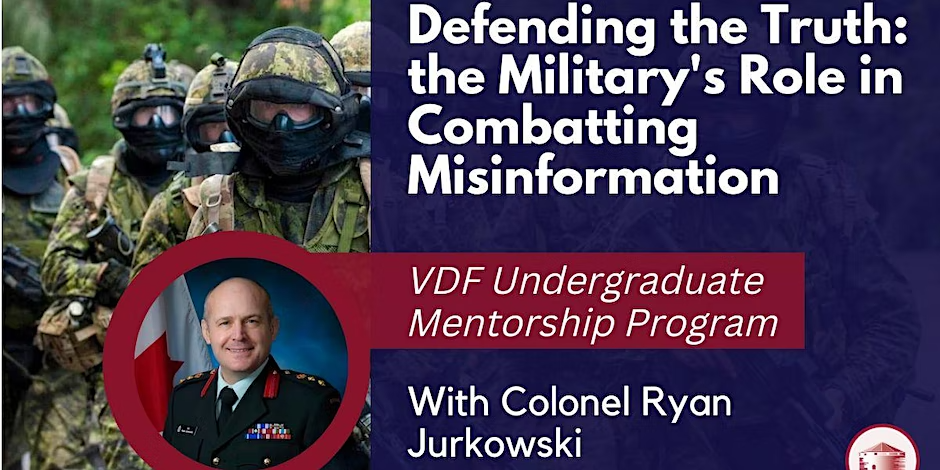
The Military's Role in Post-Conflict Stabilization Activities: Working with the Whole of Government & NGOs

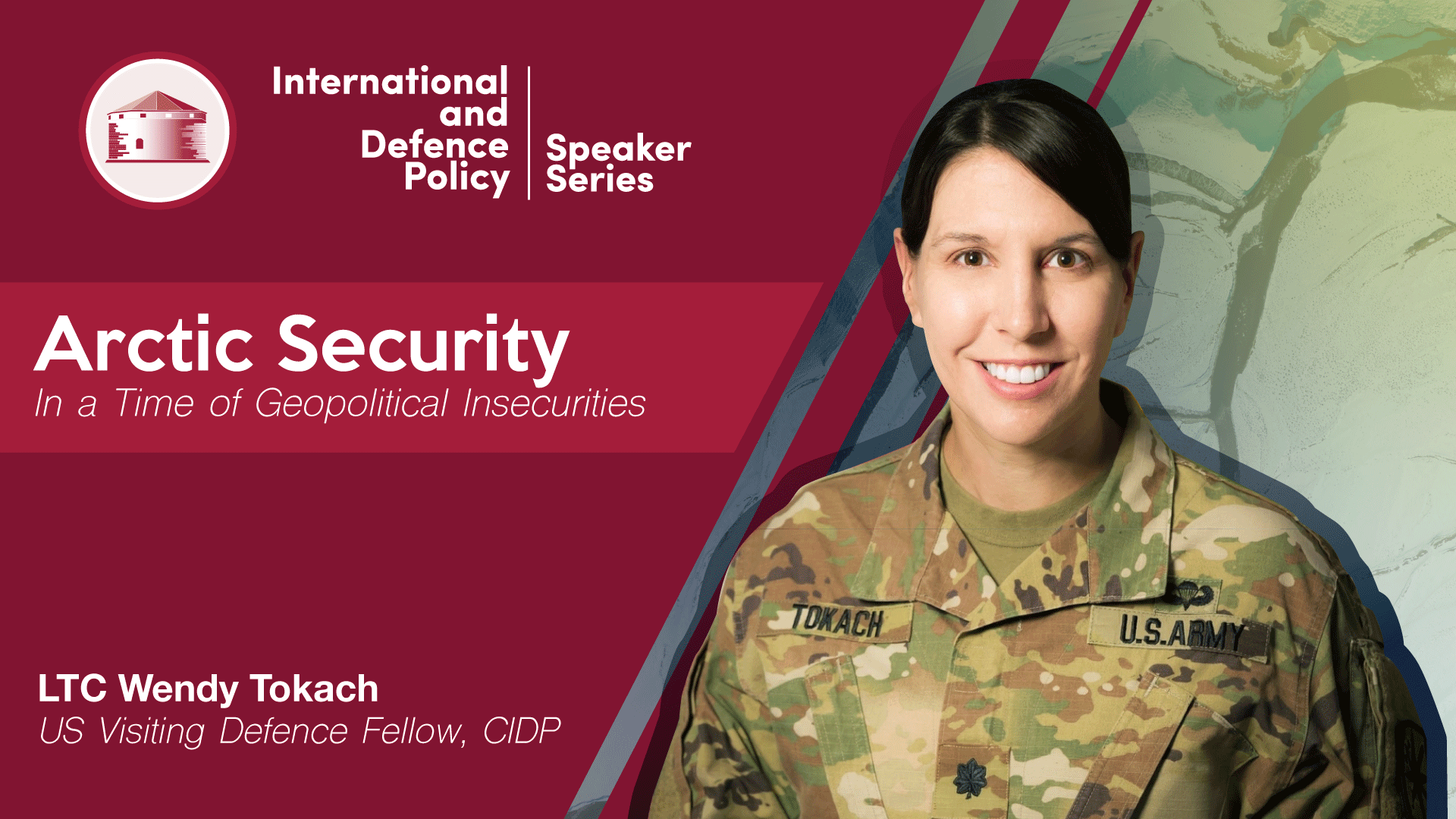
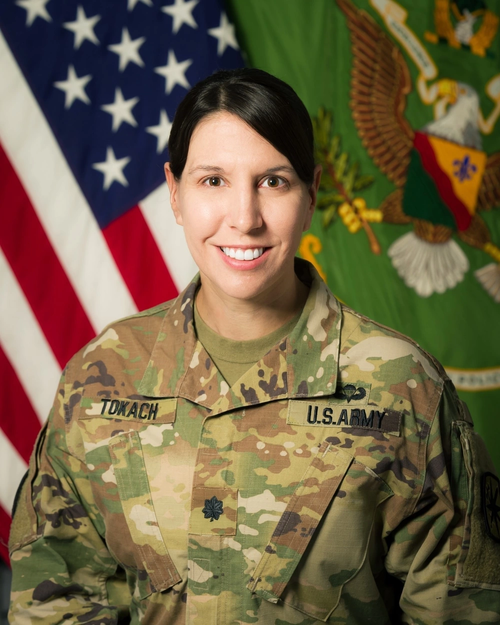
LTC Tokach and Col. Jurkowski will be discussing cooperation in post-war stabilization, focusing on a UN, NATO and Coalition lens.

Register to attend


some food and drink will be provided.


From the Margins and Outside the Box : New Perspectives on Researching the Military

Date

Thursday December 1, 2022
8:30 am - 5:00 pm

Location

Queen’s University, Robert Sutherland Hall Rm. 202 | Online via Zoom
From the Margins

french to follow.

Download the English Program & Bios | Télécharger le programme et les bios

Often called out for its lack of diversity and inclusion, it is not only the military institution that needs to change, but also the way it is studied. For far too long, research on the military has been siloed. Few dialogues and consultations among researchers were taken place, either because their research field was distinct (political science, sociology, anthropology, history, applied ethics, and so forth) or because they were working for different institutions (academic or governmental). Now more than ever, marginalized approaches and perspectives in the study of international security need to be heard and seen as they can bring answers to some of the challenges the military institution is currently facing.

By bringing together researchers – virtually and in-person – from different countries, this conference aims to delve into how the military institution can be researched from more perspectives than we usually imagine when we think of the military. It is about paying attention to what underrepresented researchers, researchers using underrepresented approaches or working on underrepresented topics, can bring to the table. But it is also about opening a space for researchers – and the public – to share and learn from each other.

The conference is hybrid. Public is welcomed either in person or virtually.

This is a bilingual event. Live interpretation will be available to all attendees.

------------

Hors des sentiers battus: nouvelles directions dans la recherche sur le militaire

Régulièrement interpellée pour son manque de diversité et d’inclusion, ce n’est pas seulement l’institution militaire qui a besoin de changer, mais aussi la manière dont elle est étudiée. Pendant trop longtemps, la recherche sur le militaire s’est faite en silo. Trop peu d’échanges et de discussions entre chercheur.e.s prenaient place, parce qu’ils appartenaient à des disciplines différentes (science politique, sociologie, anthropologie, histoire, éthique appliquée, etc.) ou parce qu’ils travaillaient pour des institutions différentes (universitaires ou gouvernementales). Maintenant plus que jamais, il est important de prêter davantage attention aux approches et perspectives considérées qui comme marginales dans le champ de la sécurité internationale, et ce parce qu’elles peuvent apporter des réponses à certains des défis que l’institution militaire doit actuellement affronter.

Rassemblant des chercheur.e.s – virtuellement et en personne – de différents pays, cette conférence a pour objectif d’explorer comment l’institution militaire peut être analysée de davantage de façon qu’on tend à imaginer lorsqu’il est question du militaire. C’est à propos de ce qu’on peut apprendre si on prête attention à ce que les chercheur.e.s sous-représenté.e.s, les chercheur.e.s ayant recours à des approches sous-représentées, ou travaillant sur des sujets sous-représentés, font. Mais l’objectif est aussi d’ouvrir un espace au sein duquel chercheur.e.s – et public – peuvent partager et apprendre des autres.

La conférence est hybride. Le public peut y assister en présence ou virtuellement.


PROGRAMME AGENDA:

8:30 am - Opening words – conference’s structure

8:45 am - Panel #1 : Participatory Research within the Military Institution: From Observation to Action-Research in the Service of Servicemembers

This panel focuses on how participatory research offers an original and relevant perspective when it comes to the analysis of the military institution and its members. Using different perspectives (sociology, anthropology, applied ethics, etc.) and relying on different case studies (France, the Netherlands and Canada), the four researchers in this panel will present their work, as well as how they used this methodological approach in their respective research. Participative research contributes to a better understanding of issues such as the integration of women into the armed forces, the psychological suffering suffered by certain members, or more generally the ways to improve the situation of active members, veterans, and their relatives. As such the contributions of participatory research should not be overlooked.

Panelists:

  • Marguerite Déon
  • Léa Ruelle
  • Elizabeth Suen
  • Amber S. Spijkers

10:00 am - BREAK

10:15 am - Panel #2: Lived Experiences Under Scrutiny: Learning from the Servicemembers Themselves

This panel is about lived experiences, and how a better understanding of what is happening at the individual level can potentially help to better understand – and thus ultimately improve – what is occurring at the institutional level. Lived experiences make it possible to better understand the trajectory of individuals and how they are coping when confronted with obstacles at certain points of their lives. Soldiers’ lives courses in particular are known to be chaotic. Learning for instance about their experiences on the battlefield, or their transition out of the military, can enable the armed forces to better prepare its members when, or if, they face these situations.

Panelists:

  • Dr. Jennifer O’Neil
  • Dr. Michelle Jones

10:55 am - BREAK

11:00 a.m. - Panel #3: Representation of Gendered and Sexual Identities: Toward a More Inclusive and Diverse Military Institution

This panel addresses the question of gender and sexual identities – as well as their integration – within the military, and how this issue has become central to most armed forces in democratic countries. Indeed, the military institution has long been synonymous with hyper-masculinity and heteronormativity. Those who did not match to the expected image and qualities of a soldier did not necessarily find their place within the institution, and were sometimes the target of inappropriate behaviour, harassment or violence. If today’s and tomorrow’s military wants to pursue the agenda of inclusion and diversity that it has set itself, it requires a better understanding of what some of its members are going through as well as the implications this has for them, as shown by the researchers on this panel.

Panelists:

  • Dr. Pooja Gopal
  • Dr. Linna Tam-Seto
  • Dr. Rachel Yon & Major Rex Steel

12:00 pm - LUNCH

1:00 pm - BOOK PRESENTATION: Dr Grazia Scoppio & Dr Sarah Greco

The Power of Diversity in the Armed Forces. International Perspectives on Immigrant Participation in the Military

While countries throughout the world rely on immigrants to support their populations and economies, access to the military is limited, denied to those who have not yet acquired citizenship. Precluding immigrants from serving in their host country’s armed forces is an issue of moral equity and operational effectiveness. Allowing immigrants to enlist ensures that the military represents the population it serves and encourages inclusivity and cultural change within the institution, while also creating a more effective military force. The Power of Diversity in the Armed Forces investigates how different countries approach the inclusion or exclusion of immigrants in their armed forces and offers immigrant military participation as a pathway to citizenship and a way to foster greater societal integration and achieve a more equitable, diverse, and inclusive military. By surveying international perspectives on immigrant and non-citizen military participation in twelve countries, The Power of Diversity in the Armed Forces introduces and examines a new way to unlock the power of diversity in military organizations globally.

1:40 pm - BREAK

1:45 pm - Panel #4 : For a Culture Change: Capturing the Military’s Institutional Evolution

This panel tackles the question of military culture, and the difficulties that lie not only in analyzing it, but specifically in changing it. Having become a matter of importance, particularly in Canada, due to the problematic behaviours associated with it, military culture nonetheless remains complex to approach as an object of study. The researchers on this panel approach the issue from different but complementary angles.

Panelists:

  • Dr Isabelle Richer
  • Major (retired) Marshall Gerbrandt
  • Dr. Tamir Libel & Dr. Krystal Hackey

2:40 pm - BREAK

2:55 pm - Panel #5 : State Power and Military Force: A Complex and Changing Relationship

This panel focuses on the relationship between the state and the armed forces, a relationship that has evolved over time and space, and which influences the way power and strength are more generally apprehended. As the researchers on this panel will demonstrate, this relationship evolves depending on the context, including when a country is in a period of conflict, even if a state claims to be neutral. Nationalist discourses can also influence this relationship, as the presence of third actors, who do not always recognize one or even both institutions. Finally, and despite the possibilities offered by new technologies, such as artificial intelligence, we must remain cautious about the transformative potential of these new technologies, as it will be shown in this panel.

Panelists:

  • Arthur Servier
  • Manaswini Ramkumar
  • Benjamin Toubol
  • Jacob Gateau

4:05 pm - BREAK

4:10 pm - KEYNOTE: Dr. Maria Rost Rublee

The State of Diversity in Canadian Studies

In this presentation, Dr. Rublee explore the state of diversity in Canadian security studies, including demographic representation, methodological choices, and topics. Based on a multi-method investigation, she argues that Canadian security studies do not reflect the diversity of scholars and students studying it, nor the diversity of the Canadian population.

4:55 pm - Closing remarks

IDPS - How Russia’s Hybrid Warfare is Changing? with Dr. Marzena Żakowska

Date

Wednesday November 16, 2022
12:00 pm - 1:00 pm

Location

Online Webinar over Zoom

How Russia’s Hybrid Warfare is Changing?

The study aims to examine Russia's hybrid tactics below the threshold of conventional war used against Georgia and Ukraine to secure the sphere of influence by destabilizing those states' internal security and territorial integrity. The research focus is on analyzing hybrid methods used by Russia, to include: (i) "borderization" policy; (ii) separatist movement and local unrest (iii) disinformation campaign. The study's methodological framework is based on the clash of interests approach and Gerasimov's doctrine of non-linear warfare. Evidence suggests that the Georgia War of 2008 and Ukraine War of 2014-2021 best demonstrate the reality of Russia’s approach to hybrid war. However, comparison with the Ukraine War since February 2022 suggest that some hybrid war measures may be changing.

The earlier wars suggest that Russia’s hybrid tactics are the first step to "opening the door" to Outimplement a military operation in other states' territories. Russia undermines the sovereignty of the targeted states through election meddling to establish pro-Russian local government and induces widespread disinformation to build pro-Russian sentiments in the targeted society. Gerasimov’s doctrine of non-linear warfare does accept the reality of conventional means of war being used, but the war since February 2022 suggests that hybrid war approaches as used in the earlier wars did not achieve Russian ends, thus leading to the use of traditional conventional means that call into question the utility of hybrid war. This allows for identifying determinants that show how Russia’s hybrid war is changing.

This study is part of the research project developed in cooperation with professor Larry P. Goodson from U.S. Army War College.


Keywords: hybrid warfare, hybrid tactics, Russia, Ukraine, Georgia, borderization policy, separatist movement, local unrest, disinformation


Speaker

Marzena Żakowska

Dr. Marzena Żakowska
War Studies University, FNSWSU

Marzena Żakowska is an assistant professor and lecturer at the National Security Faculty at the War Studies University, FNSWSU. She holds a Ph.D. in Security Science from the National Defence University, Warsaw, Poland. Currently, she is Director of the Global Affairs and Diplomacy Studies at FNSWSU and Chair of the War Studies Working Group at the International Society of Military Sciences. Professional associations include the Academy for International Conflict Management and Peacebuilding and the United States Institute of Peace in Washington, D.C. She is also a Research Fellow at the Royal Military College of Canada and the US Army War College. As editor and author, she has published books and articles on the subject of armed conflict, hybrid threats, security, and social security issues. Recently she worked on the project “Modern War and Grey Zones” with prof. David Last from the Royal Military College of Canada and project “How Russia’s Hybrid Warfare is Changing?” with prof. Larry Goodson from US Army War College.

Emma Fingler

Emma

Emma Fingler

PhD Candidate/Researcher

Political Studies

Queen's University

15ejf@queensu.ca

Mackintosh-Corry Hall, B304

About

Emma Fingler (she/her) is a SSHRC-funded doctoral candidate researching gender, disaster response operations, and regional governance in South and Southeast Asia. She is a Fellow with the Climate Security Association of Canada and is a Graduate Research Fellow with the Centre for International and Defence Policy (CIDP) at Queen’s University. Emma was the 2023 Graduate Scholarship recipient of Women in Defence and Security (WiDS). She was previously a Canada-Asia Young Professional Fellow with the Asia Pacific Foundation of Canada and 2022-2024 Graduate Fellow with the Research Network on Women, Peace and Security. Emma has experience working abroad on humanitarian, development, and coordination issues. Prior to joining Queen’s, she was the Special Assistant to the United Nations Resident Coordinator in Kathmandu Nepal, and a Junior Professional Consultant with the UN Resident Coordinator’s Office in Kathmandu. She holds an M.A. in Global Governance from the University of Waterloo’s Balsillie School of International Affairs and a B.A. Hons. in Political Studies from Bishop’s University.

Research Interests

  • Humanitarian and disaster governance
  • Women Peace and Security Agenda, with a focus on the Association of Southeast Asian Nations (ASEAN)
  • Global governance structures and norms

Recent Publications

  • 2024 Fingler, E. “Women, peace and security initiatives should matter to all Canadians.” The Conversation. April 14, 2024. https://theconversation.com/women-peace-and-security-initiatives-should-matter-to-all-canadians-226939
  • 2023 Fingler, E. “‘Get More Specific On Canada’s Women, Peace, and Security Agenda’ in Canada’s Indo-Pacific Strategy: Analysis From Our Young Professionals Fellows.” Asia Pacific Foundation of Canada. January 24, 2023. https://www.asiapacific.ca/publication/canadas-indo-pacific-strategy-analysis-young-professionals.
  • 2022 Fingler E. ‘Opportunities for Peace: Analysing the Intersection of Security and Disasters in Southeast Asia.’ Report, Defence and Security Foresight (DSF) Group, University of Waterloo. https://www.emmafingler.com/_files/ugd/e4e225_0c07b75be1354db88743290c77d734a0.pdf
  • 2021 Fingler, E. ‘Finding soldiers of peace: Three dilemmas for UN peacekeeping missions,’ International Affairs, Volume 97, Issue 5, September 2021, Pages 1631-1633, https://doi.org/10.1093/ia/iiab139

Dr. Meaghan Shoemaker

Meaghan

Meaghan Shoemaker

Special Advisor

Canadian Institute for Military and Veteran Health Research (CIMVHR)

About

Meaghan holds a PhD in Political Studies from Queen’s University and is the Special Advisor on Gender and Diversity for Canadian Institute for Military and Veteran Health Research (CIMVHR). Her research interests include defence policy, human security, and diversity and human rights. She has contributed to forums such as The Conversation Canada, The Globe and Mail, and the NATO Association of Canada.   

In her previous employment with Canada’s Department of National Defence, Meaghan led organization-wide initiatives for the Canadian Armed Forces related to employment equity, sexual misconduct, and culture change. Meaghan also provides training and education for national militaries, facilitating conversations with members across all ranks on the topics of emotional intelligence, mentorship, unconscious bias, micro-aggressions, and human rights.  

Research interests 

  • Women, Peace, and Security
  • International Security Organizations (NATO; UN)
  • Military and Defence Policy

Recent Publications

  • (Forthcoming, Winter 2026) Shoemaker, Meaghan. Mission Marginalized: Gender Bias in NATO Operations. DeGruyter Press.

  • (In progress) Shoemaker, Meaghan, and Tam-Seto, Linna (ed). The Gender Dimension of Veteran Transition: Best Practices and the Way Forward. University of British Columbia Press.

  • Shoemaker, Meaghan, “Power and Culture Change in the Military.” Canadian Military Journal (CMJ), vol 23 (3) (2023). Special Issue edited by Maya Eichler, Nancy Taber. 

  • Taber, Nancy and Meaghan Shoemaker, “A Force to Imagine: A Feminist Rethinking of Universality of Service,” Journal of Military, Veteran, and Family Health. (December, 2023). doi:10.3138/jmvfh-2023-0011. 

Online

  •  

Critical Skills for Organizational Leadership

Date

Wednesday October 26, 2022
5:30 pm - 7:00 pm

Location

The Grad Club | 162 Barrie Street Kingston, ON K7L 3K1

VDF Mentorship - Oct 16

As part of the VDF mentorship program for undergraduate skill building.


VDF Mentorship Talk - What Makes a Leader? Critical Skills for Organizational Leadership

This meeting will begin with a short lecture on what it means to be a leader in organizations and the skills required, led by LTC Wendy Tokach. Following the initial talk, the floor will open up to discussions about leadership, or any other questions students may have relating to the field of international defence and security.

Register now to attend


One Korea – Two Nations

Date

Wednesday October 26, 2022
12:00 pm - 1:00 pm

Location

Online Webinar over Zoom

One Korea - Two Nations

Since the signing of the Armistice Agreement in 1953, the international community has pursued a range of talks, actions and initiatives aimed at achieving a final peace agreement for Korea. 70 years later a great deal has changed on the Korean peninsula, but the two nations are no closer to achieving an enduring peace. Is this due to the actions of the Democratic People’s Republic of Korea (North Korea), the Republic of Korea (South Korea), China or the USA? Examining the influences of the key players in the Korean Peninsula indicates that a solution is not likely in the near term, and why the Korean Peninsula could serve as a hinge point for a future conflict in the region.


Speaker

Acton Kilby

COLONEL ACTON KILBY, CD
Canadian Armed Forces

Colonel Acton Kilby joined the Canadian Armed Forces in 1979 as a Reservist and then entered the Regular Army in 1984 as an Infantry Officer. He is a member of the Royal Canadian Regiment and has served with 3rd Airborne Commando of the Canadian Airborne Regiment. He has commanded from Platoon to Battalion level and was acting Commander 2nd Canadian Mechanised Brigade Group while the Brigade deployed Canada’s last major rotation to Bosnia and Canada’s first ISAF Task Force to Kabul in 2005. 

He served on exchange with the British Army 1999-2002 deploying in support of British Forces in several theatres of operation. In 2007-2008 he deployed to the Democratic Republic of Congo as the Deputy Chief of Staff for the UN Mission in the Congo and subsequently as special advisor to the African Great Lakes Task Force responsible for disarmament and demobilization of Armed Militias. 

He served in the Canadian Army HQ as Director of the Land Staff and as Director Strategic Readiness with Canada’s Strategic Joint Staff. In 2010-2011, he deployed to Afghanistan as Director Stability with 10th (US) Mountain Division where he was responsible for Stability Operations in Regional Command South. 

Col Kilby was the Canadian Defence Attaché to Australia, New Zealand, and Papua New Guinea (2013-16). He was subsequently appointed Director Foreign Liaison for the Canadian Armed Forces, responsible for supporting Canadas Defence Diplomacy program with 138 countries and exercising command of Canada’s Defence Attaches deployed around the world (2016-19). 

In 2019, Col Kilby was selected as Director Senior Appointments responsible for the career management and support for all Senior Appointment Chief Warrant Officers, Colonels, General Officers and Flag Officers of the Canadian Armed Forces. 

In August 2020, Col Kilby was assigned to United Nations Command HQ, South Korea as the Deputy Chief of Staff (DCOS) and has just returned to Canada to commence his transition to post-service life. 

Col Kilby is a graduate of the Royal Military College of Canada, the Land Force Command and Staff College, the Canadian Forces Command and Staff College, and the National Strategic Studies Program. 

He is an avid outdoor sportsman and loves fishing. He is married with three adult children. 

Émile Lambert-Deslandes

Émile Lambert-Deslandes

Émile Lambert-Deslandes

Graduate Researcher

Political Studies

Queen's University

21eld6@queensu.ca

Robert Sutherland Hall #411

About

Émile is a doctoral student and Joseph-Armand Bombardier (CGS-D) Scholar in the Department of Political Studies at Queen’s University, studying International Relations and Security under the supervision of Dr. Stéfanie von Hlatky. He has been granted the Desjardins Scholarship, the G.G. Baron Van der Feltz Award for best master’s dissertation in International Relations, and the Ontario Graduate Scholarship (OGS; twice). Émile’s research is primarily focused on NATO deterrence, nuclear weapons, and nuclear latency. Additionally, he works on Canadian foreign and defence policy, as well as nuclear (non-)proliferation. 

Émile has authored or co-authored articles, book chapters, and book reviews that have been published in International Affairs, the Journal of Strategic and Military Studies, the Palgrave Handbook on Contemporary Geopolitics, and The Conversation, and regularly analyzes international events on the radio. He is also a Graduate Research Fellow at the Centre for International and Defence Policy, and a Coordinator for the Network for Strategic Analysis. Previously, Émile earned a B.A. in International Development Studies at McGill University in 2020, and a M.A. in Political Studies at Queen’s University in 2022.

Research Interests

  •  

Recent Publications

  •  

Online