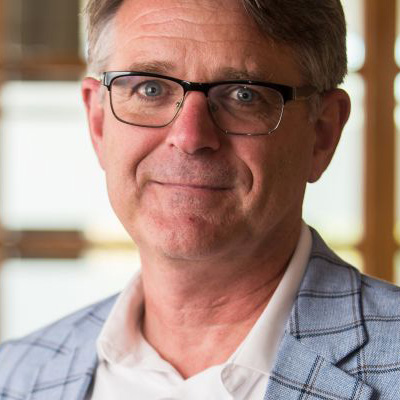
Howard Coombs

Dr. Howard Coombs

Howard Coombs

Associate Director Defence Engagement

Associate Professor

Royal Military College of Canada

howard.coombs@queensu.ca

613-541-6000 x 6535

Robert Sutherland Hall, Rm 401

About

DR. HOWARD G. COOMBS is an Associate Professor of History at the Royal Military College of Canada and Associate Director Defence Engagement of the Queen’s Centre for International and Defence Policy, both in Kingston, Ontario. He is also a part-time Canadian Army reservist with the Canadian Defence Academy, also located in Kingston.

Coombs has had operational deployments to the former Yugoslavia and Afghanistan as a military officer on regular and reserve duty. In addition to that he deployed with Joint Task Force Afghanistan from September 2010 to July 2011 as a civilian advisor to the Task Force Commander. He has been awarded the Order of Military Merit and the Canadian Forces Medallion for Distinguished Service.

He is a graduate of the Canadian Forces Staff School, Canadian Land Force Command and Staff College, United States Army Command and General Staff College, and the US Army School of Advanced Military Studies, which awarded his Master’s degree. Coombs received his PhD in military history from Queen’s University in Kingston, Ontario.

Research Interests

  • Canadian professional military education
  • Canadian military operations and training

Recent Publications

  •  

Online

  • Canadian Global Affairs Institute: https://www.cgai.ca/howard_coombs
  • Facebook: https://www.facebook.com/howard.g.coombs
  • Linked in: https://www.linkedin.com/in/howard-coombs-1051b63/?originalSubdomain=ca
  • Royal Military College of Canada (RMC): https://www.rmc-cmr.ca/en/history/howard-g-coombs
  • Twitter @HowardGCoombs


Are confidence-building measures possible in an age of competition? with Dr. Joel Ng

Date

Wednesday November 22, 2023
12:30 pm - 1:30 pm

Location

Robert Sutherland Hall, Room 334 - Queen's University
Joel Ng


2022 was the bloodiest year for conflicts since 1994, the year of tragic genocides in the former Yugoslavia and Rwanda. 2023 looks unlikely to reverse the trend, while contending approaches to global order by rival powers mark divisions that seem increasingly insurmountable. The rise of ‘tit-for-tat’ measures since the initiation of the US trade war aimed at China has raised tensions and led to restructuring of domestic policies worldwide toward ‘resilience’ – a byword for anticipating conflict and the decreasing reliance on interdependence. Yet seen from a game-theoretic perspective, ‘tit-for-tat’ is a strategy that is not solely negative or hostile, but one that also contains its own solution, if positive actions can be reinforced. Confidence-building measures (CBMs) have been long considered a critical part of the security toolkit in the Indo-Pacific. Yet 30 years of their implementation have not seemed to have much effect as rivalries grow in the region. This seminar considers the prospects for rethinking CBMs as needs grow for addressing retaliatory actions and transactionalism in an age of competition.


Joen Ng HeadshotBio:

Dr Joel Ng is Research Fellow and Deputy Head of the Centre for Multilateralism Studies (CMS), S. Rajaratnam School of International Studies (RSIS), Nanyang Technological University (NTU), Singapore. His research focuses on regionalism, integration, security, and intervention norms, focusing on ASEAN and its dialogue partners as well as the African Union. He began his career in international affairs working in Uganda on peace, conflict, and refugee issues. He has also worked in the private sector in Singapore in public and investor relations. He is presently in the Singapore committee for the Council for Security Cooperation in the Asia Pacific (CSCAP). Dr Ng is the author of Contesting Sovereignty: Power and Practice in Africa and Southeast Asia (Cambridge University Press, 2021). He has a DPhil from the University of Oxford, where he was an Oxford-Swire and Tan Kah Kee scholar, and also holds a MA (Distinction) from the University of Sussex, and a BA (Hons) from the University of East Anglia.

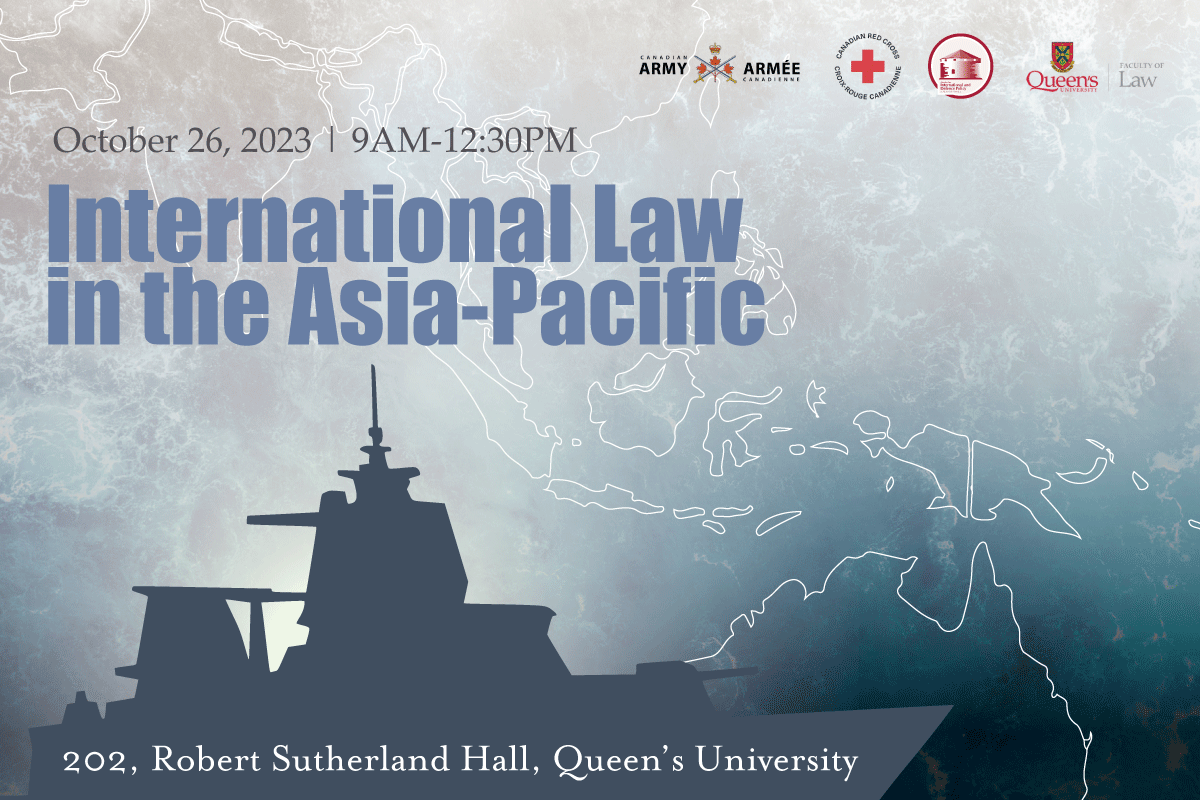
Conference: International Law in the Asia-Pacific

Date

Thursday October 26, 2023
9:00 am - 12:30 pm

Location

Robert Sutherland Hall, Room 202, Queen's University
International Law in teh Asia-Pacific


The Canadian Red Cross, the Centre for International & Defence Policy, Queen’s Law, and the Canadian Forces Military Law Centre are pleased to announce the 2023 Ontario IHL Conference to be held at Queen’s University in Kingston. This year’s theme is “International Law in the Asia-Pacific.”

This free, public, half-day conference featuring academics and practitioners, will provide participants the opportunity to increase their understanding of pressing issues and challenges pertaining to international law in the Asia-Pacific.

The Asia-Pacific region is rapidly becoming a global centre of economic dynamism and a host of complex strategic challenges. It is also the home of a vibrant civil society invested in protecting the human security, human rights, and livelihoods of 60% of the world’s population. This event will highlight the need for Canada and the Canadian public to demonstrate global humanitarian leadership and sustained commitment to help address f Asia-Pacific populations’ concerns. In this spirit, our experts will assess prospects for the peaceful management of territorial and other disputes in the context of increased militarization of areas where international law in general, and humanitarian law in particular, is being challenged from the South China Sea to Myanmar. The event will profile international humanitarian law (IHL), Maritime Law, Canada’s contributions to regional security, and humanitarian and disaster relief interventions.
 

Sophie Rondeau

Dr. Sophie Rondeau

Philip Drew

Dr. Phillip J. Drew

Mark Raymond

Professor Mark Raymond

Emma Fingler

Emma Fingler


Programme

08:30 am - Registration

09:00 am - Introduction, Land Acknowledgement & Asia-Pacific contextual overview | Words of Welcome

  • Howard Coombs, Deputy Director - Centre for International & Defence Policy

  • Dr. Sophie Rondeau, Director and Legal Advisor, IHL Education

09:10 am - International Humanitarian Law

  • Dr. Sophie Rondeau, Director and Legal Advisor, IHL Education

09:50 am - Maritime Law in the Asia Pacific Region

  • Dr. Phillip J. Drew, Assistant Dean JD and Graduate Studies

10:30 am - Break

10:45 am - Panel Presentations

      Moderator: Brigadier-General (Ret'd) Ken Watkin

  • What’s Really Going on in the South China Sea?
    • Professor Mark Raymond, Wick Cary Associate Professor of International Relations, Balsillie School of International Affairs, Director of the Cyber Governance and Policy Center, University of Oklahoma
  • Disaster Governance and Responsibility to Protect in Myanmar
    • Emma Fingler, PhD Candidate - Queen's University
  • Canada’s Contributions to Regional Security
    • Lieutenant-Commander Brent K. Lemon, CD Deputy Director, Canadian Forces Military Law Centre, Canadian Armed Forces

11:50 am - Evaluation

11:55 am - Closing Remarks | A word of thanks

  • Lieutenant-Commander Brent K. Lemon, CD Deputy Director, Canadian Forces Military Law Centre, Canadian Armed Forces
  • Dr. Sophie Rondeau, Director and Legal Advisor, IHL Education

12:00 pm - Reception

12:30 pm - End of Conference


Bios:

Dr. Howard G. Coombs is an Associate Professor of History at the Royal Military College of Canada and Deputy Director of the Centre for International and Defence Policy, Queen’s University, both located in Kingston, Ontario. Coombs is also a part-time Canadian Army reservist with the Canadian Defence Academy, also in Kingston. Coombs received his PhD in Military History from Queen’s University and his primary research interests are Canadian professional military education, in addition to Canadian Cold War military operations and training.

Dr. Sophie Rondeau is currently Director and Legal Advisor at the Canadian Red Cross, in the International Humanitarian Law team. She started with the Red Cross in 2005 as the HIP (Humanitarian Issues Program) coordinator for Québec; she then held various legal and governance functions in the organization. She graduated from Université de Montreal's Law Faculty (LL.B), holds a Masters' degree in International Law from Université du Québec à Montréal (UQAM) (LL.M), a Doctorate in Law from Université de Genève and Université Laval (LL.D), and is a member of the Quebec Bar (2003 / articled at the ICTY). In the last 15 years, she has been a researcher, guest speaker and lecturer in various Canadian universities and she has worked in institutions such as the Diakonia IHL Centre, Rights & Democracy and the Jean-Pictet Competition. She is a member of the Governance committee and a Board member of Canada’s Amnesty International Francophone section, and previously sat of UQAM’s Alumni committee, and on L’Itinéraire’s Board of Directors. She currently lives on the island of Tiohtiá:ke\Montreal with her husband and 2 sons.

Dr. Phillip Drew is a former military officer who divided his thirty-one year career in the Canadian Armed Forces between the Intelligence Branch and the Legal Branch.  Following his retirement from the Forces he worked as a senior consultant in the Maritime Security and Counter-Piracy Directorate at the United Nations Office on Drugs and Crime.  From 2016-2020 he was an Associate Professor at the Australian National University College of Law where he taught International Humanitarian Law, Maritime Security Law, and Peacekeeping Operations Law.  He earned the degree of Doctor of Law (D. Iur.), from the University of Frankfurt (Oder) where he specialized in the Law of Maritime Blockade.  He completed both his Juris Doctor and Master of Laws degrees at Queen’s University.

Brigadier-General (Ret’d) Ken Watkin OMM, CD, KC, served for 33 years in the Canadian Forces, which included 28 years as a military lawyer. He finished his military service as the Judge Advocate General (20062010). In addition to serving as a prosecutor and appellate counsel Ken worked in a variety of military law positions including operational law, training, human rights, and general legal advisory roles.  He advised the 1993 joint civilian/military Board of Inquiry investigating the Canadian Airborne Battlegroup in Somalia; and served as Government legal counsel in respect of inquiries and investigations arising from the 1994 genocide in Rwanda representing Lieutenant-General (Ret’d) Dallaire and his military assistant. This included appearing as counsel in 2004 before the International Criminal Tribunal for Rwanda. As the Deputy Judge Advocate General/Operations and the Judge Advocate General he was responsible for operational law advice to the Army, Air Force, Navy and Special Operations Forces for a significant portion of the 2001-2010 time period following the attacks of 9/11.

Upon retirement Ken was appointed as a Foreign Observer to the Israeli Independent Commission investigating the 31 May 2010 Gaza blockade incident, which inquired into the actions of the Israeli Defence Force concerning the seizure of the Motor Vessel, Mavi Marmara. He subsequently served as the Charles H. Stockton Professor of International Law at the United States Naval War College (2011-2012). Ken has also worked as a counterterrorism/national security consultant for the United Nations regarding the collection of evidence on the battlefield, and in Canada concerning human intelligence operations.

Ken Watkin has written extensively about the application of international law to contemporary conflict and counterterrorism. His book Fighting at the Legal Boundaries: Controlling the Use of Force in Contemporary Conflict (Oxford University Press, 2016) was awarded the 2017 Francis Lieber Prize by the American Society of International Law as “an exceptional published work in the field of armed conflict.”  Ken also co-authored a second book, Law in War: A Concise Overview (Routledge, 2nd ed., 2023).  He has published over sixty articles, on-line commentaries and book reviews on international humanitarian law, human rights and national security law with his work being cited by both the Canadian and Israeli Supreme Court.   

Ken was a member of the Editorial Committee of the International Committee of the Red Cross project to update the 1949 Geneva Convention (III) on Prisoners of War Commentary that was published in 2020. He has participated as an expert in international working groups tasked with clarifying the law and developing manuals/studies regarding Cyberwarfare, Occupied Territory, Air and Missile Warfare, Direct Participation in Hostilities, The Conduct of Hostilities and State Self-Defence.

Ken is a graduate of The Royal Military College (Hons BA), Queens University (LLB and LLM) and was a visiting fellow at the Human Rights Program at Harvard University (2002-2003). In 2002 Ken was appointed to the Order of Military Merit, in 2006 a Queen’s Counsel (now King’s Counsel), and in 2010 received the Canadian Bar Association (CBA) President’s Award that recognizes the significant contribution of a Canadian jurist to the legal profession, to the CBA or to the public life of Canada.

Mark Raymond is the Wick Cary Associate Professor of International Relations at the University of Oklahoma, and the Associate Director for International Security Policy at the Oklahoma Aerospace and Defense Innovation Institute. In addition to his faculty appointment, he is the Associate Editor of International Theory. He is the author of Social Practices of Rule-Making in World Politics (New York: Oxford University Press, 2019). His work appears or is forthcoming in various academic journals including International Theory, the Journal of Global Security Studies, Contemporary Security Policy, Strategic Studies Quarterly, The Cyber Defense Review, the UC Davis Law Review, and the Journal of Current Southeast Asian Affairs. He has contributed policy commentary to outlets including Lawfare, The Monkey Cage, and The Diplomat. He was a Senior Advisor with the United States Cyberspace Solarium Commission, and he has testified before the United Nations Commission on Science and Technology for Development, and at the UN Internet Governance Forum.

Emma Fingler (she/her) is a SSHRC-funded doctoral candidate researching gender, disaster response operations, and regional governance in South and Southeast Asia. She is a Doctoral Fellow with the Research Network on Women, Peace and Security (RN-WPS) at McGill University and is a Graduate Research Fellow with the Centre for International and Defence Policy (CIDP) at Queen’s University. Emma is the 2023 Graduate Scholarship recipient of Women in Defence and Security (WiDS). She was previously a Canada-Asia Young Professional Fellow with the Asia Pacific Foundation of Canada. Emma has experience working abroad on humanitarian, development, and coordination issues. Prior to joining Queen’s, she was the Special Assistant to the United Nations Resident Coordinator in Kathmandu Nepal, and a Junior Professional Consultant with the UN Resident Coordinator’s Office in Kathmandu. She holds an M.A. in Global Governance from the University of Waterloo’s Balsillie School of International Affairs and a B.A. Hons. in Political Studies from Bishop’s University.

LCdr Brent Lemon graduated from the Royal Military College as a Naval Warfare Officer and sailed onboard warships of the Royal Canadian Navy before joining the Office of the Judge Advocate General of the Canadian Armed Forces. He is fortunate enough to have served in a variety of locations including Canada’s Arctic, Ukraine, and Latvia with NATO’s Enhanced Forward Presence Battlegroup. Needless to say, he has a very patient partner and family.

Cindy Cruz

Cindy Cruz

Cindy Cruz

Phd Candidate/Researcher

Dept. of Political Studies

Queen's University

About

Cindy is a doctoral student within the Department of Political Studies at Queen’s University. Her research focuses on the Canadian Armed Forces organization and members within, including elements such as gender, civilian military relations, organizational identity, security, and international relations. She has a multi-disciplinary background with a BA in Criminology, Sociology, and an MA in Sociology.

Research Interests

  •  

Recent Publications

  •  

Online

  •  

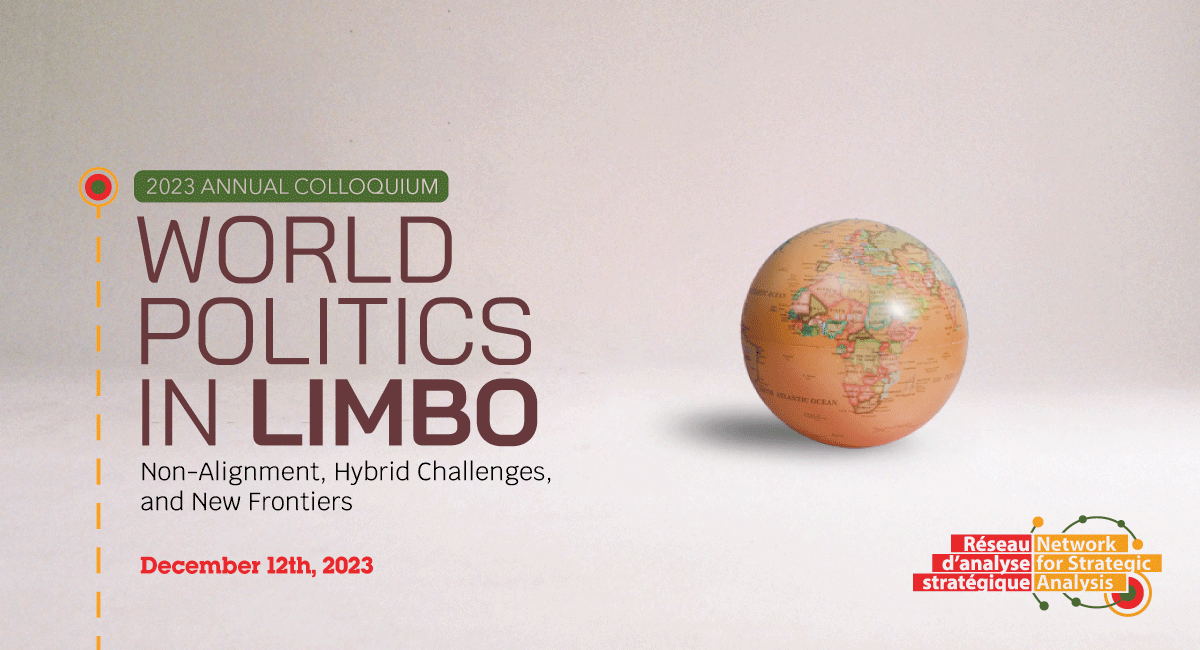
WORLD POLITICS IN LIMBO: Non-Alignment, Hybrid Challenges, and New Frontiers

Date

Tuesday December 12, 2023
12:00 am - 12:00 am

Location

University of Ottawa
World Politics in Limbo

Save the Date!

Great powers. Allies and Friends. Rivals, or lately even enemies. These are the labels we typically use to refer to countries we care about the most for our defence and security. As talk of a “new Cold War” abounds in policy discourse, the world seems once again like it can be divided into rival, competing blocs. There are those we cooperate with, and others we compete with. Yet most countries of the world do not fall neatly within these categories. Instead, they are often located in-between (or even outside) such binaries. Their non-alignment concerns us, and we fear the implications of them choosing the “other” (wrong) side.

In the current geostrategic context, international institutions are a prime venue of competition as major powers vie for support but are met with resistance against attempts to force “the Rest” to pick sides. Friendshoring, through the reinforcement of existing alliances or the launching of new ones among the “like-minded,” also presents new opportunities for cooperation. It also results in fragmentation, closure and exclusion, perceived by some as provocations that increase the likelihood of conflict. In addition, rising threats below the threshold of war, in cyber, informational or AI domains, but also in the “new frontiers” of space and the deep sea, can lead to new types of conflict we are ill-prepared to face. Against this volatile backdrop, the security implications of climate change, from rising sea levels, disasters, food insecurity, and displacement, are increasingly salient. They beg for a kind of cooperation that is proving more challenging against the backdrop of fraught major power relations, and lead to tensions in the Arctic, the South China Sea, Africa, and elsewhere.

This colloquium investigates why and how these various “in-betweens” of security and defence matter for Canada. It deals with a broad range of issues and geographical areas where cooperation and conflict unfold in tandem, straddling divides between “us” and “them.” It showcases that Canada should actively centre these actors, issues, and spaces in its defence and security policy if it is to approach the current global security environment with open eyes.

Dr. Emilie El Khoury

Dr. Emilie El Khoury

Emilie El Khoury

Postdoctoral Fellow

emilie.elkhoury@queensu.ca

Robert Sutherland Hall, Rm 409

About

Dr. Emilie El Khoury is a postdoctoral fellow at the Centre for International and Defence Policy (CIDP) at Queen's University, specializing in anthropology with a focus on terrorism, counterterrorism, gender. Her research examines the impacts of terrorism on victims as well as counterinsurgency strategies. She is also an adjunct professor at the Royal Military College of Canada (RMC) and contributes to the AMALTHEA Project, which investigates terrorism and gender issues.

Research Interests

  •  

Recent Publications

  •  

Online

  •  

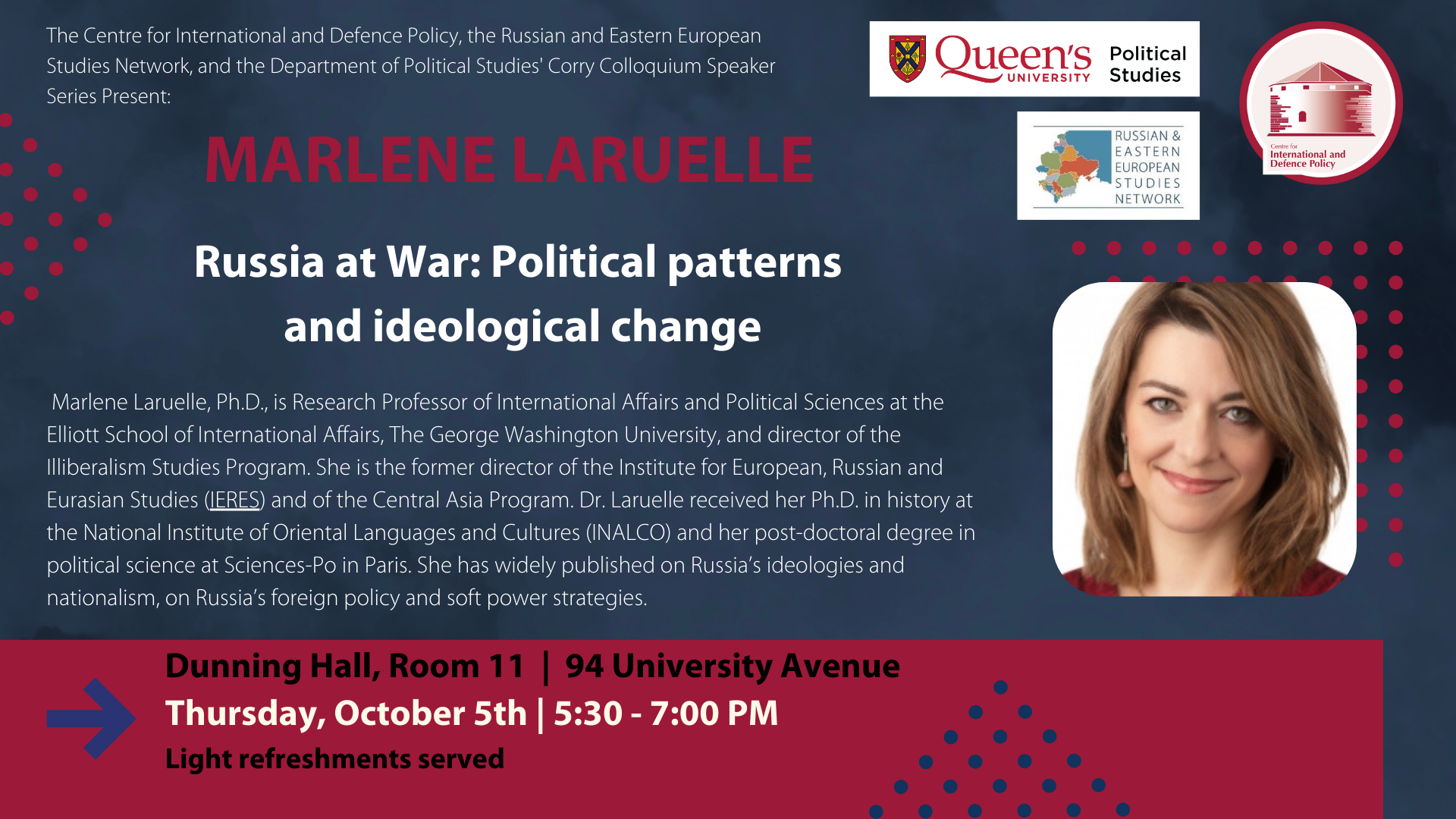
Russia at War: Political Patterns and Ideological Change with Marlene Laruelle

Date

Thursday October 5, 2023
5:30 pm - 7:00 pm

Location

Dunning Hall | Room 11

The Centre for International and Defence Policy, the Russian and East European Studies Network, and the Department of Political Studies' Corry Colloquium Speaker Series Present:

Marlene Laruelle

Russia at War: Political patterns and ideological change

Marlene Laruelle - The George Washington University


Light refreshments served


Marlene LaruelleBiography: 

Marlene Laruelle, Ph.D., is Research Professor of International Affairs and Political Sciences at the Elliott School of International Affairs, The George Washington University, and director of the Illiberalism Studies Program. She is the former director of the Institute for European, Russian and Eurasian Studies (IERES) and of the Central Asia Program. Dr. Laruelle received her Ph.D. in history at the National Institute of Oriental Languages and Cultures (INALCO) and her post-doctoral degree in political science at Sciences-Po in Paris. She has widely published on Russia’s ideologies and nationalism, on Russia’s foreign policy and soft power strategies.

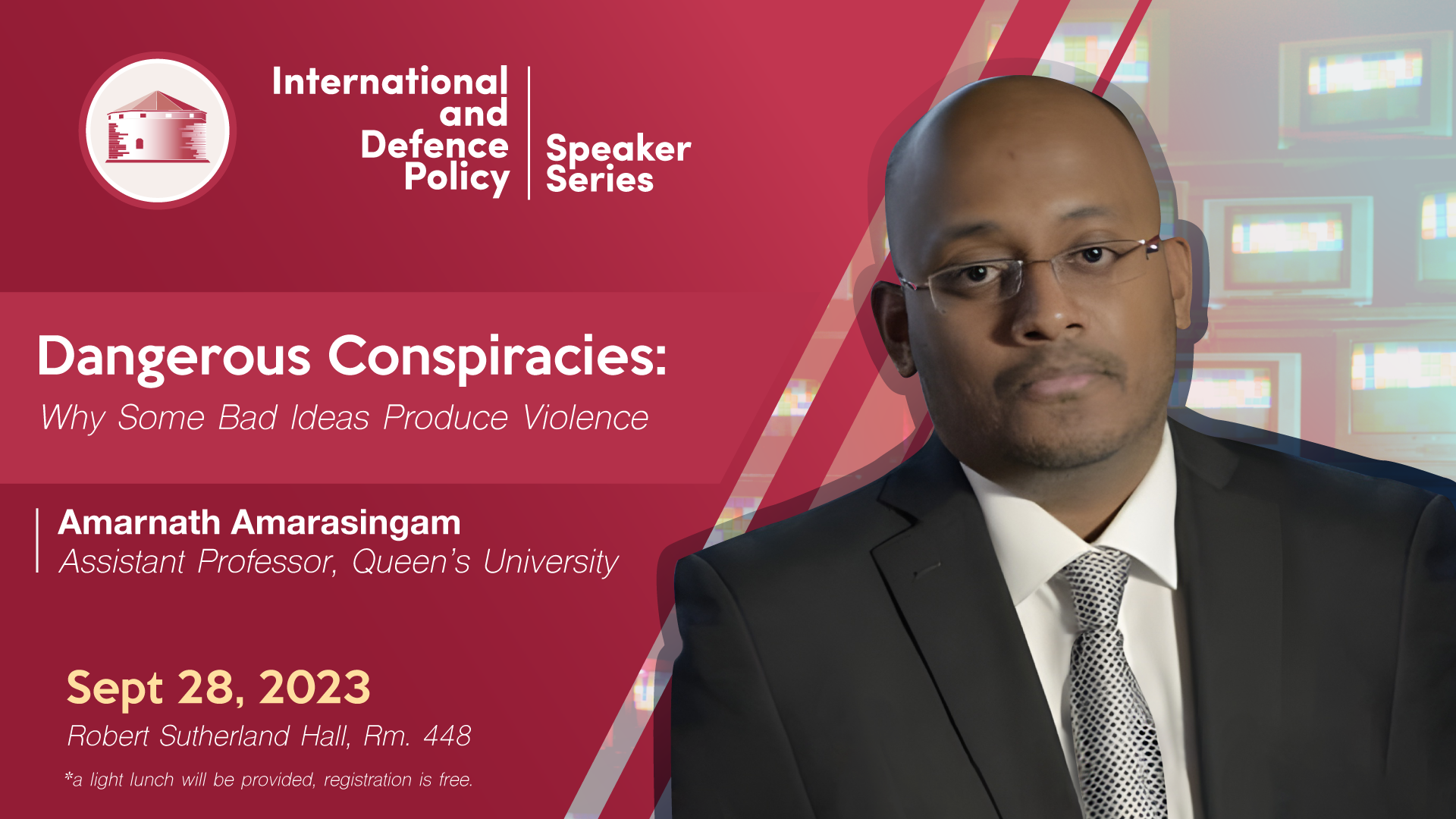
Dangerous Conspiracies: Why Some Bad Ideas Produce Violence

Date

Thursday September 28, 2023
12:10 pm - 1:10 pm

Location

Robert Sutherland Hall, Room 448 - Queen's University | Online via Zoom
amarnath

Dangerous Conspiracies: Why Some Bad Ideas Produce Violence 

Conspiracy theories have long been woven into the fabric of society, but not all remain benign chatter in the dark corners of the internet. This talk delves into the dynamics of why certain conspiracy theories escalate into violent ideologies, focusing on findings from a comprehensive survey of the UK population. The presentation will also explore the history of movements like QAnon, their political influence, look at the current state of conspiracy theories like the Great Replacement and Antisemitic ideas. Amarasingam will illuminate the premise that while ideas in isolation seldom pose a threat, an amalgam of factors within an ecosystem of conspiratorial thought can steer individuals towards endorsing, or even advocating, violent action.

*note: Q&A will not be available for the online audience, if you would like to ask a question please join us in-person.


Bio:

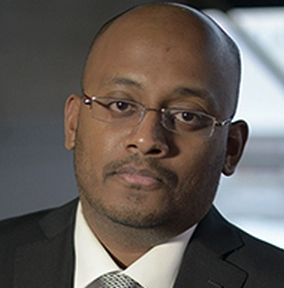
Amarnath AmarasingamAmarnath Amarasingam is an Assistant Professor in the School of Religion, and is cross-appointed to the Department of Political Studies, at Queen’s University in Ontario, Canada. His research interests are in terrorism, radicalization and extremism, conspiracy theories, online communities, diaspora politics, post-war reconstruction, and the sociology of religion. He is the author of Pain, Pride, and Politics: Sri Lankan Tamil Activism in Canada (2015), and the co-editor of Stress Tested: The COVID-19 Pandemic and Canadian National Security (2021) and Sri Lanka: The Struggle for Peace in the Aftermath of War (2016). He has also published over 60 peer-reviewed articles and book chapters, has presented papers at over 100 national and international conferences, and has written for The New York Times, The Monkey Case, The Washington Post, CNN, Politico, The Atlantic, and Foreign Affairs. He has been interviewed on CNN, PBS Newshour, CBC, BBC, and a variety of other media outlets.
Dr. Amarasingam is an experienced field researcher, having conducted hundreds of interviews for his PhD dissertation on social movement activism, organizational dynamics, and youth identity in the Sri Lankan Tamil diaspora, as well as over 50 interviews with former fighters of the Liberation Tigers of Tamil Eelam (LTTE, or Tamil Tigers) throughout the former war zones of Sri Lanka in 2013 and 2014. He has also conducted field research in Syria, Iraq, Morocco, Somalia, Lebanon, and Israel/Palestine. He co-directed a study on foreign fighters in Syria and Iraq, based at the University of Waterloo, for six years during which he conducted numerous social media and in-person interviews with current and former foreign fighters in Syria and Iraq, as well as parents and close friends of those who travelled to fight. He has also conducted several interviews with former extremists on the far-right and conspiratorial movements.


Dr. Ian Garner

Dr. Ian Garner

Ian Garner

Assistant Professor

Center fo Totalitarian Studies

Pilecki Institute, Warsaw

About

Ian Garner is Assistant Professor at the Center for Totalitarian Studies, Pilecki Institute, Warsaw. He received his PhD from the Slavic Department at the University of Toronto (Canada) in 2017, where he wrote his doctoral thesis on the myth of the Battle of Stalingrad. A specialist in history and politics, his research interests primarily lie in Russian and Soviet military culture and propaganda. He is the author of two books, Z Generation: Into the Heart of Russia's Fascist Youth (Hurst/Oxford, 2023) and Stalingrad Lives: Stories of Combat & Survival (McGill-Queen's, 2022) and the co-editor of Russia and Modern Fascism: New Perspectives on the Kremlin's War Against Ukraine (ibidem/Columbia, 2025). He regularly comments and writes for major media outlets across the world. In 2024, Dr. Garner was made a Fellow of the Royal Historical Society.

Research interest

  • War propaganda
  • Russia and Soviet Union
  • Identity

Recent Publications

  • Garner, I., & Kuzio, T. (Eds.) (2025). Russia and Modern Fascism: New Perspectives on the Kremlin's War Against Ukraine. Ibidem/Columbia UP. 
  • Garner, I., & Edwards, A. (2025). Creating Good Young Patriots: Russian Youth Leaders on Telegram and the War against Ukraine. Communist and Post-Communist Studies. 
  • Garner, I. (2025). Building a Future Past: Early Representations of the Reconstruction of Stalingrad. In Rutherford, J., & von Maier, R. (Eds.). The German-Soviet War: Combat, Occupation, and Legacies. Cornell University Press.
  • Garner, I. (2024). Fighting the Online War: Online Russian Nationalists and the Discourse of Stalingrad in the Early 2010s. Journal of Nationalism, Memory & Language Politics. 
  • Garner, I. (2023). Z Generation: Into the Heart of Russia's Fascist Youth. Hurst/Oxford UP. 

Online

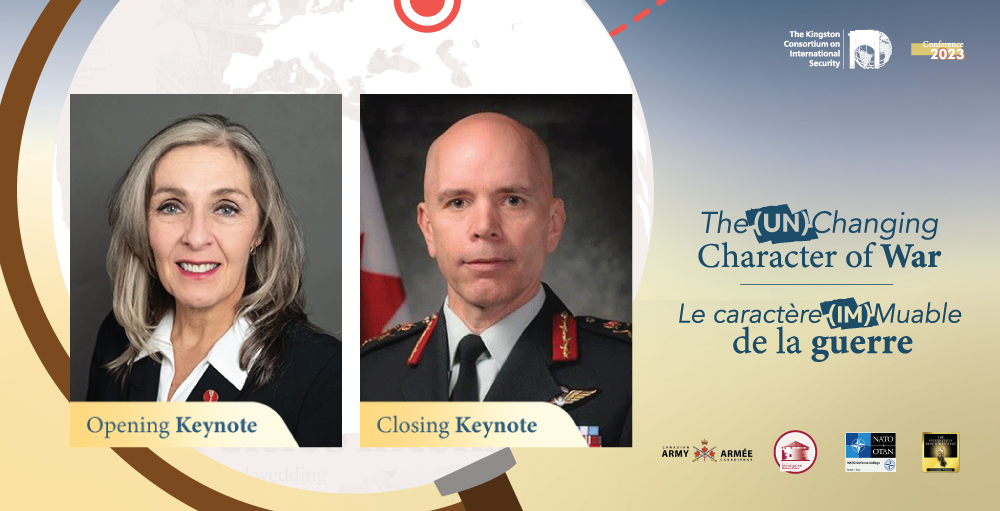
KCIS Conference 2023 - The (UN)Changing Character of War

Start Date

Tuesday September 19, 2023

End Date

Thursday September 21, 2023

Time

12:00 am - 12:00 am

Location

Donald Gordon Hotel and Conference Centre, Kingston ON
KCIS 2023 Keynote speakers


Some of our Keynote speakers and many of our panelists have been revealed, including: Senator Rebecca Patterson as our Opening Keynote, General Wayne Eyre as our Closing Keynote.

Standing at an inflection point in history, over the past few years it has become painfully evident that a new era is upon us. From the challenges to the current rules based international system to its potential impacts on partnerships, globalization, and the environment; from new contests for influence in regions stretching from the Arctic to Europe and all across Asia; from the [un]changing character of warfare of major combat operations in Europe to multi-domain operations across the Indo-Pacific. Each of these focus and friction points offer opportunities for the development of new strategy, policy, and security and defence. KCIS 2023’s theme is ‘the [un]Changing Character of War’. 

The aim of this conference is to identify and analyze the impacts of recent major shifts in the international security environment on the changing character of war, with a particular emphasis on the current flashpoints observed in the Indo Pacific, Central Europe, as well as the impact upon human security. Though broad in its interest, this conference seeks to bring together scholars and practitioners into the spotlight of those issues that resonate across all domains related to security and defence in this new era.

visit thekcis.org for the most up to date information.


Registration is now open!