
 Queen's 2015 Nobel Prize in Physics
International Conference on Scintillating Materials and their Applications
Gyeongju, South Korea. May 22-29, 2026
Nicholas Swidinsky
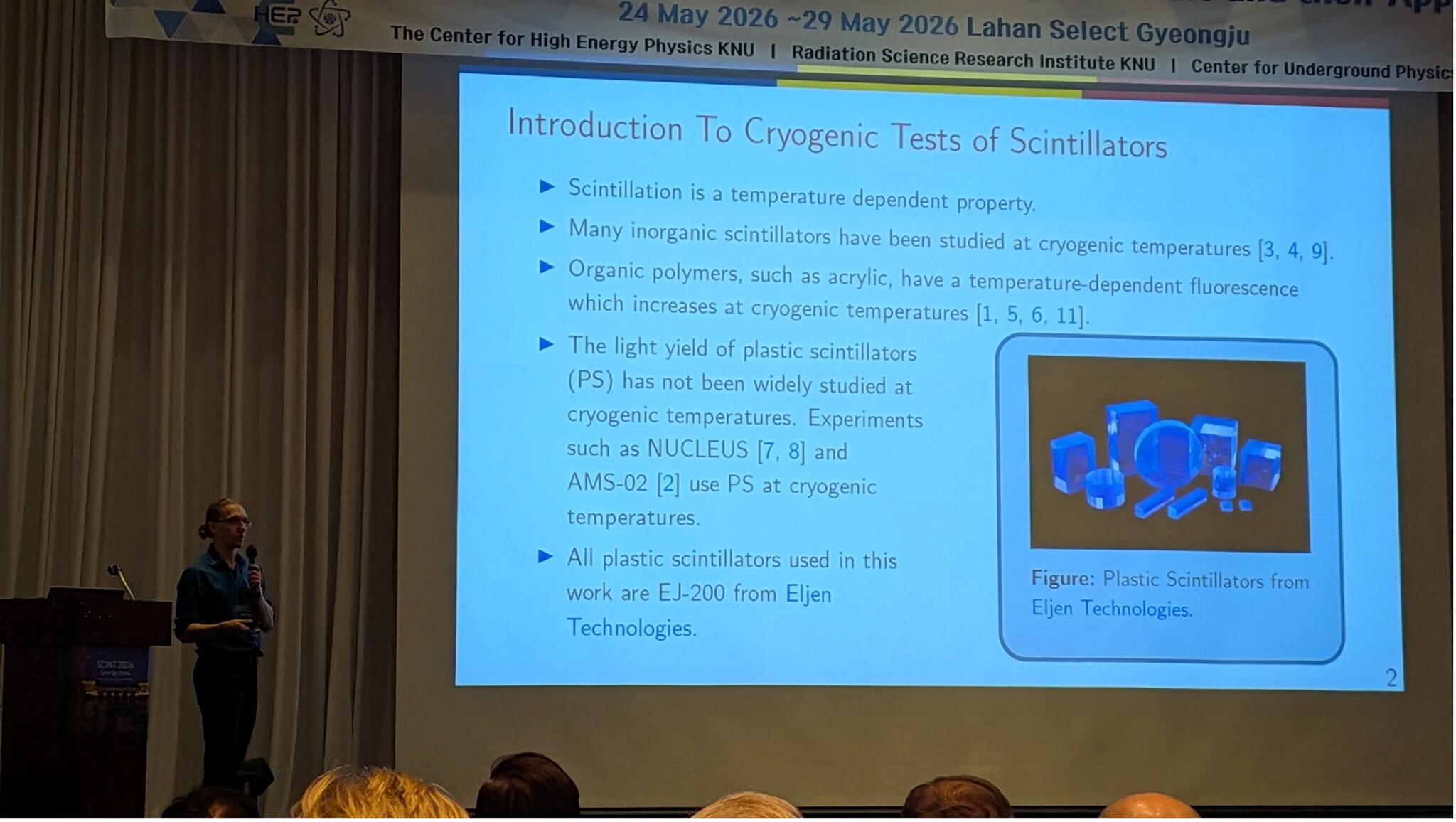
The 18th International Conference on Scintillating Materials and Their Applications was an international conference held in Gyeongju, South Korea. This conference was focused on anything related to scintillators, including manufacturing new scintillators, applications of scintillators, and characterizing scintillators. The conference also held a two-day long summer school in Daegu, South Korea that was designed for students and early career researchers to get an overview of the current status of the field. I presented my research on cryogenic tests of plastic scintillators at the conference. It was a great opportunity for me to present my research to leading experts in the field of scintillation, as well as learn new things about the field to further improve my research. – Nick Swidinsky
Canadian Astronomical Society (CASCA) Annual General Meeting 2026
Montreal, QC. June 7-12, 2026
Mayukh Bagchi, Sean Yin, Raina Irons
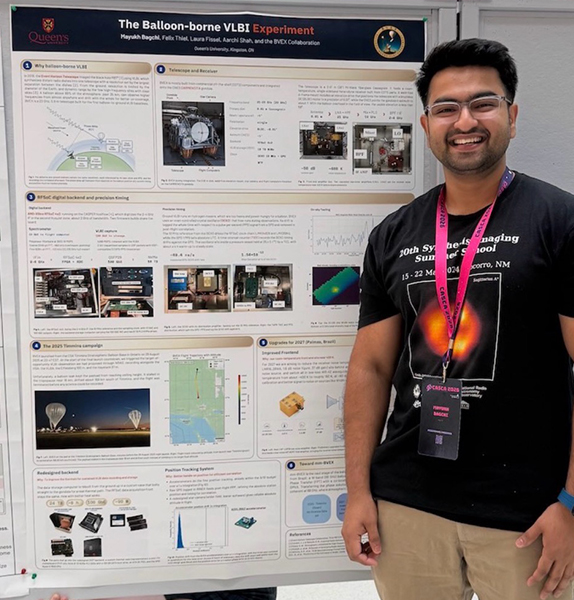
Mayukh Bagchi’s poster on BVEX, covering the instrument, their 2025 flight, and plans for the 2027 reflight. Mayukh’s poster won the Best Poster Award.
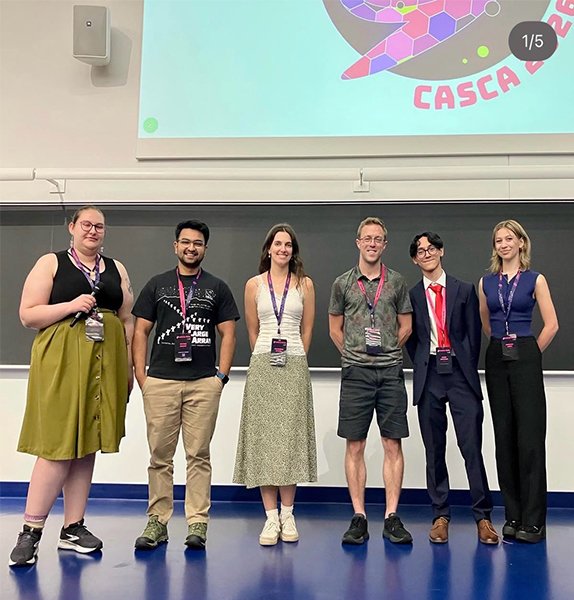
Group at the CASCA conference.
SIMBA/Kiara Team Meeting
Edinburgh, UK. June 9-13, 2026
Mathieu Perron-Cormier
The SIMBA / Kiara team meeting is a conference that regroups the different people involved with the SIMBA and Kiara cosmological simulations. I presented my original software, Mock Observation Cubes in HI (MOCHI). This software takes for input simulation data and outputs mock atomic hydrogen (HI) images like those taken by Canadian radioastronomy projects such as the WALLABY survey. MOCHI innovates on other similar software by introducing an intermediate field reconstruction step where the simulated density, temperature and velocity fields are interpolated before being collapsed into the image. This step is critical to capture the velocity gradients of mid resolution simulations like SIMBA and Kiara. MOCHI also boasts of several optimizations which allows it to beat out its competition’s performance by a significant margin, despite the field reconstruction step.
– Mathieu Perron-Cormier
Canadian Association of Physicists (CAP) Congress 2026
Ottawa, ON. June 21-27, 2026
Alexander Hayes, Ruchi Soni

Alex Hayes on a tour of the André E. Lalonde Accelerator Mass Spectrometry lab while at CAP Congress.
I participated in the student competition with a presentation on “Performance results of germanium high-voltage detectors tested in the Cryogenic Underground TEst facility” on behalf of the SuperCDMS collaboration. We also have a corresponding paper out on this work. – Ruchi Soni
Supermassive Black Holes and Blue Notes 2026
Montreal, QC. June 29-July 3, 2026
Mayukh Bagchi
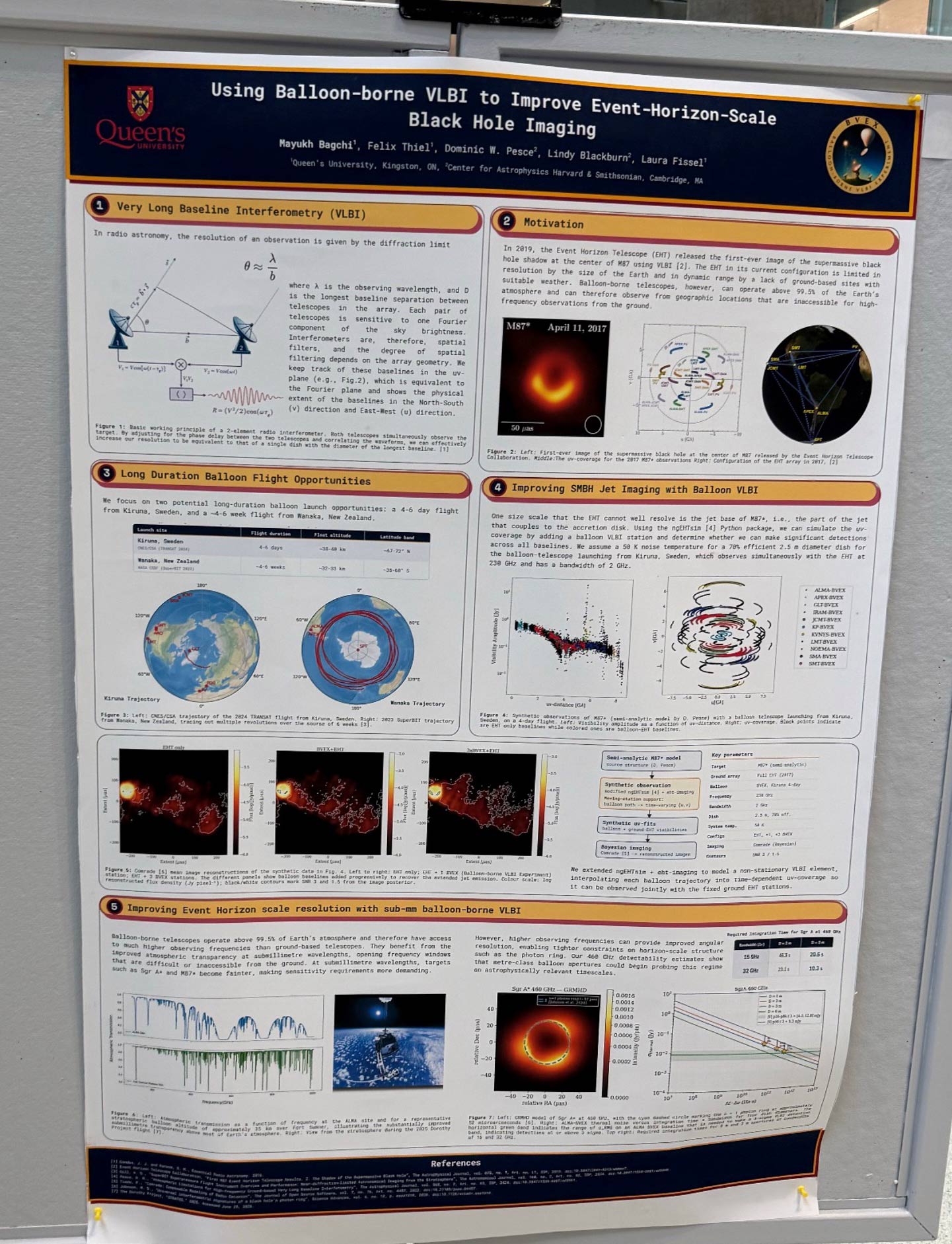
Poster by Mayukh Bagchi on the future of BVEX and the science enabled by an instrument of this kind.
SPIE Astronomical Instrumentation and Telescopes Conference
Copenhagen, Denmark. July 5-11, 2026
Felix Thiel, Mayukh Bagchi
I attended the 2026 edition of the SPIE Astronomical Instrumentation and Telescopes conference in Copenhagen, Denmark from July 6th to July 10th. This conference is organized on a bi-annual basis and is an opportunity to interact with experts on Instrumentation all across the field. I gave a talk called "The Balloon-borne VLBI Experiment Radio Telescope and Position Tracking System," which is also accompanied by a conference proceeding: https://arxiv.org/abs/2609.11676 . I got to interact with instrumentation and astronomy experts from all across the globe from institutions, such as CfA/ Harvard (Cambridge, MA), NRC/Herzberg (Victoria, BC), Radboud University (Nijmegen, Netherlands), University of Groningen (Netherlands), Academia Sinica Institute of Astronomy and Astrophysics (Taiwan) as well as Niels Bohr International Academy (Copenhagen) at that meeting.
— Felix Thiel
Mayukh Bagchi presented a talk on the telescope backend and timing system for BVEX. The paper he presented at SPIE has been published.
Metamaterials, Photonic Crystals & Plasmonics (META) 2026
Dublin, Ireland. July 12-18, 2026
Andrew Wakileh
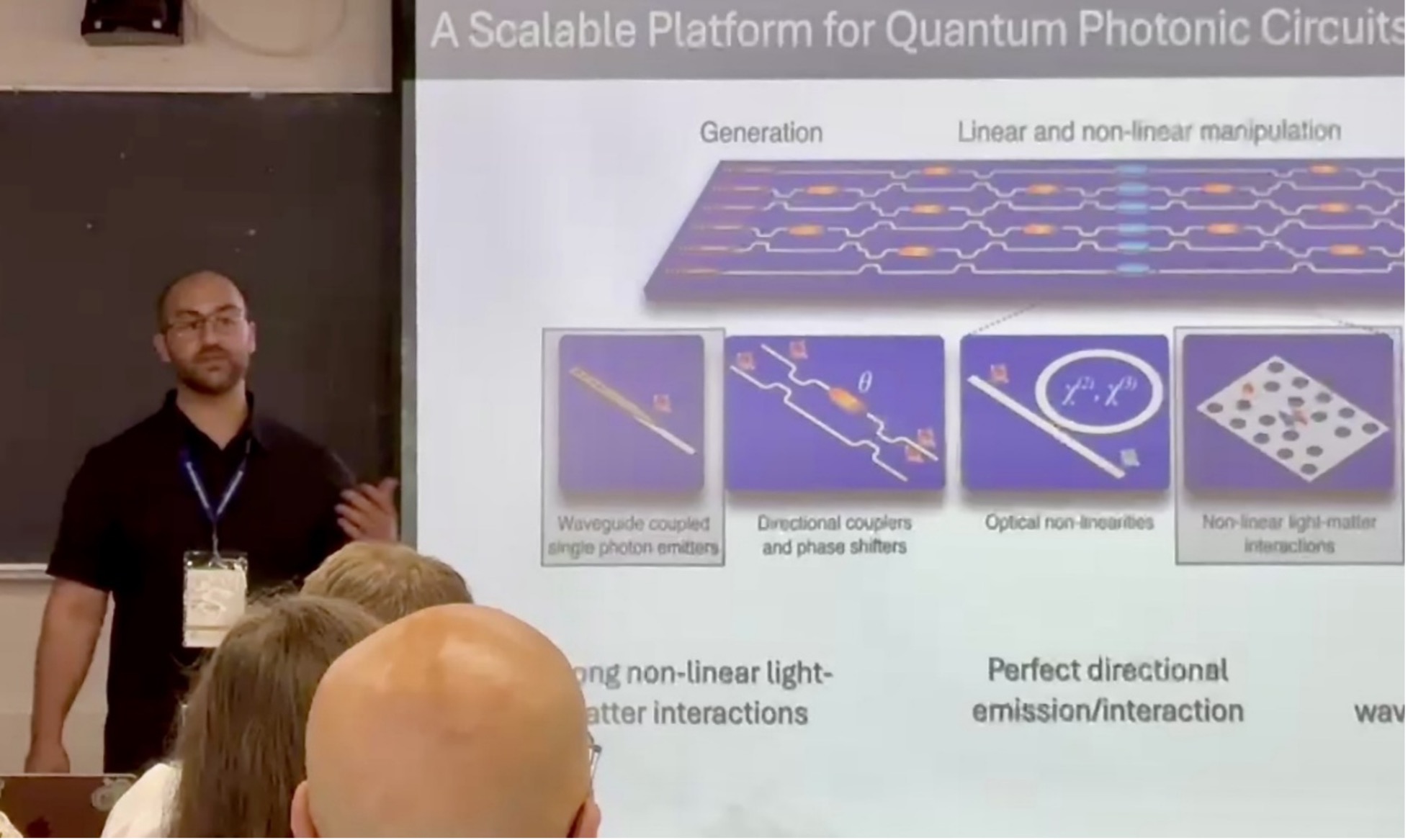
Andrew Wakileh participated as an invited speaker at this year’s META 2026 (Metamaterials, Photonic Crystals & Plasmonics) conference in Dublin, Ireland. Here he spoke on behalf of the Queen’s Quantum Nanophotonic Lab run by Dr. Nir Rotenberg regarding their work on the development of a nanophotonic platform aimed at realizing strong non-linear quantum light-matter interactions based on telecom emitting semiconductor quantum dots.
Discs on the Exe
Exeter, UK. July 26-Aug 1, 2026
Sadavoy Group’s Audrey Burggraf, Lance Schonberg, Callista Sullivan
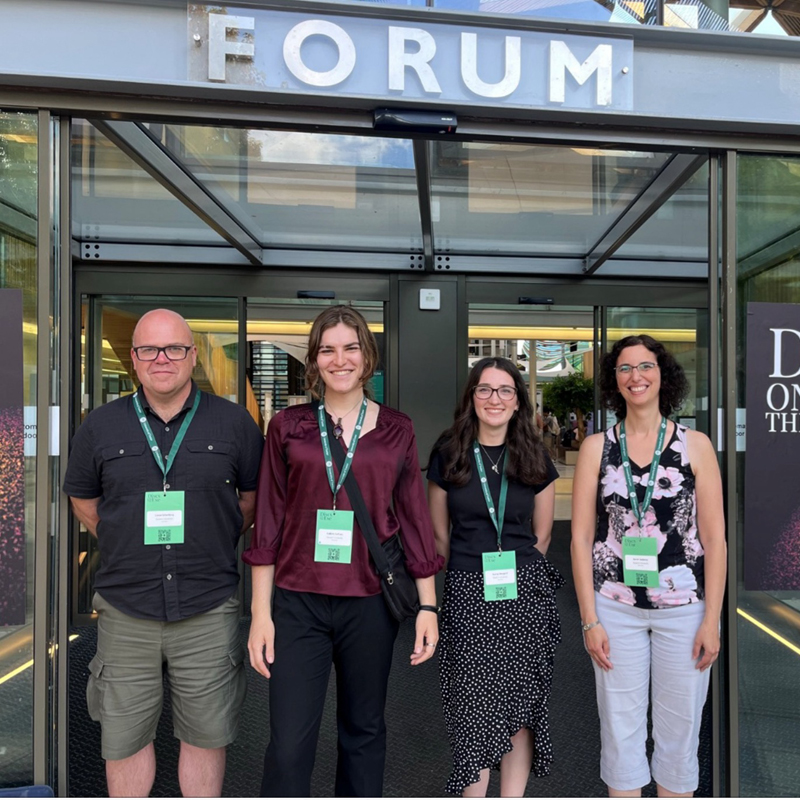
Sadavoy group at the Discs on the Exe conference in Exeter, UK. From left to right: Lance SchonbergL, Callisa Sullivan, Audrey Burggraf.
With the support and encouragement of my supervisor, Sarah Sadavoy (and a nice boost from the Harold M. Cave Graduate Travel Award), I was able to attend two conferences this summer, the annual gathering of the Canadian Astronomical Society, CASCA, in Montreal and a specialty conference at the University of Exeter in southwest England, Discs on the Exe. For the latter, I had the honour of kicking off the first parallel session for my category of Class 0/I (really young pre-stellar objects) Protostellar Discs with a talk on using archival ALMA data to look for the earliest signs of planet formation, and at CASCA was able to present a poster summarizing my results to date. — Lance Schonberg
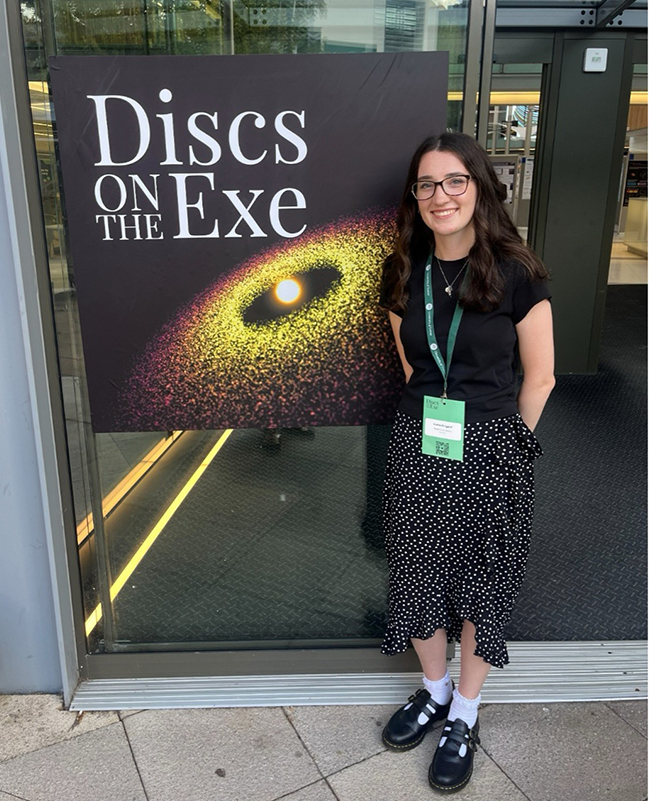
Audrey Burggraf at the Discs on the Exe conference 2026.
I had the opportunity to attend Discs on the Exe in Exeter, UK, where I presented my research on using ALMA polarization data to look for evidence of dust grain growth in the young protostar disk IRS 63. It was a wonderful opportunity to learn about current work in the field and connect with researchers from around the world. Thank you to my supervisor, Sarah Sadavoy, and the Harold M. Cave Travel Scholarship for making this opportunity possible.
— Audrey Burggraf