


Members of the Royal Legacy Society are invited to attend the second annual Tea Talk to thank you for your commitment to the university and to hear from leading Queen’s researchers who will share how their work is making a difference in the world.
Please join Dr. Stephen Lougheed, Director of Queen’s University Biological Station, Department of Biology, and Dr. Shelley Arnott, Professor of Aquatic Ecology, Department of Biology, at 3 pm EDT on June 23 for this virtual event. They will share exciting developments from their current research on environmental DNA and the effects of salinization on freshwater ecosystems.
The Queen's Royal Legacy Society recognizes those alumni and friends who have thoughtfully remembered the university through a bequest or another future gift commitment.
About the speakers
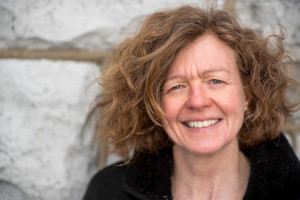 Dr. Shelley Arnott is a professor in the Department of Biology and associate director of the Queen’s University Biological Station. She uses experiments and field surveys to understand how aquatic organisms and communities are responding to contemporary environmental changes.
She has led two global experiments to assess the effects of freshwater salinization on populations, communities, and food webs and has an extensive network of government, NGO, and academic collaborators. Through her long-term research partnership with the Ontario Ministry of Environment, Conservation and Parks she has conducted studies to understand how invasive species, calcium decline, climate change, and salinization are changing aquatic ecosystems.
Valuing the communication of research, she has co-organized six international scientific meetings and numerous workshops and has been invited to present more than 65 lectures about her research at universities, workshops, and conferences. She has published more than 90 papers in peer-reviewed ecological and aquatic journals, including PNAS, TREE, Ecology, Ecological Applications, Global Change Biology, and Environmental Science & Technology.
She has trained 43 graduate and 45 undergraduate students in fundamental and applied ecological research – many of whom continue to make important contributions to environmental conservation through their jobs in academia, government, environmental consulting, and education.
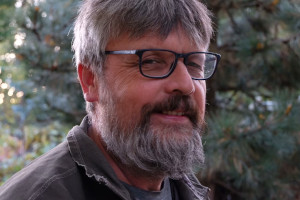 Dr. Stephen Lougheed is the Baillie Family Chair in Conservation Biology, professor of Biology and Environmental Studies at Queen’s University, and director of the Queen’s University Biological Station. His research combines leading-edge genomics, spatial ecology, eDNA, and modeling to understand species origins, maintenance of biodiversity, and human impacts on wild populations.
His fieldwork spans the Americas from Tierra del Fuego to the Arctic. He is principal investigator (PI) and co-PI on two large-scale Genome Canada funded projects that seek to collaborate with Inuit communities combining Indigenous Knowledge and genomics to manage northern species. Dr. Lougheed also leads an initiative to develop new metabarcoding and digital polymerase chain reaction (PCR) tools for monitoring aquatic diversity – funded by a New Frontiers in Research Fund (NFRF) Innovation grant.
Dr. Lougheed has trained 46 graduate students, 90 undergraduate thesis and mentorship students, and seven postdoctoral fellows. He has taught over 50 field courses on four continents and won numerous teaching awards. He has published over 150 peer-reviewed publications, book chapters, and governmental reports.
