

Feb. 4 marks World Cancer Day, a time for raising awareness about cancer and encouraging prevention of what is now the second-leading cause of death worldwide.
According to the Canadian Cancer Society, about two in five people in this country are expected to be diagnosed with cancer in their lifetime, and about one in four Canadians will likely die of the disease.
The good news is that mortality rates have actually been falling by about 1.5 per cent every year since 2003 across all cancers, and by around three per cent in recent years for lung, bladder, and colorectal cancers.
Most of those declines are due to big advances in prevention – especially reduced tobacco use – as well as improved screening and breakthroughs in treatment. And driving much of that progress are the researchers, oncologists, and donors working to turn those advances into better outcomes for patients.
At Queen’s, that includes people like Murray Sinclair, Com’84, and his wife Cara, whose $25-million gift to cancer research at the university in 2024 led to the creation of the Sinclair Cancer Research Institute.
It also includes researchers such as Dr. Christopher Booth, Artsci’97, Meds’01, and Dr. Xian Wang, whose work through the institute is advancing new approaches to cancer care and treatment showing incredible promise.
In the spirit of this year’s World Cancer Day theme, “United by Unique,” here’s a closer look at how the Sinclairs, Dr. Booth, and Dr. Wang are helping keep people and their stories at the heart of cancer research.
Who: Murray Sinclair, Com’84, and Cara Sinclair
What: When cancer hit close to home, Murray and Cara Sinclair found themselves grappling not just with a diagnosis in the family, but with the many unanswered questions that come with it. Their experience became the catalyst for a $25-million gift to cancer research in 2024, one of the largest donations ever made to Queen’s Health Sciences. The gift led to the creation of the Sinclair Cancer Research Institute and a focus on breakthroughs in cancer imaging, immunotherapy treatments, training, and more.
Read more: “When the clock stopped”
.jpg)
“We are all touched by cancer,” says Cara Sinclair (right). “And because of that, we can find the collective strength and motivation to do something about it.” (Photo: Hélène Cyr)
Who: Dr. Christopher Booth, Artsci’97, Meds’01
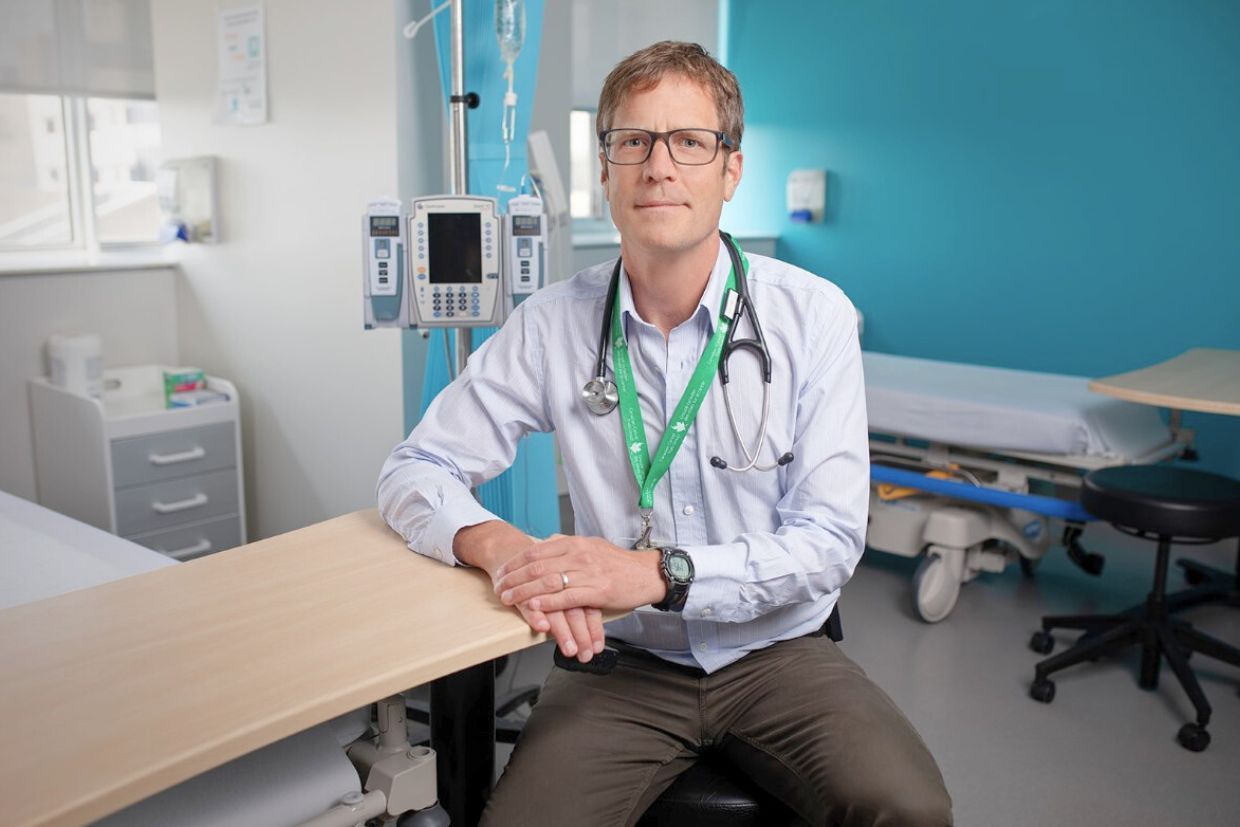
What: As an oncologist, one of the most common questions Dr. Christopher Booth hears from patients finishing chemotherapy is, “What else can I do to improve my outcomes?” Thanks to the Queen’s cancer researcher and professor’s work leading a recent headline-making study, he can now point to strong evidence linking structured exercise to significantly improved survival rates for people with colon cancer. The findings are already sparking growing interest in studying the effects of exercise in other cancers.
Read more: “For the record: Dr. Christopher Booth, Artsci’97, Meds’01”
%E2%80%AF-insidephoto.jpg)
“Until now, we did not have proof that exercise can improve survival,” says Dr. Booth. “What was so astounding was the magnitude of benefit. For every 14 patients who went on the exercise program, exercise prevented one person from dying.” (Photo: Jackie Hall)
Who: Dr. Xian Wang
What: Driven by the urgent need for better treatments for aggressive brain cancers like glioblastoma, Dr. Xian Wang is developing microscopic bubble robots that could one day offer a new way to target tumours with precision. His work uses tiny spheres about the size of red blood cells that produce mechanical forces that tear apart nearby cancer cells while leaving healthy tissue largely unharmed. His lab is now refining the system, and if successful, the approach could open a new path for not only treating brain cancer but also epilepsy, Parkinson’s, or stroke.
Read more: “Engineering microrobots for precision brain cancer treatment”
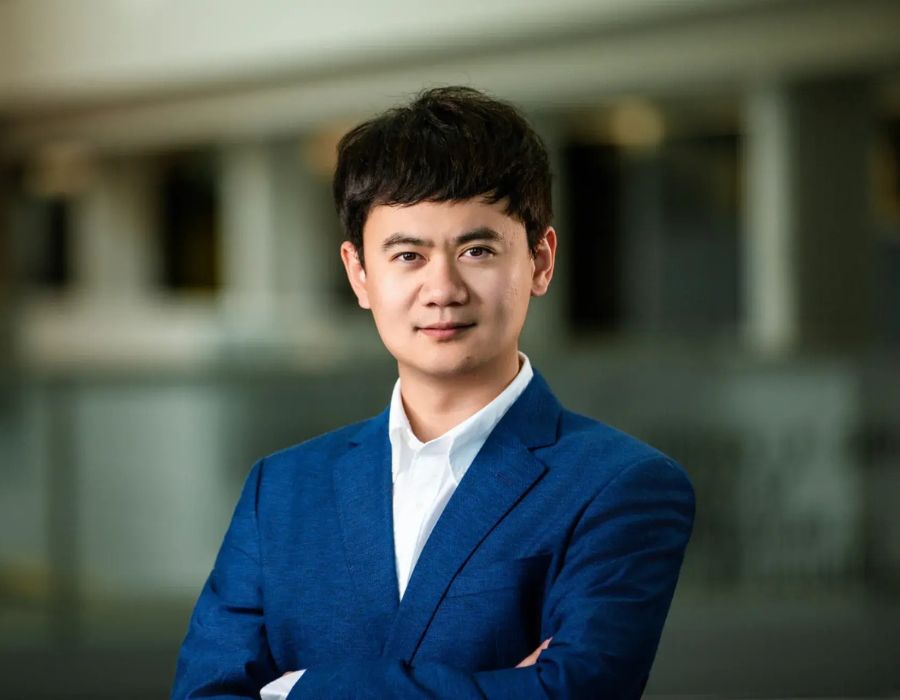
“Our goal is to create a safe, targeted therapy that improves both survival and quality of life for people facing brain disease,” says Dr. Wang. “It is an opportunity to rethink how we approach conditions once thought untreatable.”
Breakthroughs in cancer research like these don’t happen on their own. To help support the people behind the work, consider giving to the Sinclair Cancer Research Institute.
