

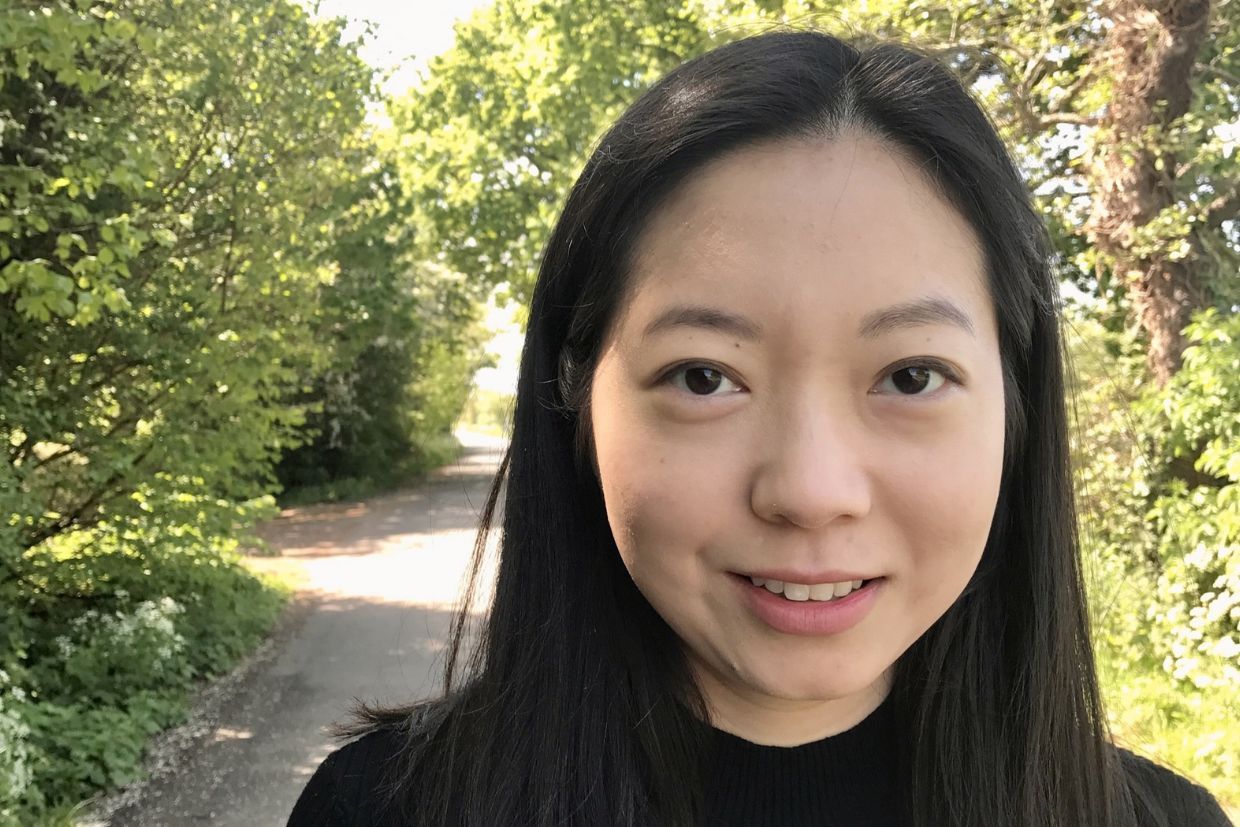
Margaret Zou hopes that through the organization she leads, small actions can make a big difference by fostering youth leadership through global education and awareness.
Zou, Artsci’13, is the executive director of Kawartha World Issues Centre (KWIC), which is based in Peterborough, Ont., and has been operating for 36 years. Its mission is to bring global issues to the fore through a local lens – with a special emphasis on the United Nations Sustainable Development Goals (SDGs), making the United Nations Day of Social Justice on Feb. 20 especially relevant.
“One of the projects we’re currently working on is called Climate Kinship [addressing SDG 13], which connects senior climate activists who've spent years working locally on climate action to younger people,” Zou says. “The activists want to share knowledge and provide support for young people’s climate action. They build connections by working together on projects such as tree planting or by holding discussions on climate action in a safe and inclusive space. That could include discussions about eco-emotions and climate anxiety, for example, so it’s very relevant for young people.”
Zou says lots of KWIC’s work is focused on global citizenship and social justice and encouraging young people – particularly those from marginalized communities – to take on leadership roles.
To that end, another of KWIC’s current projects focuses on gender equality (related to SDG 5, Gender Equality) and is called Community Conversations.
“The impetus of this project is really to raise awareness of gender equality within the Peterborough community – encouraging conversations and creating dedicated spaces for them to happen,” she says, adding that through outreach and workshops, KWIC has engaged more than 500 individuals in the community. The project also aims to foster connections and belonging for non-binary or non-gender-conforming people.
A good grounding
After graduating from Queen’s in 2013, Zou went on to do two master’s degrees in England – one in environmental management and assessment at the University of Liverpool and another in public health at the London School of Hygiene and Tropical Medicine. She says Queen’s “laid a good foundation” for her career. She studied life sciences, which gave her skills in system-based thinking.
“I took a range of courses, and those courses had really great professors who required problem-solving and understanding how different systems work and how the world works,” Zou says. “So, it did lay a strong foundation for looking at different issues, not in isolation, but together in a systemic way.”
She adds that her current role involves a lot of analytical thinking and Queen’s introduced her to the connections between health, environment and equity.
“In terms of my work today, I feel like a lot of the knowledge and experience that I have dates back to what I studied at Queen’s.”
Beyond her lectures and classes, she appreciates the extracurricular activities Queen’s afforded her.
“Queen’s is much bigger than just going to lectures and trying to memorize information,” she says. “It's about the community and the people I interacted with, and the community and groups I was able to join.
“Those experiences helped me build communication skills and as well as the ability to bring people together, work collaboratively, and create effective programming for youth,” she says.
