

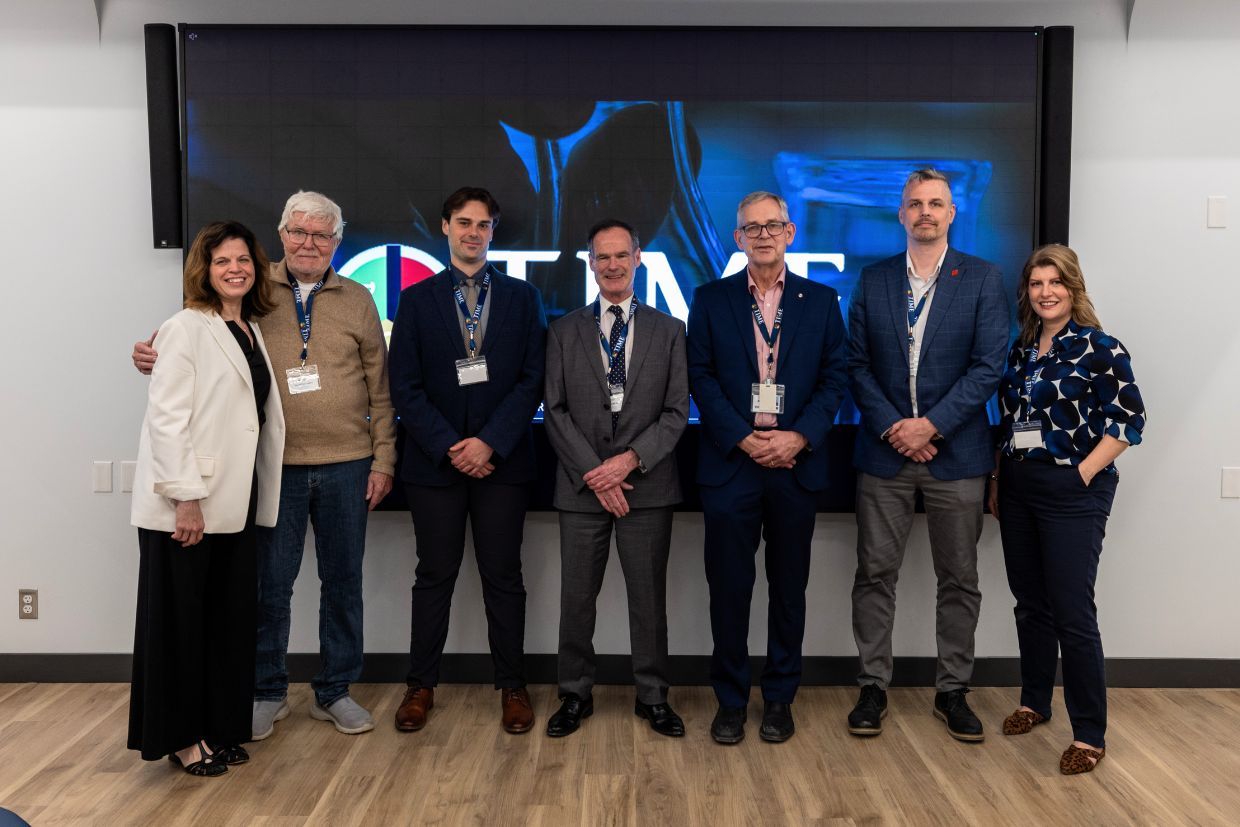
A new investment in translational medicine at Queen’s will bring researchers from across Queen’s together in a state-of-the-art facility that will have an immediate and lasting impact on Canadian health, accelerating clinical therapies and improving patient care.
It will all be made possible by a generous gift from the William J. Henderson Foundation that will support a collaborative hub for translational medicine – the Translational Institute of Medicine’s Core Facility (more widely known as TIME Core), which will now be named the W.J. Henderson TIME Collaboratory. The foundation’s $1-million gift underscores its commitment to Canadian communities through advances in health care and increases the likelihood that work in the lab will lead to commercial, clinical, and societal impact.
While some Canadians might struggle to define translational medicine, its wide-reaching impact touches us all. Often described as the bridge between scientific discovery and patient care, it helps researchers in the lab integrate scientific advances into real-world health treatments and tools. For patients in the health-care system, translational medicine can accelerate a critical diagnosis or provide access to life-saving drugs, tests, and therapies.
The W.J. Henderson TIME Collaboratory, located in the Biosciences Complex, will give scientists, doctors, and experts from a range of disciplines – faculty and students – a world-class facility and collaborative space for innovative research and experiential learning. Data exploration, visualization, and analysis, with a focus on research related to cancer, cardiopulmonary, inflammation, and neurodegenerative disease, will all be possible in the Collaboratory, which features a Sony CLED video wall that is the first of its kind to be installed in a Canadian university.
It will also be a place where intellectual property specialists can brainstorm and develop strategic approaches to the delivery of translational medicine in partnership with Queen’s Innovation office. Acting as a type of concierge service, the office will aid in the production of seamless pipelines to increase the likelihood that discovery science leads to commercial, clinical, and societal impact.
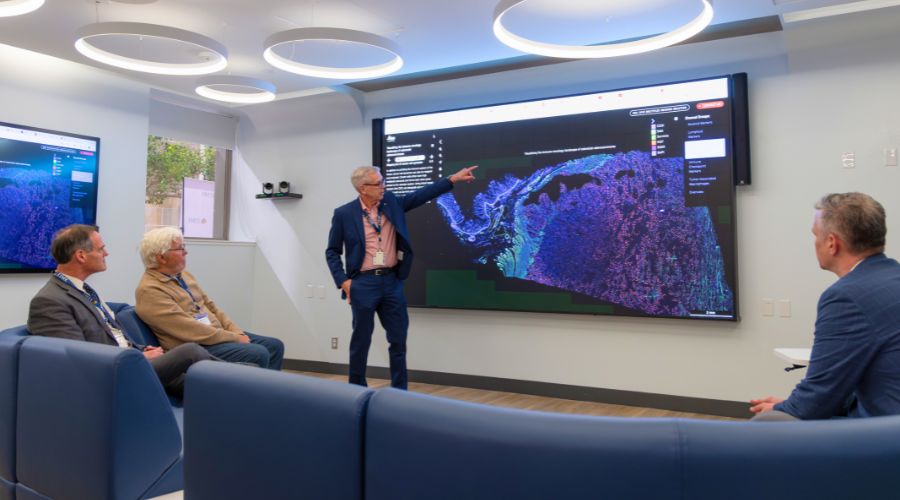
Cofounded by Drs. Stephen Archer and Stephen Vanner of the Department of Medicine, the space was always intended to foster a culture of interdisciplinary and collaborative translational medicine research. The aim was to accelerate the discovery of clinical therapies and their integration into clinical practice to improve overall patient care.
Dr. Archer expressed gratitude for the foundation’s investment, offering special thanks to director David Pattenden, Arts’67, MA’69, Law’71, MEd'74, LLD’03, and foundation trustee Michael Hickey, Artsci’82.
“I am so grateful to the W.J. Henderson Foundation for their financial support of TIME and their investment in our new Collaboratory,” said Dr. Archer. “As important as their financial support, is their personal encouragement of me and their independent validation of TIME’s impact. Their investments from our earliest days have been instrumental to our genesis and ongoing success. To David Pattenden and Michael Hickey, I offer a heartfelt thank you.”
Pattenden said the foundation focuses on funding research that can have a practical and immediate impact on clinical care.
“We are proud to once again partner with Queen’s Health Sciences, a partnership that has been strengthened over four decades,” said Pattenden. “Together, we share a vision to bring the inspirational research conducted here at Queen’s to the front lines of health care, where lives can not only be improved, but also saved. By advancing health education, we don’t have to wait for tomorrow. This groundbreaking Collaboratory will make earlier detection of disease, more personalized and compassionate treatments, and new therapies a reality today.”
Dr. Lisa Tannock, Dean of Queen’s Health Sciences and Director of the School of Medicine, also expressed gratitude to the foundation.
“As a clinician-scientist, I know first-hand how this gift will help us turn scientific discovery into human impact,” she said. “In bringing the best minds together, the W.J. Henderson TIME Collaboratory will allow researchers on campus and even internationally to learn from each other, and it will ensure that their breakthroughs become real tools to improve the health of Canadians.”
The William J. Henderson Foundation has a long history of supporting Queen’s, with total giving now exceeding $5.5 million to Queen’s health education and research.
The foundation was set up by Judge William Henderson, a 1938 Queen’s Arts alumnus who passed away in 2006. Judge Henderson was grateful to Queen’s and local hospitals for the high quality of medical care he received later in life when he encountered health problems.
