Nicaso, Antonio

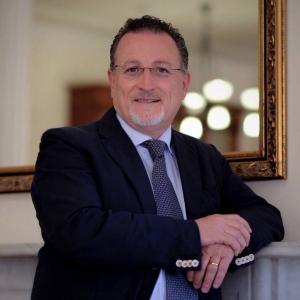
Antonio Nicaso

Antonio Nicaso

Lecturer

LLCU

Research interests: Calabrian mafia (known as 'ndrangheta), organized crime

About

Professor Antonio Nicaso is a bestselling author, an award-winning journalist, a researcher and an internationally recognized expert on organized crime. He has published 30 books on Mafia and Mafia-type criminal organizations.

He is a regular consultant to governments and law-enforcement agencies around the world. Besides his appointment at Queen's, he is also a lecturer at several other universities: Italian School of Middlebury College, Oakland, USA and St. Jerome’s University, Waterloo, Ontario.

He sits on the Advisory Board of the Nathanson Centre on Transnational Human Rights, Crime and Security, at York University (Toronto); on the International Advisory Council of the Italian Institute of Strategic Studies “Niccolò Machiavelli” in Rome (Italy); and on the Expert Advisory Committee on Bullying, Intimidation and Gang Violence in Montreal.

He is also the President of Centro Scuola e Cultura, in Toronto.

Teaching

LLCU 213: The Social History of Organized Crime in Canada
LLCU 214: Mafia Culture and the Power of Symbols, Rituals and Myth
 

Mennell, D. Jan

Jan Mennell

Retired Associate Professor

PhD

Associated with Cultural Studies

Research interests: Jewish Latin American Literature, Latin American Women’s Literature, Latin American Film, Latin American Development, Indigenous Issues of Latin America and Politics of Minority Identities in Latin America.

Education

Ph.D. in Spanish and Portuguese, Stanford, 1993
A.M. in Spanish and Portuguese, Stanford, 1987
M.A. in Spanish, University of British Columbia, 1984
B.A. (Hons.) in French and Spanish, University of British Columbia, 1978

About

Professor Mennell is passionate about Latin American culture in all its manifestations, from music to art, film and literature. Her main interest is the issue of identity and minority cultures, especially in the Southern Cone region of Argentina, Uruguay, Chile and Paraguay.

At the present time, she is finishing a manuscript on Argentine Jewish women novelists, and is beginning a new project on the marginalized indigenous cultures in Argentina and their struggles for recognition and preservation of their heritage.

Teaching

Professor Mennell teaches the following course(s):
 
LLCU 310: Jewish Latin America
SPAN 351: Panorama literario latinoaméricano I
SPAN 352: Panorama literario latinoaméricano II
SPAN 428/LLCU 328: Gender, Development and Film in Latin America
SPAN 302: Gramática avanzada y composición II
SPAN 354: Cultura femenina latinoamericana
SPAN 458: Cine latinoamericano

Macedo, António

Antonio Macedo

António Macedo

Lecturer

Portuguese, LLCU

Research interests: Portuguese as a foreign/heritage/second language, Portuguese literature and culture; foreign/heritage/second language acquisition; Intercultural Communication; Cultural Studies; Diaspora Studies

Education

PhD Student in Cultural Studies - Queen’s University, 2021-2025
M.A. in Portuguese as a foreign/heritage/second language - University of Minho (Portugal), 2015
Licentiate Degree in Portuguese and English (Teaching) at the University of Minho (Portugal), 2001

About

My name is António Macedo and I am a teacher. I fell into it almost by accident and now I can’t imagine doing anything else. I joined the Languages, Literatures and Cultures Department in 2013, after holding Teaching Appointments in English and Portuguese at different educational institutions in Portugal.  After having extensive experience in teaching foreign language acquisition to people from all walks of life, diverse backgrounds, and distinct outlooks on the world, I am now more intent in examining culture and diaspora in all its manifestations.

In my language classes, music is an integral part of the classes, as I believe it to be the ultimate vehicle of cultural identification of a people. I believe that using a language is primarily for communication, so students should first and foremost be able to improve their practical language skills in the classroom by incrementing communicative competencies. I maintain individualized interaction with my students by tracking and monitoring them closely. In my culture lectures, I try to integrate all types of multimedia applications to illustrate the course content in a fun, but also effective way, which will, hopefully, resonate with the students. I advocate that the instructor is the guide who will gradually, but ultimately, lead the learner to actively seek self-advancement and awareness of what is being taught, and develop independent output and reflection from the proposed research on a path to self-improvement, growth and mindfulness in an attempt to gain perspective on the wonderful differences between cultures.

Teaching

Professor Macedo teaches the following course(s):

PORT 103: Beginning Portuguese and Culture I
PORT 104: Beginning Portuguese and Culture II
LLCU 111: Introduction to Cultures

Lizano, Max

Max Lizano

Max Lizano

Retired Associate Professor

Research interests: Spanish as a second language, Spanish and Spanish American literature, myths and legends of El Salvador, Central America, and music as a learning and teaching tool

Education

M. A. in Spanish, Queen’s University, 2000
B. A. in Agricultural Science, University of El Salvador, El Salvador, 1980

About

Professor Lizano held Teaching Appointments at different educational institutions in Canada and at the Bader International Studies Centre in UK. At Queen’s, he has been teaching Spanish courses since 1996 when he became a graduate student.

In his classes, he creates an active learning environment, in which he energetically engages students and makes the material more comprehensible. He aims to provide a student-centred environment to encourage class participation and student motivation. By using music in his classes he is fostering the development of oral communication skills, as well as phonological and phonemic awareness and overall fluency. Songs learned in the class also expand vocabulary, promote words and retell stories.

Professor Lizano strongly believes that through the study of Spanish, students gain a knowledge and understanding of the cultures of the Spanish-speaking world and that mastering of the language occurs only when the awareness of cultural contexts is achieved.  

A former student Elena Champagne in the article  “I Want to Give My Teacher … a GOLD STAR!” in The Kingston Whig - Standard (30 Mar. 2004) speaks about Professor Lizano's teaching style: “Max conceives of all sorts of fun activities, which allow us to participate and learn at the same time…and every student seems to walk out of Max’s class knowing much more than just Spanish. We now have an open mind and an understanding of different cultures.”

Teaching

Professor Lizano teaches the following course(s):

SPAN 111: Beginning Spanish I
SPAN 112: Beginning Spanish II
SPAN 204: Intermediate Spanish
SPAN 205: Advanced Spanish
SPAN 206: Spanish Conversation and Culture

Kani, Consuelo

Consuelo Kani

Consuelo Kani

Lecturer

Research interests: la Telenovela Colombiana, Second language acquisition, Latin American Studies, the use of drama in language learning

Education

M.A. in Spanish. Queen´s University, Kingston, 2001
B.A.H. in Spanish (First Class). Queen´s University, Kingston, 1998
B.A. (with distinction). Queen´s University, Kingston, 1995


About

Professor Kani has 27 years of experience in teaching Spanish at Queen’s. Her current teaching philosophy is founded on her experiences both as a learner and as a teacher.

Many students, especially in the beginner classes, feel intimidated yet excited about the prospect of using a new language. With this in mind, she always tries to create an environment where they feel at ease, gain confidence and are able to participate without the fear of making mistakes while at the same time have fun learning the language.

To practice grammatical structures seen in class, Professor Kani incorporates different activities, such as role-play, games, group activities, presentations, games, videos, music etc., since each of them is a different individual with different ways of expressing themselves. Having experienced the learning of new languages herself, she knows how important it is to be immersed in a language. With this in mind, she tries to address the students always in Spanish. In the SPAN 010-level courses, this is not always easy, although after the sixth week it is almost 90% Spanish, but the Span 112 course is mainly in Spanish.

Professor Kani also promotes diversity in class by encouraging the students to talk about their personal experiences and backgrounds with their peers; this also enables them to construct meaning in personal ways.

Teaching

Professor Kani teaches the following course(s):

SPAN 111: Beginning Spanish I
SPAN 112: Beginning Spanish II

Jessop, Lorena

Lorena Jessop

Lorena Jessop

Lecturer

Linguistics

Research interests: Second language acquisition, laboratory phonetics, sociolinguistics, anthropological linguistics

Education

Ph. D. (ABD) in Second Language Education, University of Toronto, OISE
M. A. in Linguistics, University of California, Davis, California, 2001
Graduate work in Anthropological Linguistics, University of British Columbia, 1991
B. A. in Linguistics, University of British Columbia, 1989

About

Professor Jessop has held Teaching Appointments in English as a Second Language and Linguistics in Japan, USA and Canada. Since 2004, she has been working for the Linguistics Program at Queen’s. She designed and teaches the Language and Power course (LING 205), which examines how language reflects and creates power relations in society. She has also taught Phonetics (LING 310), Introduction to Linguistics (LING 100) and Investigating English Style (LING 205)

Professor Jessop investigates the acquisition of phonetics and phonology by second language learners. The overall objective of this research is to provide pedagogical recommendations for the teaching of pronunciation based on empirical research. She has been investigating English, Spanish and French. She has also researched ‘uptalk’ (when it sounds like people are speaking all in questions) and latrinalia (washroom graffiti). Her recent publications include "Isolated and integrated form-focused instruction: Effects on different types of L2 knowledge." With Spada, N.,Suzuki, W., Tomita, Y., & Valeo, A. Language Teaching Research (2014), 1-21. and "Uptalk: Towards a quantitative analysis." With DiGioacchino, M.  Toronto Working Papers in Linguistics (2010), 33. 

Teaching

Professor Jessop teaches the following course(s):

LING 100: Introduction to Linguistics
LING 310: Phonetics
LING 210: Language Acquisition and Learning

Hosek, Jennifer Ruth

Dr. Jennifer Hosek

Jennifer Ruth Hosek

Professor

PhD

German, LLCU

Cross-Appointed with Gender Studies
Cross-Appointed with Film and Media

Affiliated with the Cultural Studies Graduate Program
Associated with the Queen’s-University of Havana Exchange

Research interests: 20th - 21st century German culture, particularly film; European Union cultures; transnational, feminist, gender, critical, and cultural studies theories and movements; Cuban film; cities and mobility cultures; petrocultures

Education

Ph. D.  Comparative Literature, University of California, Berkeley, USA, 2004
M.A.  Comparative Literature. University of California, Berkeley, 1995
B.A. summa cum laude Comparative Literature and German, University of Illinois at Urbana-Champaign, USA , 1992

About

After completing a Comparative Literature PhD from UC Berkeley, Professor Hosek was a Stanford Fellow in the Humanities until coming to Queen's in 2007. She has published on literature, film, urban mobility cultures, critical pedagogies, critical theory and neuroscience, digital technology, and the women's movement. Her monograph analyzes the cultural influences of the global South on the North through Cuba and Germany. Sun, Sex and Socialism: Cuba in the German Imaginary (University of Toronto Press, 2012) received support from the Berlin Studienstiftung des Abgeordnetenhauses, the DAAD, the Humboldt and the Mellon Foundations, UC Berkeley, the National Coalition of Women in German (WiG) and Queen's. An article stemming from it won the 2008 National Coalition of Women in German Best Article Prize and has been published in three languages.

Her collaborative documentary Rolando en La Habana: bicycle stories (with Jaime Santos) (2016) earned several awards and has screened in many international festivals and on Latin American television.

Professor Hosek co-edited Cultural Topographies of the New Berlin with Karin Bauer (Berghahn, 2017) and Christa Wolf: A Companion with Sonja Klocke (De Gruyter, 2018).

Jennifer's current major projects -- a monograph on urban mobility cultures and the peer-to-peer language exchange e-tool  LinguaeLive -- have each been funded by the Social Sciences and Humanities Research Council of Canada and internal grants. Professor Hosek also co-organized the Faculty of Arts and Sciences and School of Policy Studies lecture series Contagion Cultures https://www.queensu.ca/sps/events.

Her teaching areas fall under German Studies, International Studies, Film and Media, Critical and Cultural Studies, and Global Development Studies (Cuba).

Teaching

Professor Hosek teaches:

GRMN 101 and GRMN 102: Beginner German I and II
GRMN 201 and 202: Intermediate German I and II
GRMN 309: Survey of German Cultural History II
GRMN 317: Contemporary Germany through Media and News
LLCU 326: Film in the New Europe
LLCU 206: Rebel Cities

CV as PDF document (460 KB)

Updated  June 2025

Holzschuh, Monika

Monika Holzschuh

Monika Holzschuh

Assistant Professor

PhD

German

German

Research interests: Language Teaching, Business German, German Romanticism and 19th century literature.

Education

Ph. D. in German Language and Literature, Queen’s University, 2000
M. A. in German Language and Literature, Carlton University, 1991
B. A. in German and French, University of Guelph, 1989

About

Professor Holzschuh began her teaching at Queen’s with third-year Business German courses for which she compiled her own teaching materials, Deutsch in Beruf und Wirtschaft, and also co-ordinated our second-year Business German courses. She has also taught our introductory Literature Courses, GRMN 311 and 312, as well as second-year language courses. Most recently, Dr. Holzschuh has focused on our introductory language courses.

During the existence of the graduate program in the Department of German, Dr. Holzschuh was supervising MA and PhD students’ teaching, and coordinating the introductory language courses. She also reorganized the curriculum for the first-year language textbook, Kontakte, which is now used over three semesters, including in GRMN 201.

Recently, Dr. Holzschuh presented on the role of videoconferencing (Skype exchange) in intermediate German language classes at the DAAD German Studies North America Conference. She is currently working on papers on the use of clickers in teaching German, and on managing large introductory language classes. She is also involved with the AP German Language and Culture Reading happening annually in June in Cincinnati, Ohio, USA.

Teaching

Professor Holzschuh teaches  following course(s):

GRMN 101 and 102: Beginner German I and II
GRMN 201 and 202: Intermediate German I and II
GRMN 306: Business German I: German in the Workplace
GRMN 307: Business German II

Curriculum Vitae 

(PDF 28 KB)
(updated May 2014)

Eldiaby Mahmoud, Amal

Amal Eldiaby Mahmoud

Amal Eldiaby

Lecturer

Arabic, LLCU

Arabic, LLCU

Research interests: Classical Arabic literature, Arabic Language and translation

Education:

BA (With Distinction ) in Spanish Language and Literature, Queen's University, 2010
BA, Faculty of Languages and literatures, Ein Shams University, Cairo, Egypt.

About:

Professor Amal's interests are in medieval Arabic Literature in Muslim Spain, Classical Arabic Literature, Religious interpretation and history.

With a background as a student in languages and literature and as a teacher of over 10 years of Arabic as a second language, she understands that each student has both strengths and weaknesses when learning a new language. Some prefer the cultural aspects solely, others thrive in the mathematical analysis of grammar rules and linguistic skills. Professor Amal tries to bring both together as being instrumental in learning the Arabic language.  Emphasis is placed on word decoding and correct grammatical application as they are vital in speech as well as in writing.

She incorporates both traditional learning methods and some new ones to strengthen the linguistic skills, and to stir an appreciation for the rich Arabic culture.

Teaching: 

Professor Eldiaby teaches the following courses:

ARAB 100 Introductory Arabic
ARAB 201 Intermediate Arabic
LLCU 216 Introduction to Arabic Culture
 

Debassige, Kimberley

Kimberley Debassige

Kimberley Debassige

Lecturer

Anishinaabemowin

Research interests: Inclusionary Strategies & Indigenous Education/Inclusive Education, Indigenous knowledges and transformative practices, Experiential Education & Land Based Education through Anti-Racism, Anti-Oppression and Decolonizing pedagogy and practice, Anishinaabemowin (Language of the Anishinaabeg)
 

Education

Ph. D. (Candiate 1st year) – Faculty of Education, Queen’s University
M. Ed. (Candidate, final year) – Faculty of Education, Queen’s University
B. A. Hons. Native Studies – 2013, University of Sudbury, Laurentian University
B. Ed – 2015, ATEP Queen’s University
O.C.T. – 2015, Ontario College of Teachers

About

Teaching philosophy follows Turtle shell and Turtle shaker concepts as mino-bimaadiziwn. It is through seeing everything as connected that knowledge transfer happens. Through these concepts one can view the interrelatedness of Anishinaabemowin (Language) and Mino-bimaadiziwin (Action and Intent in doing or living a good life), Inaadiziwin (behaviour and values), Enawendiwin (relationship and responsibilities), Gidakiiminaan (relationship to land and creation), Izhichigewin (way of doing), Inendamowin (way of thinking), and Gikendaasowin (way of knowing).

Publications: Indigenous post-Graduate education: Intercultural perspectives: Chapter “I am part of creation: An Anishinaabe Graduate Student Reflection.” Information Age Publishing (2020)

This is my fourth year as a Teaching Fellow for the Department of Languages, Literatures, Cultures at Queen’s University. I have been teaching beginners Anishinaabemowin through an understanding of mino-bimaadiziwin and Anishinaabe dbaajmownan (narratives) and aadsookaanan (sacred stories).

Teaching

ANSH 101: Beginning Anishinaabe Language and Culture I
ANSH 102: Beginning Anishinaabe Language and Culture II