Queen's 2015 Nobel Prize in Physics
Tom Weisgarber receives Teaching Award
Tom Weisgarber receives Teaching Award
On May 7th, the first day of Science Rendezvous Kingston, there were many stations showcasing exciting events for all ages. In particular, The Queen's University Observatory station was very busy bringing the solar system down to Tragically Hip Way (THW) with a number of interactive activities. Visitors got a chance to (safely!) look at the sun through multiple specialized telescopes from the observatory and the Royal Astronomical Society members.

Date
Thursday May 5, 2022Location
STI A + Zoom (HYBRID)The existence of dark matter was first postulated in the early 1930s to account for the orbital velocities of stars in the Milky Way and motion in galaxy clusters. Since that time, astrophysicists and astronomers have produced compelling evidence for the existence of dark matter and determined that it constitutes the bulk of the matter in the Universe. Despite this fact, the composition of the dark matter remains unknown. In this talk I will present recent results from the SuperCDMS experiment and give updates on the status of the next generation SuperCDMS SNOLAB experiment under construction in Sudbury, Ontario.
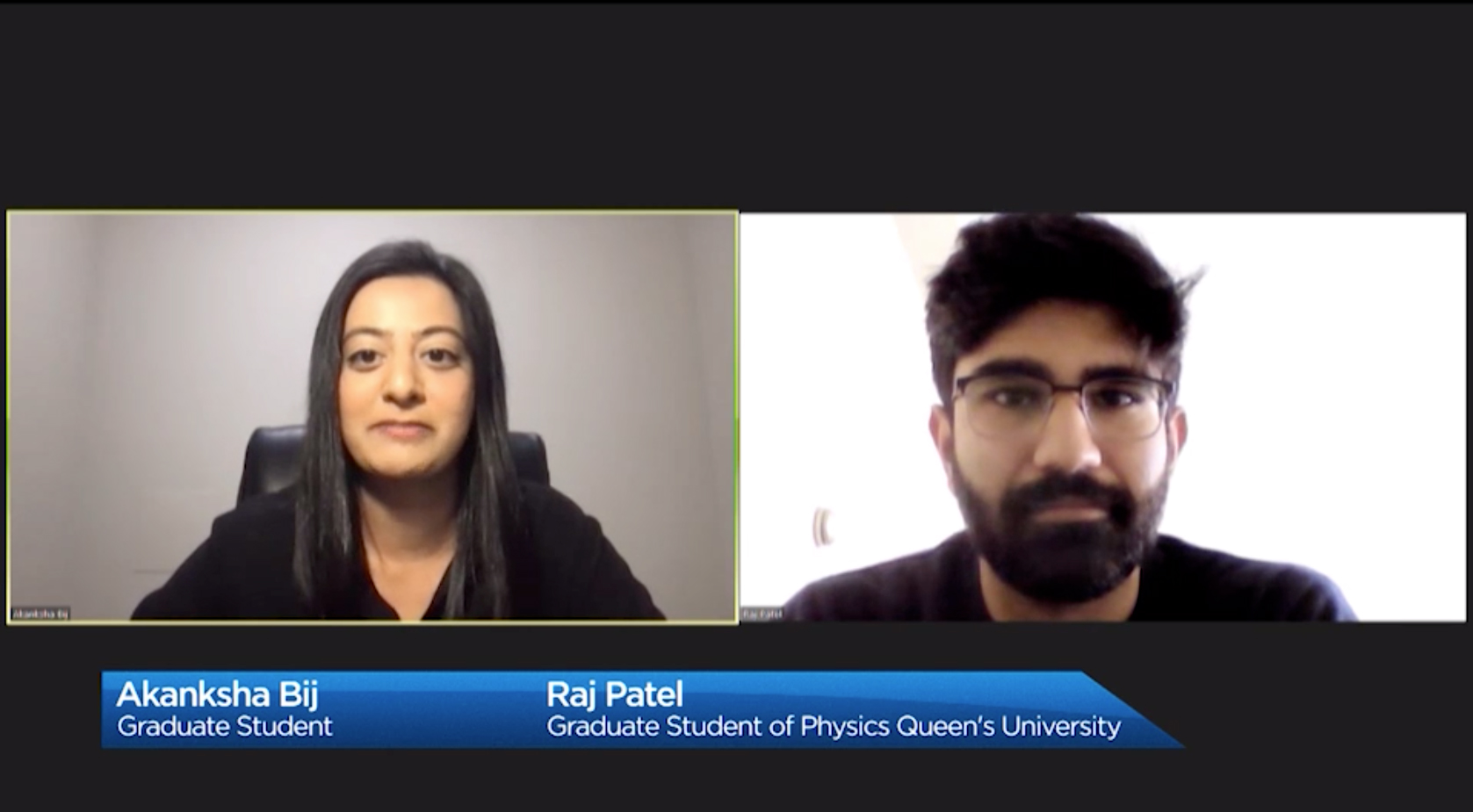
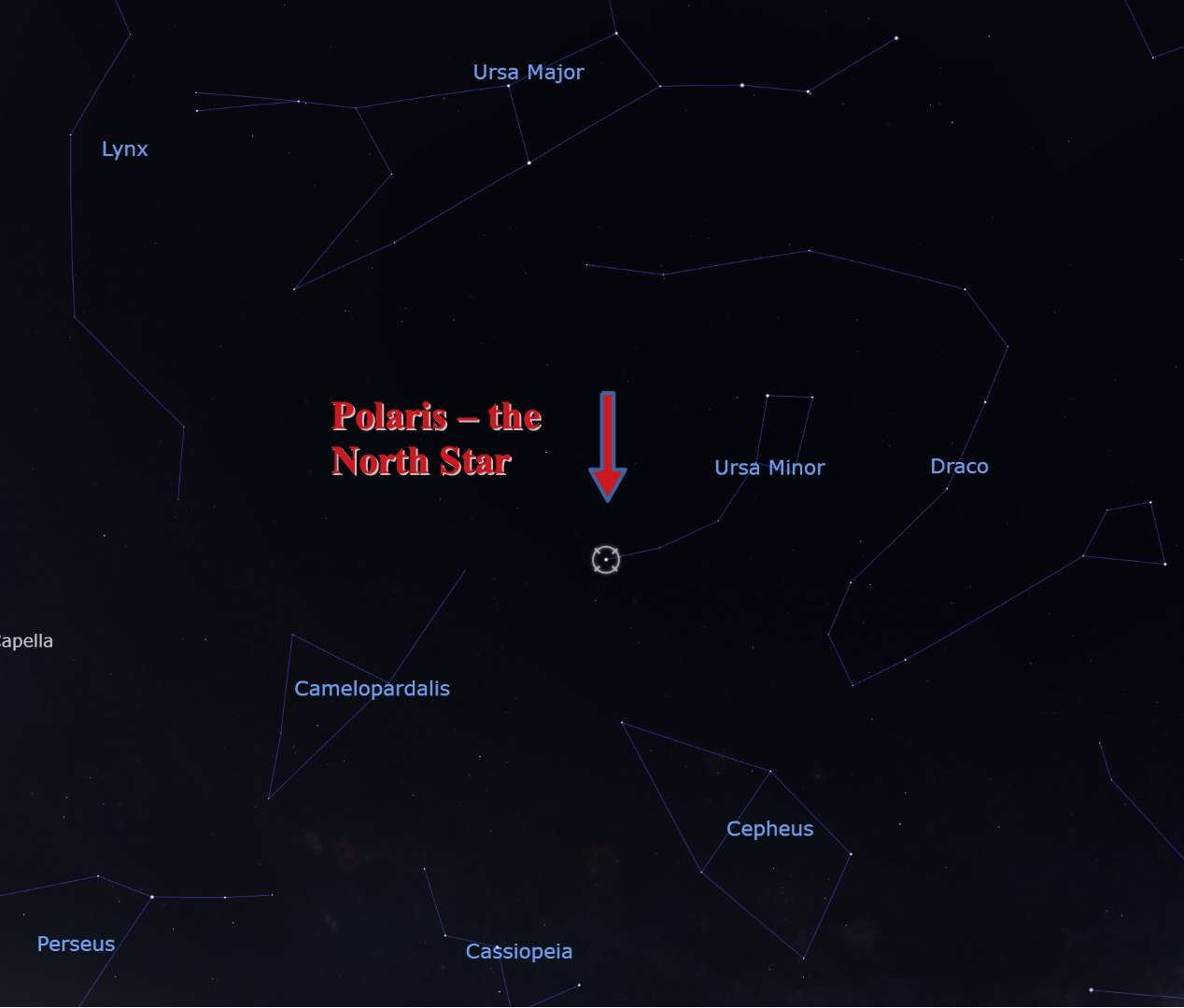
Akanksha Bij and Raj Patel talk about how Canadians may be able to see four planets in a row, with no telescope needed.
Some specific days to note:
On May 4: Stem Sampler- Sneak a Peek is at Market Square from 3-6 pm. Come try out the Newton’s Vacuum Cannon from the Department of Physics!
Date
Wednesday April 20, 2022Location
STI 201 + Zoom (HYBRID)Quantum technologies demand pure quantum states. One way to purify quantum systems is by extreme refrigeration: First, place the quantum system in a cold location such as a cryostat until it reaches thermal equilibrium with the ambient material. Then, shuttle energy and entropy from the system to an external heat bath using a sophisticated compression routine. However, this latter process, known as heat bath algorithmic cooling, has fundamental limitations to how much purification it can induce. We show how to break this process into two steps A and B, use a device known as a quantum switch to perform these two steps in a superposition of their orders A-then-B and B-then-A, and herald the presence of perfectly purified quantum systems. This is but the tip of the iceberg of promising applications introduced by the recently developed quantum switch, which may ultimately be useful for quantum communication, quantum sensing, and beyond.
Date
Monday April 11, 2022Location
STI 201 + Zoom (HYBRID)Quantum interference is a powerful apparatus in modern quantum optics that can be used for precise time and phase measurements, generating entanglement and testifying a non-locality of entangled systems. At the same time, the multiphoton interference is an essential ingredient for machine learning, quantum neural networks and boson sampling, which are the first steps of future quantum computing. Nonlinear interferometry gives a new insight into quantum interference. A nonlinear (SU(1,1)) interferometer can be obtained by replacing the beam splitters of the conventional linear interferometer with nonlinear media. Such interferometers are characterised by a phase sensitivity close to the Heisenberg limit and, at the same time, constitute useful tools for light shaping, state engineering and highly correlated states generating. For practical applications and industrial technologies, the realisation of stable and compact circuits is a vital and important problem that can be solved by exploiting integrated platforms. Taking into account the state-of-the-art of rapidly developing integrated technologies, quantum linear and nonlinear interferometers can be realised in a single integrated chip. The interaction of quantum light with matter leads to new phenomena which cannot be explained by semiclassical approaches. Within such an interaction, the redistribution of the photon statistics among the involved quantum fields, as well as non-trivial steady states of electronic occupations can be observed This talk will highlight our recent advances in the field of quantum linear and nonlinear interferometers, their integrated designs, the generation of multidimensional entangled states, as well as in the field of matter - quantum light interaction.
Dr. Sharapova is a candidate for the tenure-track position in theoretical condensed matter physics/optics.
Date
Thursday April 7, 2022Location
STI 201 + Zoom (HYBRID)Rydberg excitons have only recently been discovered. They are highly-excited, bound electron-hole pairs that represent giant atom-like quasiparticles in a semiconductor environment. These new particles defy conventional theories of exciton physics and open fundamentally new regimes for quantum optics with excitons.
Here, I will show how their remarkable properties originate from strong, long-range polarization forces acting between pairs of such states over thousands of crystal cells, suggesting great potential for optical applications. We develop a semi-analytical cluster-expansion theory to describe the enormous optical nonlinearity of the Rydberg interactive many-body system, revealing the effect of a residual thin electron-hole plasma and bringing our theory into quantitative agreement with corresponding experiments.
However, strong phonon coupling and inter-band dynamics can complicate this simple atom-like picture and limit the usability of Rydberg-Rydberg interactions for optical applications. Using experiments with cuprous oxide as an example, I will discuss the origins of phonon coupling and how the formation of an optical dark state can be used to mitigate its undesired effects. Finally, I will describe ongoing efforts to exploit strong Rydberg interactions of excitons in monolayered semiconductors for the creation of nonclassical light. Our results open the stage for physics with strongly interacting polaritons in the solid state, making it possible to induce nonlinear processes at the level of individual photons.
Dr. Walther is a candidate for the tenure-track position in theoretical condensed matter physics and optics in the Department of Physics, Engineering Physics and Astronomy at Queen’s University. Dr. Walther is an independent postdoctoral fellow in Physics at Harvard. Dr. Walther completed his PhD in Physics at the Max Planck Institute for the Physics of Complex Systems and the Technical University Dresden Germany in 2019. His work seeks to advance quantum optics and quantum dynamics in systems with strong atomic or excitonic interactions. He has pioneered the theory of Rydberg excitations in semiconductors and laid the groundwork for their nonlinear optical response.