

Dec. 3 is International Day of Persons with Disabilities, a day started by the United Nations to push for a more accessible and inclusive world for all.
It’s a spirit that runs deep at Queen’s. From Dr. A. Ross Tilley’s pioneering work in burn rehabilitation in the 1940s to the launch of one of Canada’s first schools for rehabilitation therapy in the 1960s and student-led accessibility advocacy in the 1980s, the Queen’s community has been championing change in the disability space for generations.
That legacy continues today through the work of alumni and researchers like David Nesbitt, MBA’70; Sara Nabil; and Michael Shepertycky, Sc’11, MASc’13, PhD’21.
Here’s a closer look – and a chance to revisit their stories in Queen’s Alumni Review – at how the three are breaking barriers to accessibility.
Who: David Nesbitt, MBA’70
What: The Nesbitt Centre
It’s been more than 30 years since David Nesbitt and his wife Wendy started their vocational program in Hong Kong, and it’s still thriving. The Nesbitt Centre is a multi-faceted hub complete with cafés, a bakery, and several other social enterprises by and for adults with learning disabilities. Since its inception, the centre has welcomed more than 350 people, including the Nesbitts’ own daughter, and has grown into one of Hong Kong’s most respected organizations of its kind.
Read more in Queen’s Alumni Review
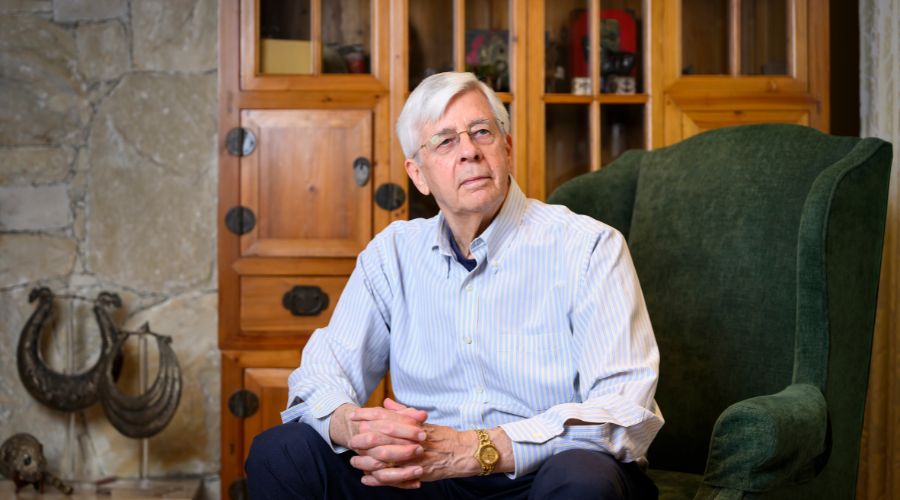
Photo: Jennifer Gauthier
Who: Sara Nabil
What: iStudio Lab
A rug that detects elderly activity. A seat cover that corrects posture. A tank top that monitors physiotherapy arm exercises. These aren’t inventions from science fiction but real designs from Queen’s Computing Assistant Professor Sara Nabil and her team at iStudio Lab. Some of their research empowers people with disabilities, including the temporarily impaired. Take Fabric-Lego, prototypes that let users customize their arm slings and finger braces by personalizing them with Lego-compatible covers instead of medical aesthetics.
Read more in Queen’s Alumni Review

Photo: Johnny C.Y. Lam
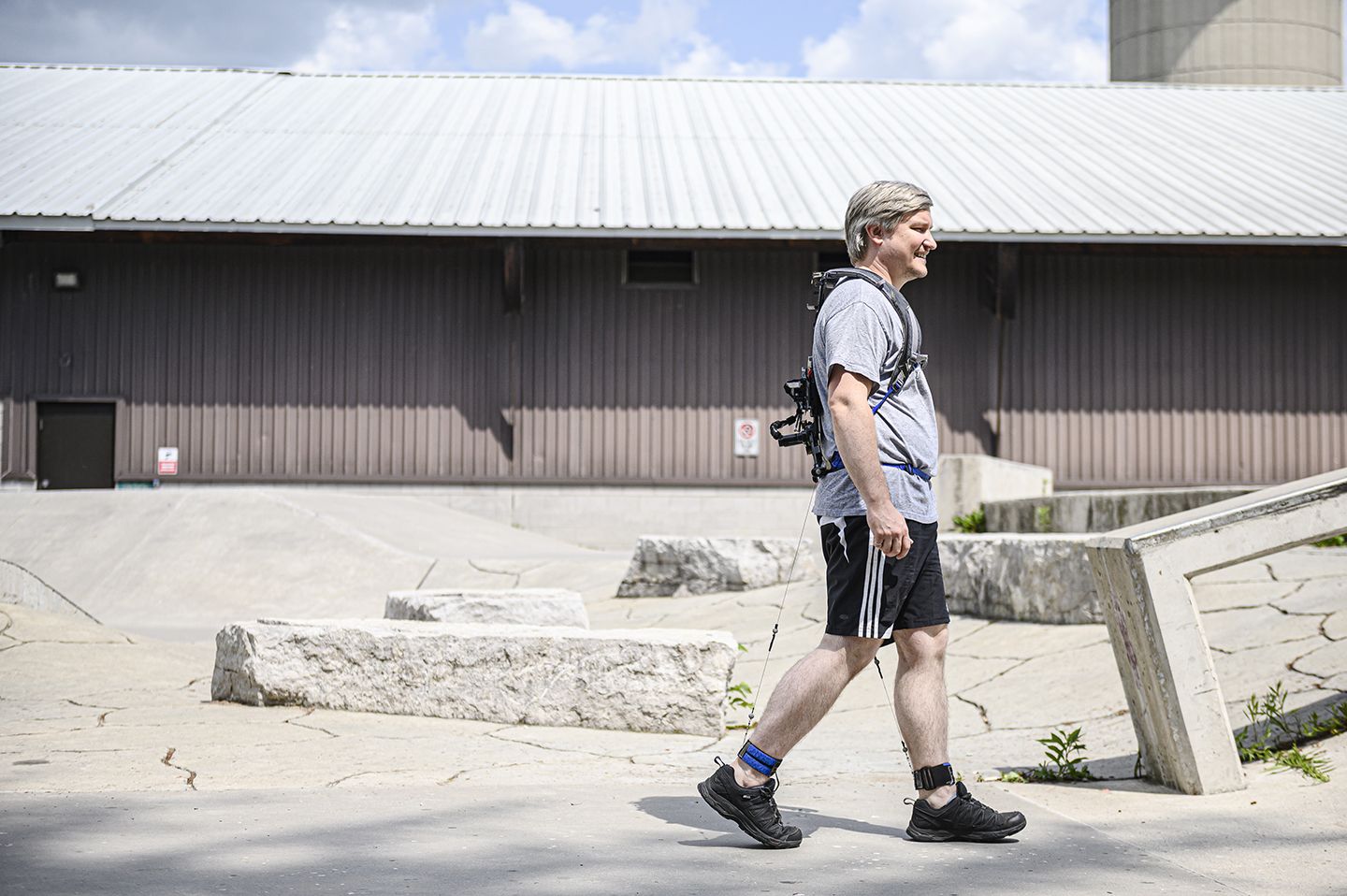
Who: Michael Shepertycky, Sc’11, MASc’13, PhD’21
What: Exoskeletons
For Michael Shepertycky, the goal is simple: to turn creative ideas into technologies that improve lives. Actually fulfilling that goal isn’t so simple for the senior research and development engineer at Baylis Medical Technologies, but his dozen years of designing, making, and evaluating biomedical and robotic devices certainly helps. His patented and much written about exoskeleton design is just one example. It makes walking easier by reducing the load on the legs and could one day help those with mobility challenges.
Read more in Queen’s Alumni Review
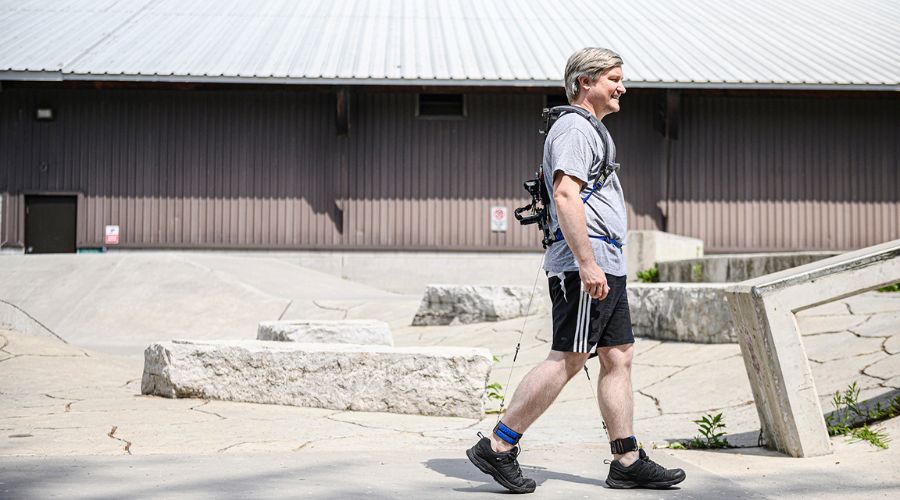
Photo: Christopher Katsarov Luna
Want to help drive progress in the disability space at Queen’s? Consider supporting accessibility by giving to the Add*Ed Research Group or the Award for Graduate Students with Disabilities.
