
 Queen's 2015 Nobel Prize in Physics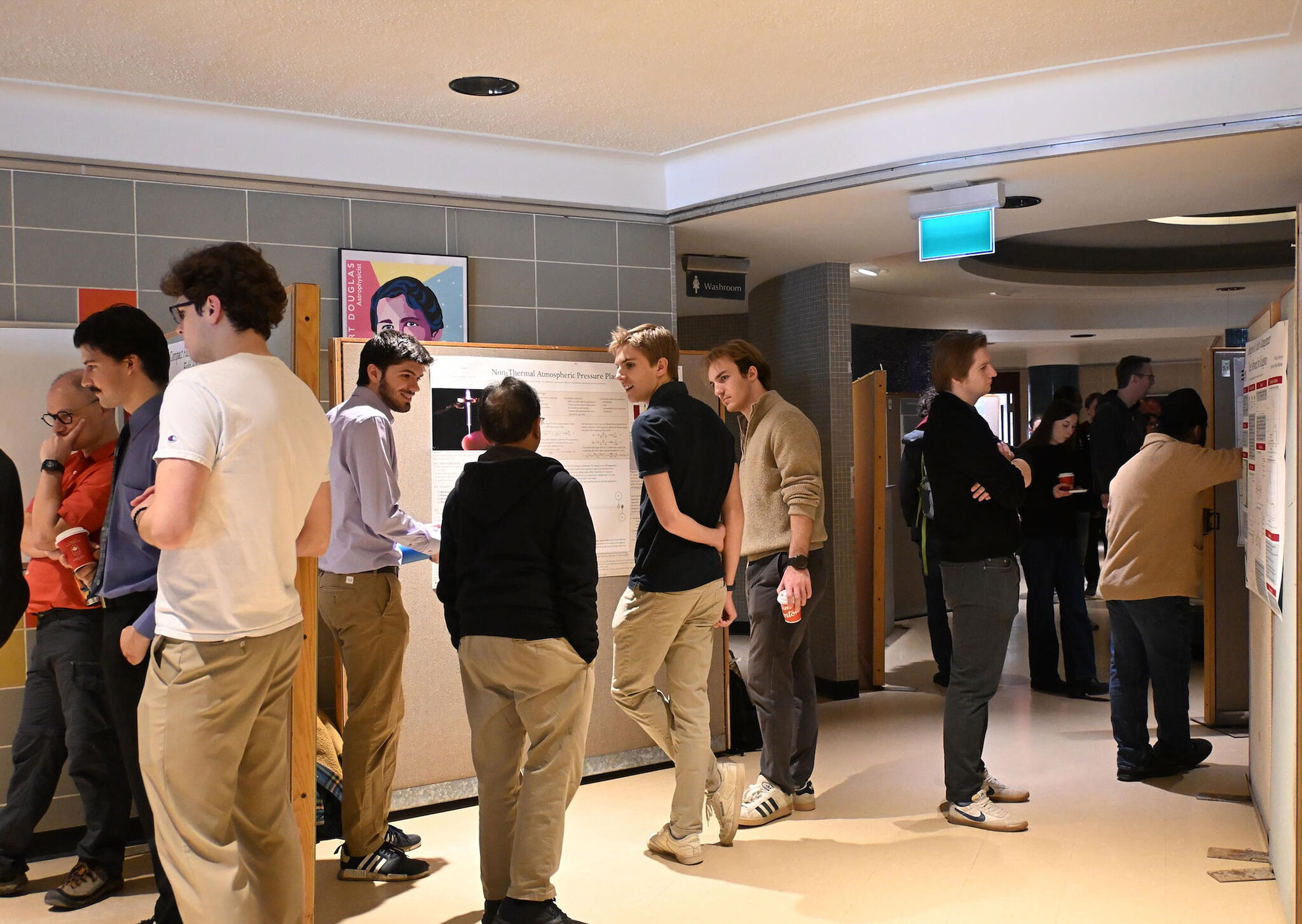
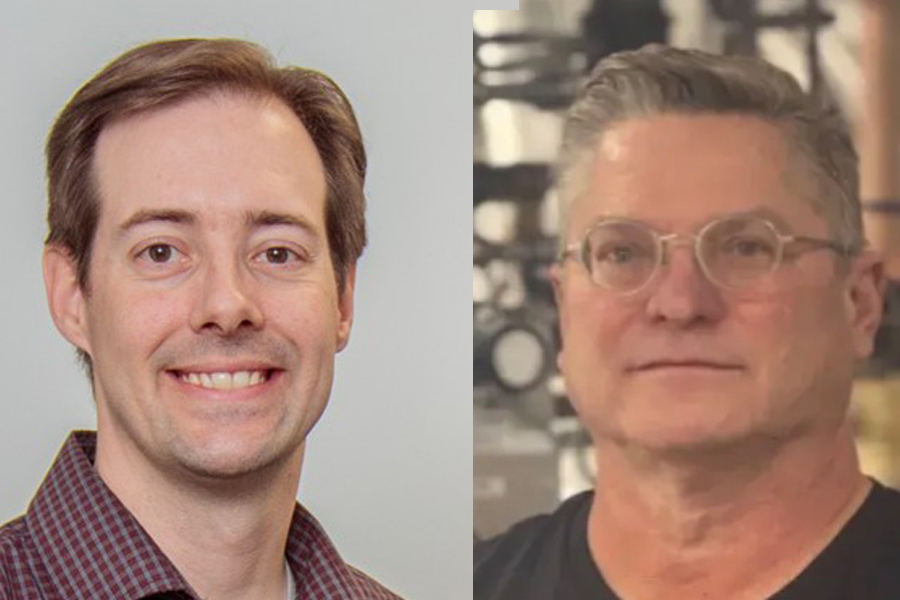
Prof. Spekkens wins First Year Teaching Award

Congratulations to Prof.
Dean's Scholars of 2026
On March 24th Smith Engineering hosted their Dean's Scholar reception. This event celebrates all final year engineering students who have achieved a 3.5 GPA or higher in all years of study. 23 students from Engineering Physics were Dean's Scholars. Our two top scholars were Melanie Phillips and Dermott Duggan who tied for the highest GPA in Eng Phys.
Departmental Colloquium - Big Detectors, Rare Signals: Probing Majorana Neutrinos with Xenon Experiments
Date
Friday March 27, 20261:30 pm - 2:30 pm
Location
STI AErica Caden
Research Scientist | SNOLAB
Adjunct Faculty |Laurentian, McGill
Abstract
Neutrinoless double beta decay (0νββ) is a hypothetical nuclear process whose observation would have profound implications for particle physics, establishing the Majorana nature of neutrinos and providing direct evidence of lepton number violation. Among candidate isotopes, xenon-136, has emerged as one of the most promising due to its scalability, radiopurity, and versatility in detector design. Recent results from xenon experiments including have significantly improved half-life limits, pushing sensitivities beyond 10^26 years. In parallel, large-scale liquid xenon detectors developed for dark matter searches are increasingly being explored for their sensitivity to double beta decay. Although not optimized for this channel, their ultra-low backgrounds and large target masses provide a powerful complementary approach. Looking ahead, proposed next-generation instruments such as XLZD aim to perform dark matter and rare event searches at unprecedented scales. With significantly increased exposure and improved background control, such detectors could extend sensitivity to 0νββ well into unexplored parameter space. This talk will discuss the physics motivation, experimental challenges, and technological innovations driving the field, as well as the growing synergy between dark matter and double beta decay efforts. The continued progress of xenon-based searches positions them at the forefront of efforts to determine whether neutrinos are their own antiparticles and to probe physics beyond the Standard Model.
Timbits, coffee, tea will be served in STI A before the colloquium.
Using the Pacific Ocean to detect Cherenkov radiation from neutrinos
Professors Nahee Park and Ken Clark are involved in part of a global experiment that will use the Pacific Ocean to capture and study Cherenkov radiation from neutrinos.
Measuring the Mass of the Solar Neighborhood of the Galaxy
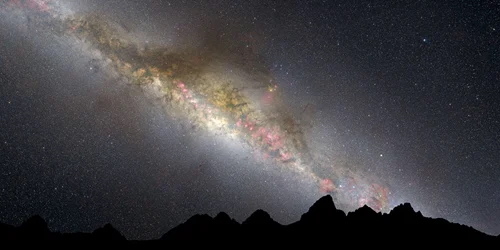
NASA; ESA; Z. Levay/AURA STScI
Departmental Colloquium - Equity and Identity in Physics Education Research
Date
Friday March 20, 20261:30 pm - 2:30 pm
Location
STI ADr. Allison Gonsalves
McGill
Abstract
Who gets to be recognized as a physicist? What are the cultural features of physics that render some identities “in-place” while others are deemed “out-of-place”? In this presentation, I will present an overview of research (mine and others) on equity and identity in physics education research, with a specific focus on the persistent underrepresentation of women in physics and the politics of recognition that perpetuate this. I will discuss the foundations of the field of identity research in physics education and highlight some practical applications of this work. I will conclude with a discussion of future directions for equity research in physics education, with a particular focus on affect and relationality.
Timbits, coffee, tea will be served in STI A before the colloquium.
Departmental Colloquium - Edge artificial intelligence for scientific instrumentation
Date
Friday March 13, 20261:30 pm - 2:30 pm
Location
STI AAudrey Corbeil Therrien
Associate Professor
Department of Electrical & Computer Engineering
Université de Sherbrooke in Québec, Canada
Abstract
Radiation and particle detectors let us observe the universe beyond what our senses can achieve. Scientists come up with new ways to collect information about our universe using detectors to transform particles into electrical signals and digital bits. These novel detectors are more precise, larger and offer much more range than their predecessors, resulting in large amounts of channels and data. For example, the ARGO detector will exploit novel photon-to-digital converters to detect light emission in a liquid argon target. The large surface area (~200 m2) and the immense number of detectors needed to cover this surface at the µm2 scale requires the development of a new data acquisition paradigm.
Transmitting raw data continuously to a compute system would be prohibitive both in material and energy costs. My research group develops systems to distribute real-time compression and analysis algorithms along the data acquisition chain including right up at the edge of the detector. This approach presents several challenges with limited computing power and memory availability. We combine small AI models with carefully selected signal processing and compression algorithms to achieve very efficient smart acquisition systems capable of several orders of magnitude data reduction in a few microseconds.
Audrey Corbeil Therrien is an Associate Professor in the Department of Electrical and Computer Engineering at the Université de Sherbrooke in Québec, Canada. She currently holds the Tier-2 Canada Research Chair in real-time embedded intelligence for ultra-high rate detectors. She has worked at CERN (2015) in Geneva, Switzerland and at the SLAC National Accelerator Laboratory where she held a Banting Fellowship (2018-2020). Her research aims to improve real-time analyses at the edge with the integration of machine learning in high performance radiation instrumentation systems. She is part of several conference committees, and she is co-chair for the 2026 IEEE Nuclear Science Symposium. She has been strongly involved with the promotion of technical and scientific careers for diverse groups with Université de Sherbrooke, SLAC, Stanford University, local non-profits and at several conferences. She received several awards, the 2023 Prix Honoris Genius — Relève of the Ordre des Ingénieurs du Québec and the 2024 IEEE Women in Engineering Leadership Development Travel Grant.
Timbits, coffee, tea will be served in STI A before the colloquium.
Jessie Thwaites
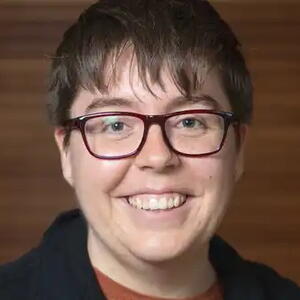
Jessie Thwaites
Post Doctorate
Graduate Students
Physics, Engineering Physics & Astronomy
Arts & Science
Area of Research
Astronomy, Astrophysics & Relativity
-Working on IceCube/P-ONE
Supervisor: Prof. N. Park