
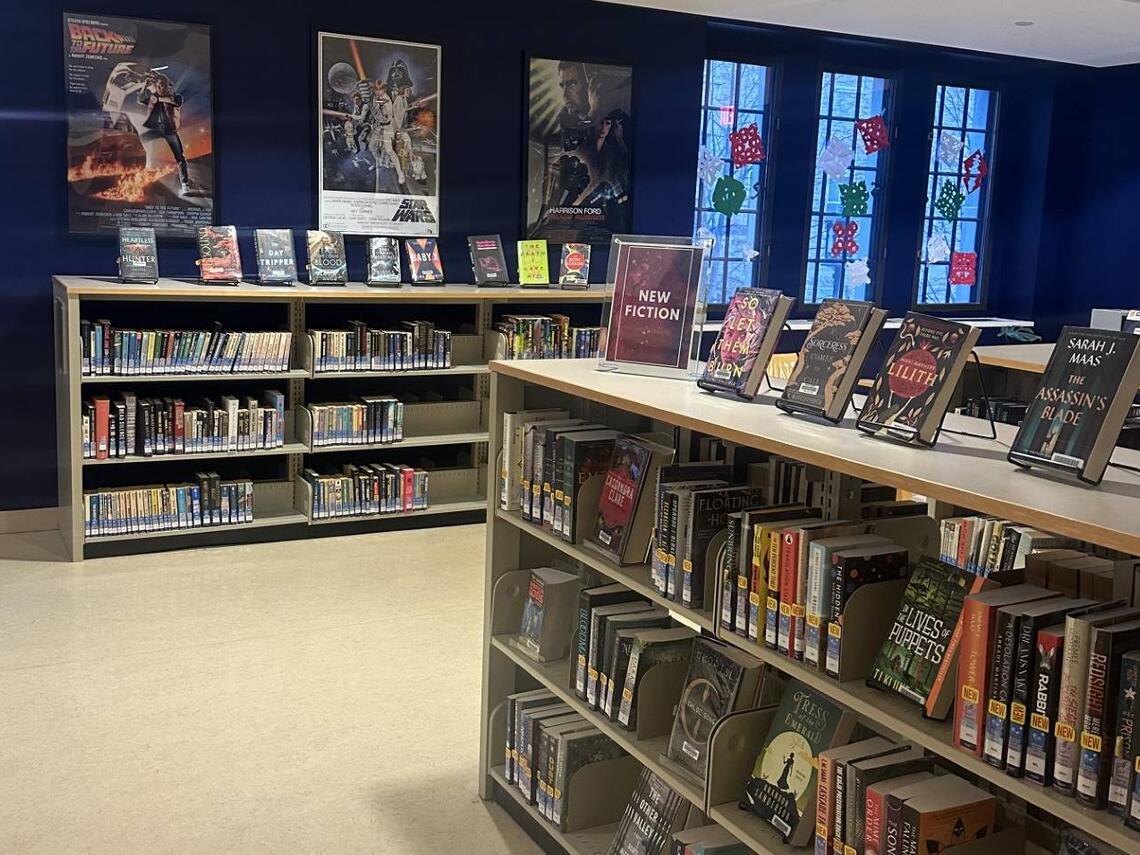
Image Description: A view of the science fiction section in Douglas Library at Queen’s University. Low bookshelves filled with novels create an open reading area, while a tabletop display highlights recently acquired science fiction and fantasy titles. A sign reading “New Fiction” stands among books displayed face-out. The deep blue walls are decorated with framed posters from classic science fiction films, including Back to the Future, Star Wars, and Blade Runner.
Read every day. It might sound obvious, but it is one of the most important habits to hold onto in graduate school and one I am trying to get back into.
Essentially, if you want to write well, it helps to keep reading. Reading for your field, reading around your field, reading something unexpected, reading for ideas. The more you read, the more you notice how authors structure an argument, how they introduce research, how they build momentum in a paragraph, or how they land on exactly the right phrase.
Sometimes reading is about content. This means reading in your field but also reading around your field. I find looking for books in an area near the book you are looking for sometimes leads you in the most unexpected and beneficial ways. Read what excites you. Sometimes the best ideas come from this interdisciplinary exchange.
When I am reading closely, I find it helps to have a physical book or a printed article in front of me. A pencil and coloured page markers (I get mine at the dollar store) in hand make a difference. Underline key passages, mark quotations you might want to return to, and write keywords or quick thoughts in the margins or back of the book. It doesn’t need to be complicated. Create a system so future-you can find what stood out easily and ask others what they do to annotate their books and articles.
Sometimes reading is also about learning how to write. Pay attention to authors whose work you enjoy reading. What makes their writing feel clear? How do they weave research into their argument? How do they move between ideas? Noticing style can be just as helpful as absorbing content and can help refine your own writing style.
For example, I love theorist Hito Steyerl. Not only is she relevant to my research, but her writing is enjoyable to read. She uses short sentences and a sense of humour that lights up her critical thinking. And Byung-Chul Han, who uses short, simple sentences packed with content in small accessible books.
And sometimes reading can be a break. Graduate school asks a lot from your brain. Reading a novel, diving into a fantasy world, or spending time with a book that has nothing to do with your research can be a real reset. Reading for enjoyment still counts. It can be important to step away from your project for a while and come back with fresh energy. See the Sci-Fi Reading Nook at the Douglas Library (pictured) and Mystery of the Law Reading Nook , Graphic Novel Area and the BIPOC Author Collection at the Lederman Law Library.
The good news is that reading does not have to cost anything.
Queen’s Libraries are an incredible resource, and graduate students can also borrow materials from partner university libraries across Ontario through interlibrary loan. If you need a book from Queen’s and it is marked non-circulating, it can still be worth reaching out to the librarian in your subject area. They may be able to help with access or suggest another option. A quick conversation can go a long way.
Kingston also has several Little Free Libraries tucked around the city, which can be a fun way to discover something unexpected.
Kingston also has book clubs. A friend of mine was in the Lazy Daisy book club and loved it, although it is paused for the summer. Check with your local library branch to see what is happening over the summer.
How to survive grad school? Read every day, even if it's just 10 minutes.