Cosmic Probes of the Dark Sector

Date

Thursday November 9, 2023
11:30 am - 12:30 pm

Location

CHE 117

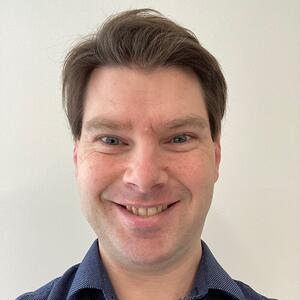
Prof. Chanda Prescod-Weinstein
Assistant professor of physics and astronomy at the University of New Hampshire

Abstract

Prof. Chanda Prescod-Weinstein is giving two talks at Queen’s University on November 9th. Originally from East L.A., Dr. Prescod-Weinstein is a graduate of Harvard College, University of California — Santa Cruz, and the University of Waterloo. She is an assistant professor of physics and astronomy at the University of New Hampshire where she is a theorist in particle physics, cosmology, and astrophysics with an emphasis on dark matter. Her physics colloquium: “Cosmic Probes of the Dark Sector” will motivate the 2020’s focus on astrophysics and cosmology for determining what exactly dark matter is comprised of. Dr. Prescod-Weinstein’s talk will focus most especially on questions relating to large-scale structure and axion-like particle models, as well as on asymmetric dark matter in neutron stars as valuable exemplars of interesting work that is underway.
 

Weighing a Ghost: The Quest to Measure the Neutrino Mass

Date

Friday November 10, 2023
1:30 pm - 2:30 pm

Location

STI A

Walter Pettus
Indiana University

Abstract

The ghostly neutrinos remain the only fundamental fermions whose masses are unknown. Neutrino flavor transformation measurements definitively demonstrate neutrinos have mass, breaching the Standard Model of Particle Physics, but cannot determine that mass scale. Searches capable of directly probing the neutrino mass now indicate neutrinos are at least six orders of magnitude lighter than the next fermion.

In this talk, I will review progress in the field of direct neutrino mass experiments. I will focus on advances by Project 8, an experimental concept based on the novel Cyclotron Radiation Emission Spectroscopy (CRES) technique. Project 8 has recently published its first measurement of the tritium beta spectral endpoint, enabling the first RF-based direct neutrino mass limit while demonstrating high precision spectroscopy. An R&D campaign is now underway to demonstrate scalability of the CRES technique and to develop the atomic tritium source required. Building on these successes, a next-generation experiment is envisioned with neutrino mass sensitivity down to 40 meV, covering the inverted mass ordering region.

Timbits, coffee, tea will be served in STI A before the colloquium.


Dark Matter Day

Today is Dark Matter Day. A global event that is held annually.

The Gazette has compiled some of their articles featuring our researchers from the Physics department and their involvement in pursuit of understanding the complex and enigmatic properties of dark matter that make up 85% of the universe. Check out the articles!

 Gazette Articles

Article Category

Machine Learning 101: From particle astrophysics to ethical considerations

Date

Friday November 3, 2023
1:30 pm - 2:30 pm

Location

STI A

Ryan D. Martin,
Undergraduate Chair, Associate Professor
Department of Physics, Engineering Physics & Astronomy

Abstract

This talk will start with a basic introduction to machine learning to show how easy it is for anyone to get started using these tools. I will then discuss a few applications of machine learning. These range from our work to remove electronic noise in particle astrophysics experiments to pricing stock options and determining the deformation of a bouncing ping-pong ball. The talk will conclude with some thoughts, and hopefully some lively discussion, about the ethics of artificial intelligence and, more generally, training STEM students without including formal ethics training.

Timbits, coffee, tea will be served in STI A before the colloquium.


From Telescopes to Dark Matter & Black Holes

Date

Friday October 20, 2023
1:30 pm - 2:30 pm

Location

STI A

Ting Li
Assistant Professor
Department of Astronomy and Astrophysics
University of Toronto

Abstract

In this talk, I will summarize astrophysical observations that can constrain the fundamental physics of dark matter in the era of modern cosmic surveys. I will highlight the progress that has been made so far with past and ongoing astronomical observations with modern surveys, and discuss how the next-generation cosmic survey programs will complement other experiments to strengthen our understanding of the fundamental characteristics of dark matter. I will finish my talk with a program that I am leading: the Southern Stellar Stream Spectroscopic Survey, or S5, and discuss how we study dark matter and black holes together with this program.

Timbits, coffee, tea will be served in STI A before the colloquium.


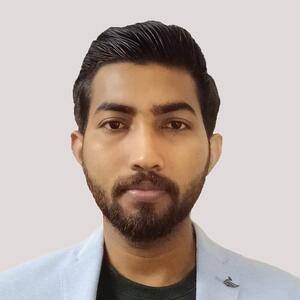
Mark Ward

Mark Ward

Mark Ward

Research Associate

he/him

Research Associates

Physics, Engineering Physics & Astronomy

Arts & Science

Area of Study

Particle Astrophysics

Supervisor: Prof. M. Chen

About Mark

Physicist and all round nerd. In my spare time I enjoy photography, video gaming and retro-gaming.


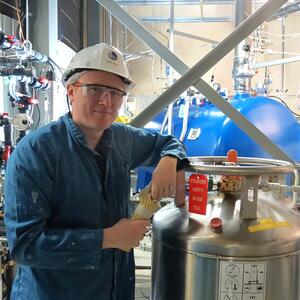
Ryan Bayes

Ryan Bayes

Ryan Bayes

Post Doctorate

he/him

Post Doctorate

Physics, Engineering Physics & Astronomy

Arts & Science

Area of Research

Particle Astrophysics

Co-Supervisors: Prof. M. Chen, Dr. C. Kraus

Ryan's CV (46 KB)

About Ryan

An avid brass musician and once upon a time competitive fencer, I enjoy hiking and biking when I am able. I am also an avid reader of science fiction and non-fiction titles, and I am always more comfortable when I have a book within reach.

Social Media