Queen's 2015 Nobel Prize in Physics
Wu Han
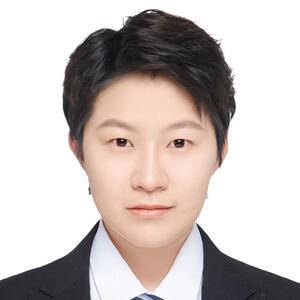
Wu Han
PhD Candidate
he/him
Graduate Students
Physics, Engineering Physics & Astronomy
Arts & Science
PhD Candidate
he/him
Graduate Students
Physics, Engineering Physics & Astronomy
Arts & Science
Gordon and Patricia Gray Chair, Professor, Associate Head
Faculty, Particle Astrophysics
Physics, Engineering Physics & Astronomy
Arts & Science
Post Doctorate
Post Doctorates
Physics, Engineering Physics & Astronomy
Arts & Science
Communications Officer at MI
he/him/his
Administrative Staff
Physics, Engineering Physics & Astronomy
McDonald Institute (MI)
Arts & Science
PhD Candidate
he/him
Graduate Students
Physics, Engineering Physics & Astronomy
Arts & Science
STI 304J
My favourite hobbies include: cooking & baking, there is nothing better than sharing great food with friends and family; chess, although I am not all that great, I do enjoy playing both online and in-person; reading, preferably 20th century politics/history or fantasy/sci-fi; and I enjoy a session of D&D or Lord of the Rings tabletop with friends.
Engineer for MI
Technologists/Technicians
Physics, Engineering Physics & Astronomy
McDonald Institute (MI)
Arts & Science
I love physics.
PhD Candidate
she/her
Graduate Students
Physics, Engineering Physics & Astronomy
Engineering & Applied Science
Particle Astrophysics
-Working on high-energy neutrinos: IceCube, developing prototype detector module for future detector, neutrino emissions from extragalactic objects
Supervisor: Prof. N. Park
Date
Tuesday October 10, 2023Location
STI AThe atomic gas (HI) content of nearby galaxies provides important insight into the physics that underpins their formation and evolution within the standard cosmology. In this talk, I will highlight some of my group's recent progress towards building statistical samples of gas-rich galaxies to use as cosmological probes. I will first focus on how sensitive HI searches in optically-selected dwarf and ultra-diffuse galaxy candidates are a powerful tool for measuring their structure and constraining formation models. I will then describe how the widefield WALLABY survey, now underway on the Australian SKA Pathfinder (ASKAP) telescope, is delivering the first spatially-resolved populations of HI disks for comparison with cosmological predictions. I will finish by explaining how this work paves the way for probing HI in galaxies more widely and deeply than ever before with a new generation of radio facilities that are under construction now, including the billion-dollar SKA telescope in which Canada will soon become a full member.
Timbits, coffee, tea will be served in STI A before the colloquium.
Prof. Spekkens will be meeting with members of the department on Tuesday and Wednesday, October 10 and 11.
Affiliated Adjunct, Senior Research Scientist (MI)
Affiliated Adjunct Faculty
Physics, Engineering Physics & Astronomy
McDonald Institute (MI)
Arts & Science
The department sponsored one of our Eng Phys students, Nathan Pacey, to travel to Switzerland to work at CERN for the summer. Here is his experience in his own words: