
Waveguide quantum electrodynamics: Collective radiance and photon-photon correlations

Date

Thursday March 23, 2023
2:30 pm - 3:30 pm

Location

STI B

Dr. Ivan Iorsh
ITMO University

Abstract

Ability for the on-demand generation and manipulation of non-classical states of light is a cornerstone of scalable quantum information processing. In my talk, I will describe how emerging field of waveguide quantum electrodynamics (WQED), studying interaction of photons propagating in a waveguide with localized quantum emitters, paves new routes towards flexible control over the photon-photon correlations. In the first, introductory part of the talk, I will describe what are the entangled photon states and how they can be used for quantum information processing. I will then discuss how the distinctive features of WQED systems such as photon-mediated long range interactions between two-level systems facilitate the emergence of the strong photon-photon correlations. I will continue by reviewing the state of the art experiments, and in the final part of my talk I will give a brief overview of our recent results in this field. 

Coffee, tea will be served in STI B before the colloquium.


Iron Ring

Congratulations to the Engineering Physics class of 2023 who received their Iron Rings on Sunday March 19!

The Iron Ring symbolizes the pride which engineers have in their profession, while simultaneously reminding them of their humility. The ring serves as a reminder to the engineer and others of the engineer’s obligation to live by a high standard of professional conduct. This is a huge milestone in the academic career of the Engineering students – congratulations!

Article Category

Accelerating quantum dynamics with long-range interactions

Date

Monday March 20, 2023
11:30 am - 12:30 pm

Location

STI A

Dr. Jeremy Young
Postdoctoral Fellow, JILA, NIST and the University of Colorado

Abstract

One of the major goals in the field of quantum science is to utilize the properties of quantum mechanics for applications in quantum computation, quantum simulation, and quantum sensing. In order to address this goal, a variety of different many-body quantum platforms have been developed. Many of these quantum platforms exhibit long-range interactions, particularly power-law interactions, including Rydberg atoms, polar molecules, trapped ions, among others. This gives rise to a natural question: how does the long-range nature of these interactions affect the resulting quantum evolution?

In this colloquium, I will discuss some of the ways that these long-range interactions have been utilized both for studying new many-body physics and for applications in quantum science. I will focus in particular on how long-range interactions can be used to accelerate entanglement generation in two contexts. First, I will illustrate how long-range interactions can be used to provide exponential speedups over short-range interactions in entanglement spreading and state transfer and discuss how this can be achieved with Rydberg atoms and polar molecules. Second, I will present an approach for engineering multi-qubit gates by dressing Rydberg atoms with coherent light, which provides a means for tuning the underlying Rydberg interactions.

Dr. Young is a candidate for the tenure-track faculty position in theoretical condensed matter physics or theoretical optics. There are opportunities to meet with Dr. Young during his visit, please contact Melissa Balson to be added to the schedule.

Coffee, tea will be served in STI A before the colloquium.


Biophotonic advancements in biosensing and laser therapy for vision diseases and cancer

Date

Friday March 17, 2023
1:30 pm - 2:30 pm

Location

STI A -Hybrid

Prof. Ozzy Mermut
Department of Physics and Astronomy,
York University

Abstract

Approximately 2.2 billion people suffer globally from some form of vision impairment or blindness with most of these individuals being over the age of 50 years.  Vision diseases acutely and severely affect the quality of life, especially in the elderly.  One common disorder, age-related macular degeneration, is the leading cause of vision loss for older adults.  In our group we are studying biophotonic techniques for the early detection of hallmark biomarkers associated with retinal tissue degeneration, and investigating improved laser therapy approaches which aim to selectively target lesioned tissue to improve individualized treatment outcomes in maculopathy and cancer.  In this talk, I will present our recent biophotonic advances in early hypoxia detection, as well as new targeted laser therapy methods for these debilitating diseases. One of our photonic biosensing approaches includes sensitive, molecular-scale measurements of hypoxia – a characteristic pathophysiological property of vision diseases and tumours.  Real-time, in situ hypoxia monitoring is key to effective evaluation of the aggressiveness of a diseased lesion and its treatment resistance.  I will also present our research and development of advanced therapies based on sub-microsecond laser pulse shaping methods, which enable thermomechanical stress confinement of delivered energy to the lesion target whilst spatially limiting collateral damage to surrounding healthy cells.  Achieving quantitative dosimetry, our results from photoacoustic detection of micro-cavitation (vapourized bubbles) in photomechanical therapy mechanisms, as well as dosimetry from radical oxygen species in photochemical processes (photodynamic therapy), will be discussed.  Our recent explorations in weak magnetic field perturbations in photosensitizer fluorescence lifetime show proof-of-concept of a promising new avenue for the quantification of the oxygen micro-environment during oxygen-mediated phototherapy, with possibility of real-time molecular feedback during laser treatment.

Timbits, coffee, tea will be served in STI A before the colloquium. The colloquium speaker will be presenting remotely.
What Makes Quantumness?

Date

Monday March 13, 2023
2:30 pm - 3:30 pm

Location

STI 501

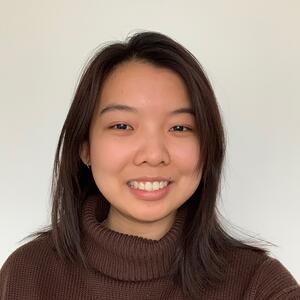
Asma Al-Qasimi
University of Rochester

Abstract

In this talk, I will introduce entanglement, the "golden child" in the field of quantum information, considered by many to be THE real signature of quantumness, which when used efficiently should give us powerful quantum computers. I will discuss related concepts, quantifications, and studies in physical systems, highlighting open questions in the field.

Coffee, tea will be served in STI 501 before the colloquium.


Superradiance in ordered atomic arrays

Date

Tuesday March 7, 2023
11:30 am - 12:30 pm

Location

STI D

Dr. Stuart Masson
Columbia University

Abstract

Collective phenomena are found in every branch of science; the behavior of the whole differs strongly from the behavior of the individual elements. In quantum optics, a hallmark example is Dicke superradiance. Here, a fully inverted ensemble of atoms emits a short and bright light pulse, known as the superradiant burst, that initially grows in intensity. This is in stark contrast to independent atoms which decay exponentially, emitting a pulse that monotonically decreases in time. Experiments in dense disordered systems have observed the superradiant burst, but there, inhomogeneous broadening plays a large role, making the systems hard to model or control. In contrast, ordered arrays have much lower inhomogeneity - atoms in the bulk all see the same set of neighbors - making them an ideal platform to study dissipative many-body physics. Here, we show the conditions under which such systems produce a superradiant burst. We go beyond two-level approximations, and demonstrate that long-wavelength transitions from ytterbium and strontium atoms can be used to observe such physics. Our work represents an important step in harnessing such systems to build quantum optical sources and as dissipative generators of entanglement.

Dr. Masson is a candidate for the tenure-track faculty position in Physics.  There are many opportunities for professors and students to meet with Dr. Masson during his visit – please let Rob Knobel know if you are interested.

Timbits, coffee, tea will be served in STI D before the colloquium.


What does Quantum Physics have to do with Aircraft Maintenance? and other ways a degree in phys/eng-phys applies to industry

Date

Friday March 10, 2023
1:30 pm - 2:30 pm

Location

STI A

Ginelle Johnston
WIA (Women in Aerospace)

Abstract

Described as a business, aviation, and tech enthusiast all in one, many are still surprised to learn Ginelle's background is in engineering physics (BASc) and quantum optics (MSc). During the colloquium, Ginelle will present an overview of her career progressing from Analyst to Department Head in one of the world's largest aircraft manufacturers, and beyond to her current endeavors. Through this she will reflect on how she believes her degrees set her up for her career trajectory in aerospace leadership and speak to the importance of personal branding. Active in the aerospace community she will incorporate topics around the status of the aerospace industry and the new technology fuelling its future.

Timbits, coffee, tea will be served in STI A before the colloquium.

Quantum Dynamics in Random Quantum Circuits

Date

Thursday March 2, 2023
12:30 pm - 1:30 pm

Location

STI C

Dr. Zhi Li
Perimeter Institute

Abstract

Recent progress in experiments has enabled precise control and direct investigation of the dynamics of quantum many-body systems and has motivated us to study many-body systems that are out of equilibrium.

In this talk, I will introduce the random quantum circuit as a useful framework to study universal features of many-body quantum dynamics. In particular, I will describe how to understand the effect of noise and measurements in the random quantum circuits framework. With noise, the entanglement has an "area law" bound, implying classical simulatablity. With measurements, the system shows interesting superlinear entanglement dynamics due to nonlocal effects of measurements. I will also describe the problem of quantum complexity growth in random quantum circuits.

Dr. Li is a candidate for a faculty position in Physics at Queen’s.  There are several opportunities for students and faculty to meet with Dr. Li.  Please sign up to meet with him during his visit Thursday and Friday, March 2,3.

Timbits, coffee, tea will be served in STI C before the colloquium