
 Find us
The Facilities department is responsible for advancing campus sustainability initiatives, identifying and implementing new opportunities for sustainability and engaging and creating awareness about environmental issues within the campus community. Guided by provincial legislature and university policy, Facilities oversees the university’s central waste management strategies, including campus waste diversion and reduction programs as well as the management of the waste removal contractor.
Pickup Forms
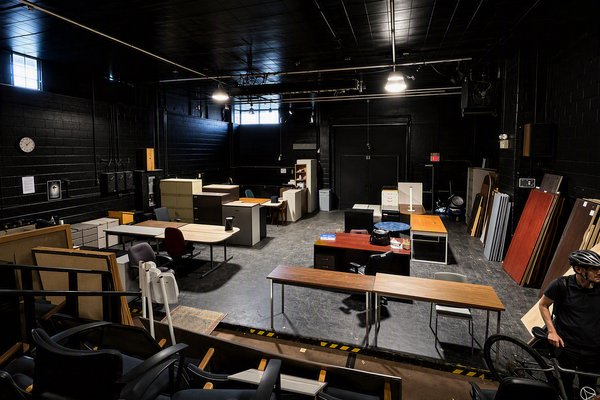
Furniture & Large Items
Furniture & Large Item Pickup Form
Facilities operates a furniture reuse and disposal program, where items still in usable condition are diverted from landfill and reused by different departments on campus. If a department cannot rehouse an item in good condition, Facilities may place it in surplus for reuse. Items that cannot be reused should be disposed of using the Furniture & Large Item Pickup Form above.
- Disposal requests are paid for through the University’s Central Waste Fund. This does not include ancillary departments on campus.
- In the event of a last-minute move or short timeline, contact the Resource Recovery & Sustainability Specialist.
- Where no on campus use is found for a university-owned asset, requests for personal use will be considered. Please contact the Resource Recovery & Sustainability Specialist for more information.
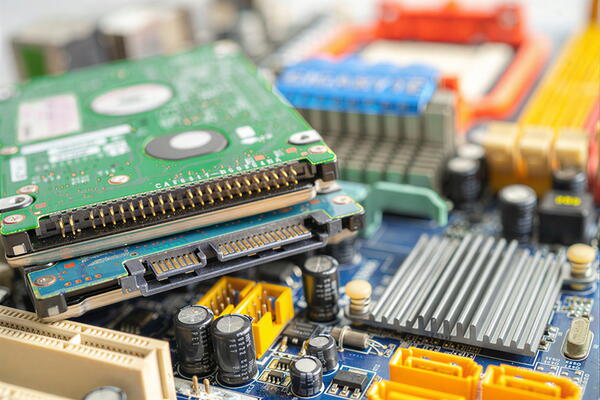
E-Waste & Equipment
E-Waste & Equipment Pickup Form
E-waste refers to electronic products that have been discarded, abandoned, or become obsolete. These items, ranging from smartphones and laptops to computer keyboards and monitors, contain valuable materials and harmful substances that need to be handled with care. To facilitate the process of disposing of E-Waste, an E-waste Request Form must be filled out. It is recommended that memory containing devices be wiped prior to the pick up of E-Waste. All E-Waste items are sent to a contracted E-Waste recycler.
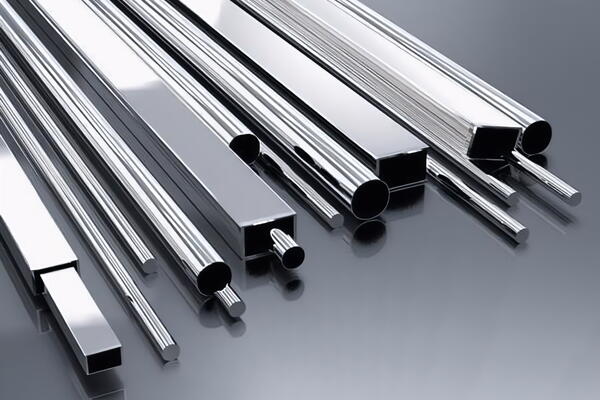
Scrap Metal
Scrap metal refers to discarded or surplus metal materials that are no longer needed for their original purpose and are intended for recycling or disposal. Examples include leftover metal pieces from construction projects, old machinery, or obsolete metal components.
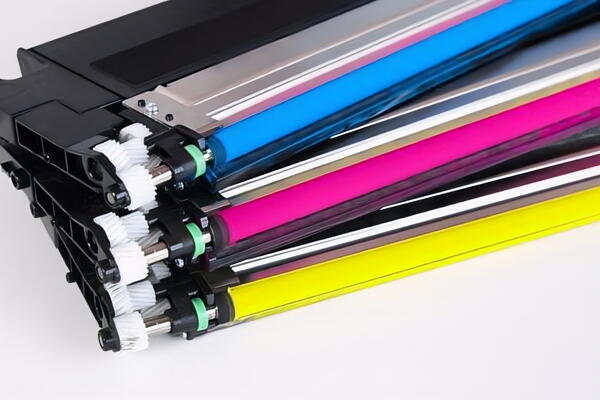
Printer Cartridges
Printer cartridges often contain hazardous materials. Therefore, it's crucial to follow proper disposal practices to minimize environmental impact. If an E-Waste request has been submitted, please include printer and toner cartridges within that request. However, if an E-Waste request is not in place, a Printer Cartridge Request Form must be completed for proper disposal.

Note for Ancillary Departments
Ancillary departments may use the Facilities forms to request item pickups. Departments will be billed directly by DG Maintenance for the pickup and disposal of furniture, equipment, e-waste, scrap metal, and printer cartridges.
Event Waste
Event planners are responsible for making sure their event is equipped with appropriate waste receptacles. To request waste and recycling services for your event, please fill out the Event Waste Planning form below.
The form must be filled out at least 7 business days prior to event. If insufficient notice is given, there is no guarantee that service can be provided to your event.
Charges may apply. For information on event support, please contact Custodial Support Services.
Event Waste Planning Form
ReUseIt
Do you have furniture or equipment that you don't want any more? Find someone on campus who needs your item(s). Save money and reduce waste in landfills.
Facilities operates a furniture reuse program, where items still in usable condition are diverted from landfill and reused by different departments on campus. Facilities operates the furniture reuse program, and assists departments in the removal, relocation and reuse of various office furniture items.
The Queen’s ReUseIt website is an online platform for exchanging campus furniture items. Simply sign in with your staff netID and password to view furniture items available for reuse, or to upload items you may be looking to get rid of.
Campus Organics Programs
Composting has many environmental benefits including conserving landfill space, improving soil quality and it keeps organic material out of landfill. When food waste sits in a landfill and is not properly turned and processed (like compost is), it releases methane, a greenhouse gas more potent than CO2.
Campus departments are invited to join the organics program which focuses on capturing food waste generated by staff who bring their lunches to work. To adequately control the content and quality of the organic collection, an organics collection container is provided for kitchen or lounge spaces. This container will be emptied into an exterior collector that is picked up weekly and transported to a composting facility. Check the Waste Wizard to verify what goes in organics.
The dining rooms and retail food outlets participate in an organics program. The organic material that comes from the dining rooms and retail food outlets is collected in exterior toters and the material is transported by the campus waste hauler to Tomlinson Organics in Joyceville. Tomlinson’s converts the organic material into compost that is used by commercial landscapers and home gardeners to enhance their soil.
Compostable items include: meat, dairy products, produce, coffee grounds, kitchen paper towels, napkins, uncoated paper take-out containers, cups and plates, and pizza boxes.
FAQs
What happens if recycling is contaminated?
When a custodian removes a bag of paper, cans/glass/plastic recycling or organics, and it contains more than 10% of garbage then the whole bag of recycling must go to waste. The recycling facility will not accept contaminated recycling as these items are difficult to recycle and find buyers for.
Is Queen's part of the municipal recycling system?
Queen’s is not part of the municipal recycling system, the university is part of the ICI sector (industrial, commercial, institutional).
The municipality of Kingston and Queen’s University are guided by different legislation. The City has its own recycling facility (Kingston Area Recycling Centre) while the University uses a contracted waste hauler to remove waste and recycling from the campus.
However, the two systems are very similar and we work to make the differences clear to the Queen’s and Kingston community.
Where does our waste go?
Organic material collected from Queen’s composting program is sent to Tomlinson Organics in Joyceville, Ontario where it is broken down by their composting process and then sold as compost for gardens and farms. Recycling materials from Queen’s are collected and sent to Brockville Waste Management Transfer Station.
How much waste does Queen's generate annually?
- 3178 MT of waste
- 744 tonnes of recyclables are diverted from landfill annually, representing a 23% diversion rate
- More than 85% of our current waste stream can be diverted
Why are my coffee cups and plastic bags no longer recyclable?
Coffee cups have a wax or plastic coating on them so that they can hold hot liquid. This coating prevents the cups being broken down into pulp for paper recycling. In addition, to-go coffee cups are often used as as mini garbage cans and contain all kinds of items (banana peel, wrappers, napkins), and this results in contamination of the recycling stream. To properly dispose of a coffee cup at Queen's, place it in the waste container.
Plastic grocery bags are no longer acceptable in recycling streams, because they are very difficult to recycle into new materials. Plastic bags require a specific recycling process and there is little market demand for this item.
Say no to plastic bags and one-time use cups, and choose reusable versions instead.
How can I safely dispose of E-Waste?
Unused electronics should be submitted to the E-Waste program when no longer required.
Disposal process
- Step 1: The requesting office completes an E-Waste/Equipment Pickup Request. Ensuring that a complete list of items to be picked up is documented in the Description of Work field.
- Step 2: The requesting office will receive a confirmation email complete with a submission number. (The submission number should always be used when referencing the request).
- Step 3: The requesting office labels the devices to be picked up with the submission number, so moving services knows they are taking the correct items.
- Step 4 The requesting office places the e-waste in a secure area to await pick up. Secure areas are those not easily accessed by anyone outside of your unit’s staff, preferably a locked room or cabinet. Under no circumstances leave e-waste in hallways, outside of buildings, or on loading docks even for a short period as this may expose the University to risk.
- Step 5: Moving services will arrive to remove the e-waste.
Can I recycle office supplies? What about coffee capsules?
Queen's Strategic Procurement Services has negotiated special rates on select products to make it easy and cost-effective to collect and send hard-to-recycle items for processing. The best rates are offered by Grand & Toy, and they offer two types of "Zero Waste" boxes to help ensure proper waste management in the office setting:
Coffee Capsules - Zero Waste Box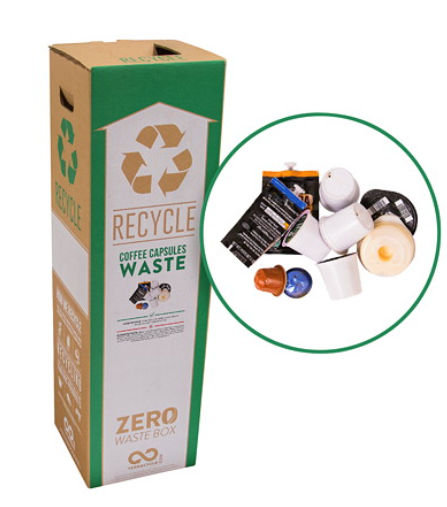
An estimated 20 billion coffee capsules will be consumed this year and most will end up in landfills.
Lets do our part to avoid that.
- Log into your Queen's acQuire account, go to the shopping page and search for TerraCycle
- Order the appropriate sized TerraCycle Coffee Capsules - Zero Waste Box (box sizes and prices below)
- Collect your coffee capsules
- Ship the filled box to TerraCycle using the prepaid label on the box
- Order a new box
Office Supplies - Zero Waste Box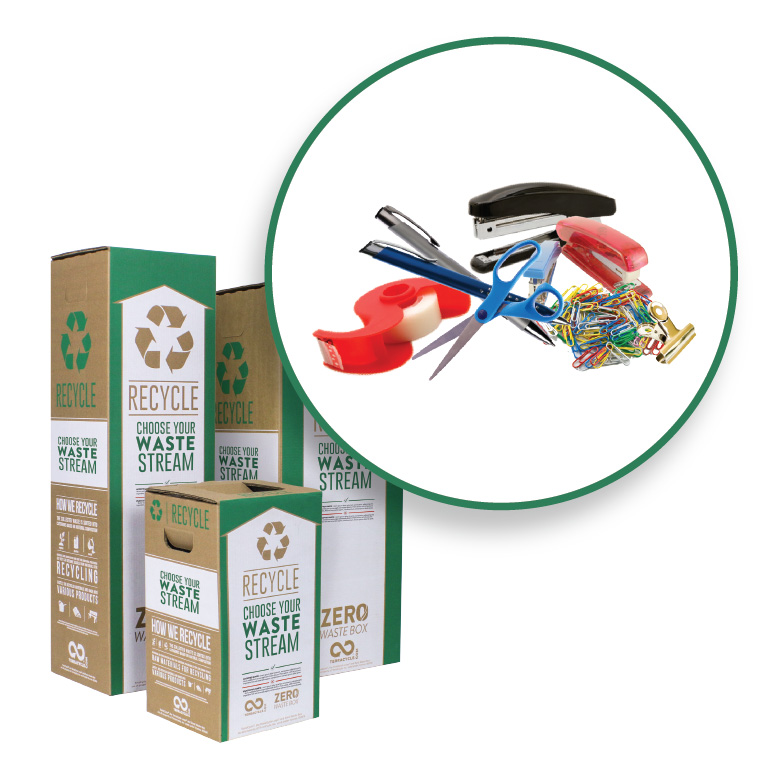
Recycle your office supplies in four easy steps:
- Log into your Queen's acQuire account, go to the shopping page and search for TerraCycle
- Order the appropriate sized TerraCycle Office Supplies - Zero Waste Box (box sizes and prices below)
- Collect your discarded supplies
- Ship the filled box to TerraCycle using the prepaid label on the box
- Order a new box
Accepted waste includes discarded, non-electronic office tools such as tape, desk organizers, card and document filers, binders, calendars, labels, staplers, writing instruments, hole punchers, dividers, paper cutters, and correction supplies. You can also recycle fasteners including paper clips, staples, and binder clips, and backing from sticker and label sheets.