

Media and Performance Production

Music

Philosophy
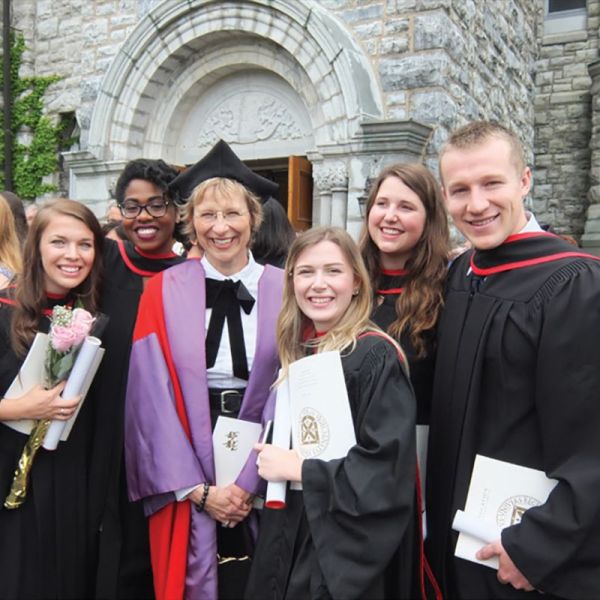
Grappling with life’s big topics, Philosophy provides students with critical thinking skills that enable you to uncover hidden assumptions, identify core premises, and evaluate arguments. The Department of Philosophy at Queen’s University has faculty working in a wide variety of fields, including political philosophy, ethics, bioethics, feminism, contemporary metaphysics and epistemology, philosophy of language, philosophy of science, continental philosophy and the history of philosophy.
Physics & Astronomy

Political Studies

Politics is about power – who has it and how it is exercised by nation-states, individuals, groups, classes, or political parties, and how different interests are reconciled in and between communities. Political Studies is also concerned with the institutions created to govern communities, as well as with political practices such as voting habits or protests, and how rules, behaviours, and cultures are created in societies. Since power in society is often dependent upon material resources, political scientists also study the distribution of wealth, both within and between nations. Our department is particularly well known for its strength in the study of ethnically divided and diverse societies.
Politics, Philosophy and Economics

Study social issues and how our society responds to these issues while asking questions drawn from economic, political, and philosophical perspectives. Society faces challenges that are complex and multi-dimensional, and our efforts to tackle these challenges require us to bring complementary intellectual skills together using multidisciplinary analytical and critical approaches. This program combines Economics, Philosophy and Politics to prepare students to enter graduate studies in areas of law, public service, international development, policy design and analysis, or any other career that calls for strong analytical and communication skills.
Psychology

Psychology is the study of mental processes and behaviour. Psychologists study relationships between brain function, behaviour, and environment. As a discipline, psychology explores a wide range of topics, including cognition, neuroscience, social influence, mental health, development, relationships, sensation, and perception, as well as the influence of factors such as gender and culture on these areas. Home to 35 labs, psychology students have the opportunity to work alongside faculty researchers to gain valuable research training.
Religious Studies

Religion plays a major role in shaping and influencing various cultures and historical and political movements around the world. Understanding religious traditions and their impact on diverse modern issues is vital preparation for building a career in the global marketplace. At Queen’s, our approach to the study of religion is multicultural, diverse, and interdisciplinary. Religious Studies involves, among other things, examining the history of religious traditions, comparing ideas and values, and understanding the place and function of religion in society, including varieties of secularism. Students of religion investigate why people are religious, where religion comes from, and how it can be analyzed.
Sociology

Sociologists investigate how societies work. We critically examine the social world at every level, from personal relationships to the functioning of institutions and nations, right up to global interconnections. Our department is particularly well known for its strengths in criminology and the law; media, information, and surveillance; power, inequalities, and social justice.
Software Design

Spanish and Latin American Studies

Statistics

World Language Studies