

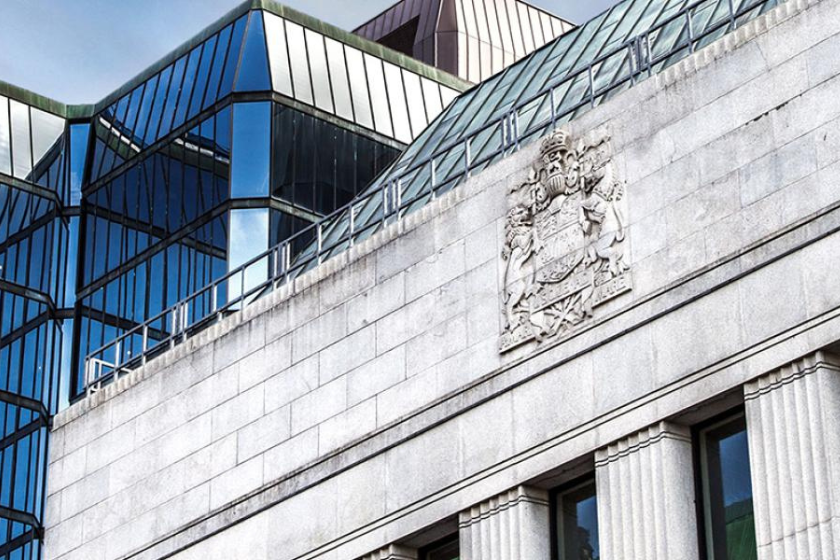
Photography by Rémi Theriault
On the money
by Robert Gerlsbeck
*This story originally appeared in the Queen's Alumni Review.
For a moment in March 2020, as COVID--19 began its deadly sweep through Canada, it seemed a health emergency might trigger an economic meltdown, too. Businesses shuttered overnight. Masses of Canadians lost jobs. Between February and May, unemployment nearly tripled.
For weeks, politicians and economists scrambled to gauge the damage and stave off a worst-case scenario: a broken economy that would take years to heal.
One of those in the thick of the fight was Stephen Poloz, Artsci’78, governor of the Bank of Canada.
That spring should have been a victory lap for Mr. Poloz, whose term was winding down. Appointed in 2013, he had followed Mark Carney, Canada’s celebrated central banker who helped steer the country through the 2008 financial crisis before heading to the Bank of England. By contrast, Mr. Poloz was largely unknown. He joked he was like the player who replaced Wayne Gretzky that no one remembers.
But over his seven-year tenure, Mr. Poloz proved an astute central banker with a knack for plain language and metaphors that any Tim Hortons regular could grasp. He once compared currency fluctuations to walking a dog on a long leash. Frothy oil prices for Canada were like finding a valuable hockey card in your basement.
By March 2018, when he returned to Queen’s to deliver a lecture in Goodes Hall on the future of work (wearing the maroon Arts and Science jacket he’d gotten for Christmas in 1974), Canada’s economy had rebounded from the Great Recession. Unemployment was at a record low and inflation was low and steady. The financial crisis was in the rear-view mirror.
The pandemic, however, was something different: a forced economic shutdown. Bank officials worried about wobbling markets and businesses risked running short of cash. Mr. Poloz recognized the danger wasn’t just money but confidence – cracks in the belief the financial system would keep functioning.
On March 27, he announced an extraordinary move: the bank would buy $5 billion a week in government bonds, for as long as necessary, plus take other measures to keep markets humming. Some critics thought he overreacted. But Mr. Poloz and his team saw the gathering storm. When a reporter asked why so much money for so long, he had a ready reply: “A firefighter has never been criticized for using too much water.”
Continue reading the full story on the Queen's Alumni Review.